The Two Nights.
What the leaked numbers can only sketch, eyewitnesses make irrefutable.
Content warning: this section contains documentary photographs of fatalities, wounded protesters, body bags, and morgues. The images are reproduced here under fair-use editorial provisions because the events themselves are being denied.
The order to kill.
On 8 January 2026 the regime moved from police containment to full military suppression. The IRGC was given an explicit order to use lethal force against unarmed civilians — the most intense crackdown in the Islamic Republic's history. IRGC and Basij units deployed snipers, armoured personnel carriers, and helicopter surveillance. Medical facilities were targeted; doctors treating wounded protesters were arrested.
Among the deadliest single incidents was the 2026 Rasht massacre: HRANA documented at least 392 killed in Rasht alone, the vast majority after an internet blackout was imposed. Amnesty International and Human Rights Watch documented at least 28 protesters and bystanders killed in 13 cities across 8 provinces between 31 December 2025 and 3 January 2026 — before the most intense crackdown began. In Malekshahi, Ilam province: Reza Azimzadeh, Latif Karimi, Mehdi Emamipour, Fares (Mohsen) Agha Mohammadi, and Mohammad Reza Karami were shot by IRGC forces firing from inside a Basij base. In Azna, Lorestan province: Vahab Mousavi, Mostafa Falahi, Shayan Asadollahi, Ahmadreza Amani, Reza Moradi Abdolvand, and Taha Safari — sixteen years old, his body withheld from the family.
On 3 January, Khamenei said “rioters should be put in their place.” On 5 January the Head of the Judiciary ordered prosecutors to show “no leniency.” Authorities forced some victims' families to appear on state media blaming deaths on accidents, under threat of secret burials if they refused.
The dispute over the dead.
The death toll became one of the most contested figures in modern Iranian history. The official Pezeshkian government count, published 1 February 2026, was 3,117 (including some 214 security forces). HRANA's verified named list, published on 23 February 2026 in a report titled The Crimson Winter, recorded 7,007 confirmed deaths — 6,488 adult protesters, 236 minors, 207 security personnel, and 76 non-participants — with 11,744 cases still under review. Iran International independently compiled 6,634 names. A doctors' network speaking to The Guardian warned the toll could exceed 30,000.
Time magazine, on 25 January 2026, reported a list of 30,304 protest-related deaths registered in civilian hospitals for 8 — 9 January alone, citing two senior Iranian officials who said the administration “ran out of body bags” and used “semi-trailer trucks instead of ambulances.” Leaked internal IRGC Intelligence Organization reports from 22 — 24 January placed the toll at 33,000 — 36,500 — figures published by Iran International on 25 January from leaked Supreme National Security Council documents covering more than 400 cities. A leaked parliamentary report cited 27,500. The UN Special Rapporteur on Human Rights in Iran, Mai Sato, said on 22 January that the dead could surpass 20,000. Reza Pahlavi, citing diaspora networks reporting to The Sunday Times, placed the total at roughly 50,000, including some 15,000 in Tehran alone.
Whichever figure stands the test of independent investigation, the lower bound — Iran International's 36,500-name leak — already makes 8 — 9 January 2026 the deadliest two-day repression event in modern Iranian history. Iran International found fewer than 100 names in common between its list and the government's, describing the official tally as “a shameful attempt to downplay the scale of the largest street massacre in Iran's contemporary history.” On 11 February 2026, President Masoud Pezeshkian publicly apologised to the Iranian nation for the massacres — a historically unusual admission.
What the witnesses described.
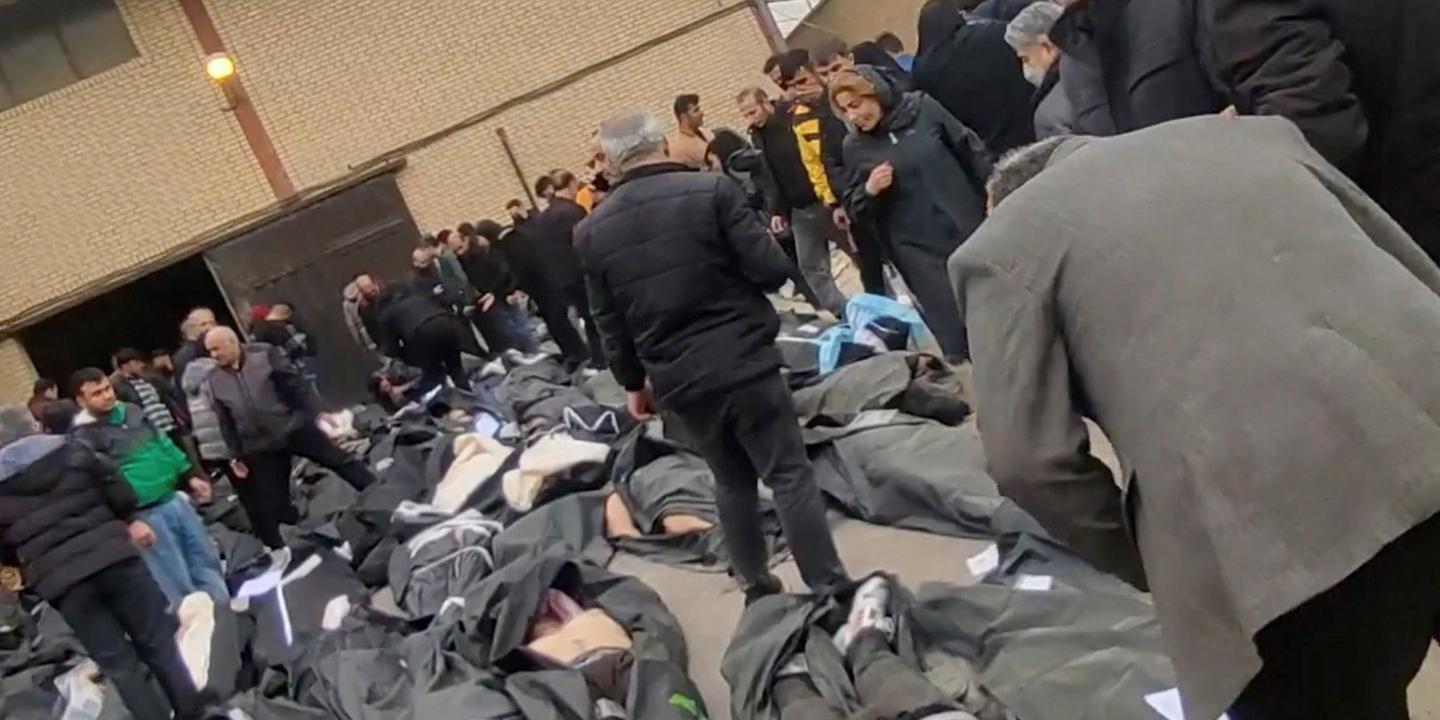
A physician interviewed by the Center for Human Rights in Iran from a hospital in Isfahan described eighteen consecutive head-trauma surgeries in a single night. Blood pooled in the gutter outside the operating theatre. Body counts were altered on hospital files. Corpses were taken from morgues at 3am by Basij agents and buried in unmarked rows; families who came looking were threatened with secret burials if they refused to recant.
Time, citing two senior Iranian health officials on 25 January 2026: “They ran out of body bags. They used semi-trailer trucks instead of ambulances.”
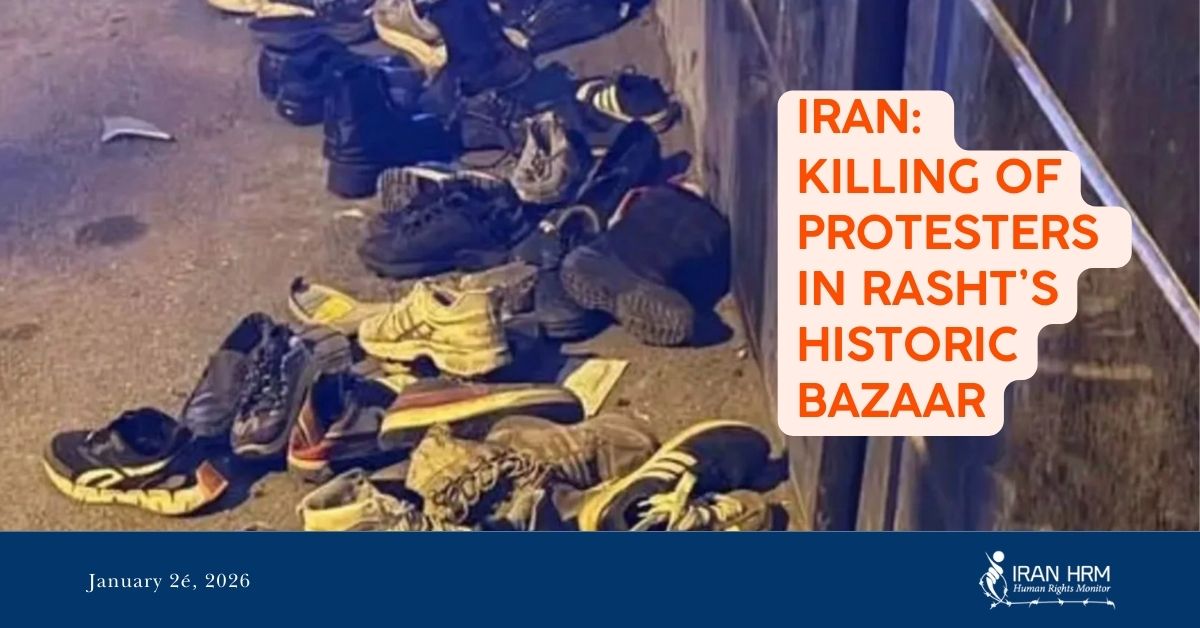
In Rasht, IRGC and Basij forces set fire to the historic covered bazaar after blocking the exits, then opened live fire on civilians fleeing the smoke. HRANA documented at least 392 dead in Rasht alone; Iran HRM recorded up to 3,000. Survivors described “finishing shots” administered to the wounded.
“We were walking in blood.”
Iranian doctors and nurses, speaking to Le Monde on condition of anonymity, described emergency wards where the floor could no longer be cleared between patients. One physician at a Tehran public hospital said staff worked through three consecutive shifts removing bullets from skulls and chests; the corridors filled with the wounded faster than orderlies could carry them out.
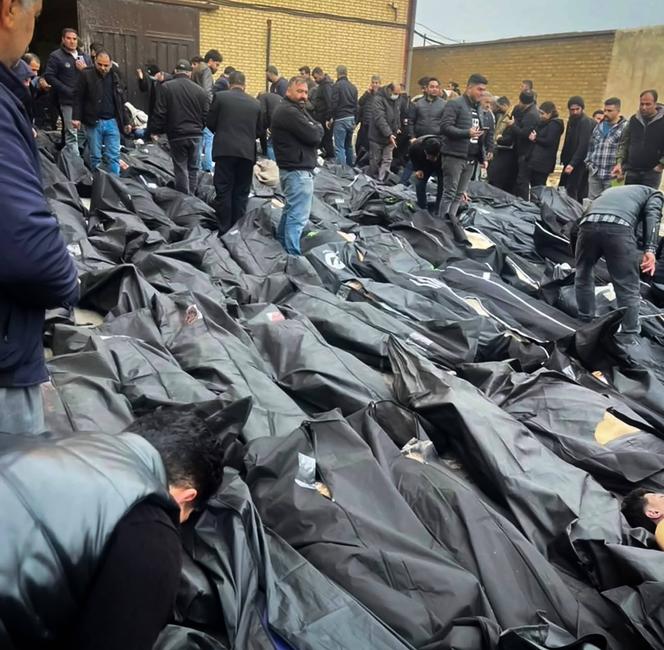
“We were walking in blood,” a junior surgeon told the paper. “The water from the mops came out red. They brought children. They brought boys whose faces were destroyed.” Hospital administrators were ordered, on pain of dismissal, to record protest casualties under unrelated diagnostic codes — “car accident,” “fall from height,” “unknown cause.” The body bags ran out on the second night.
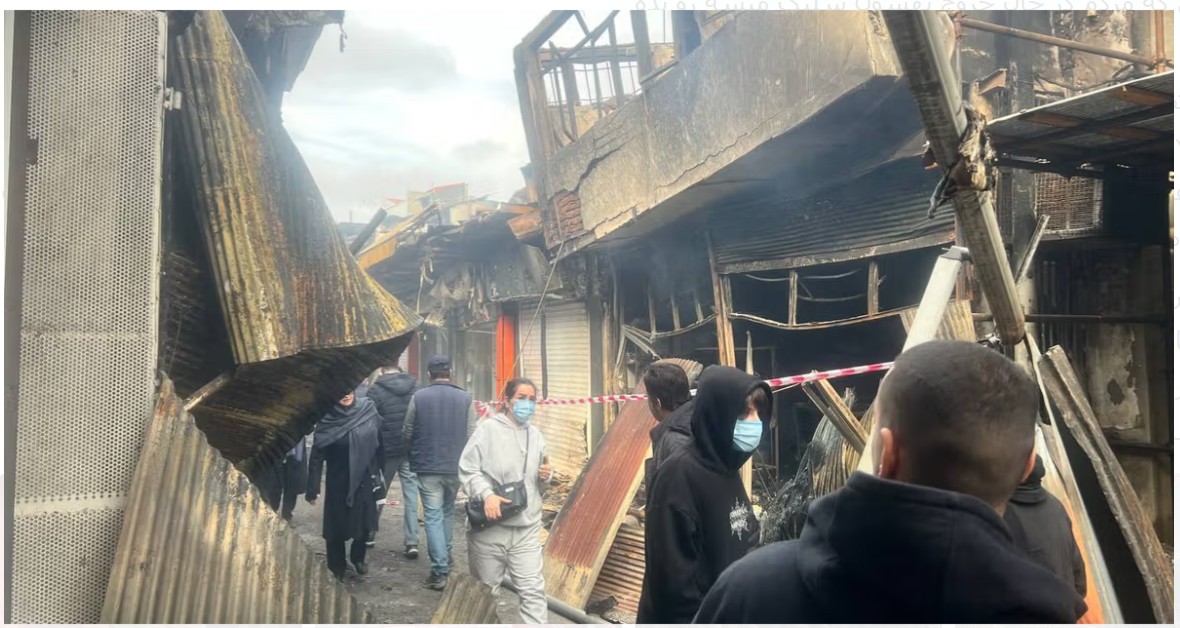
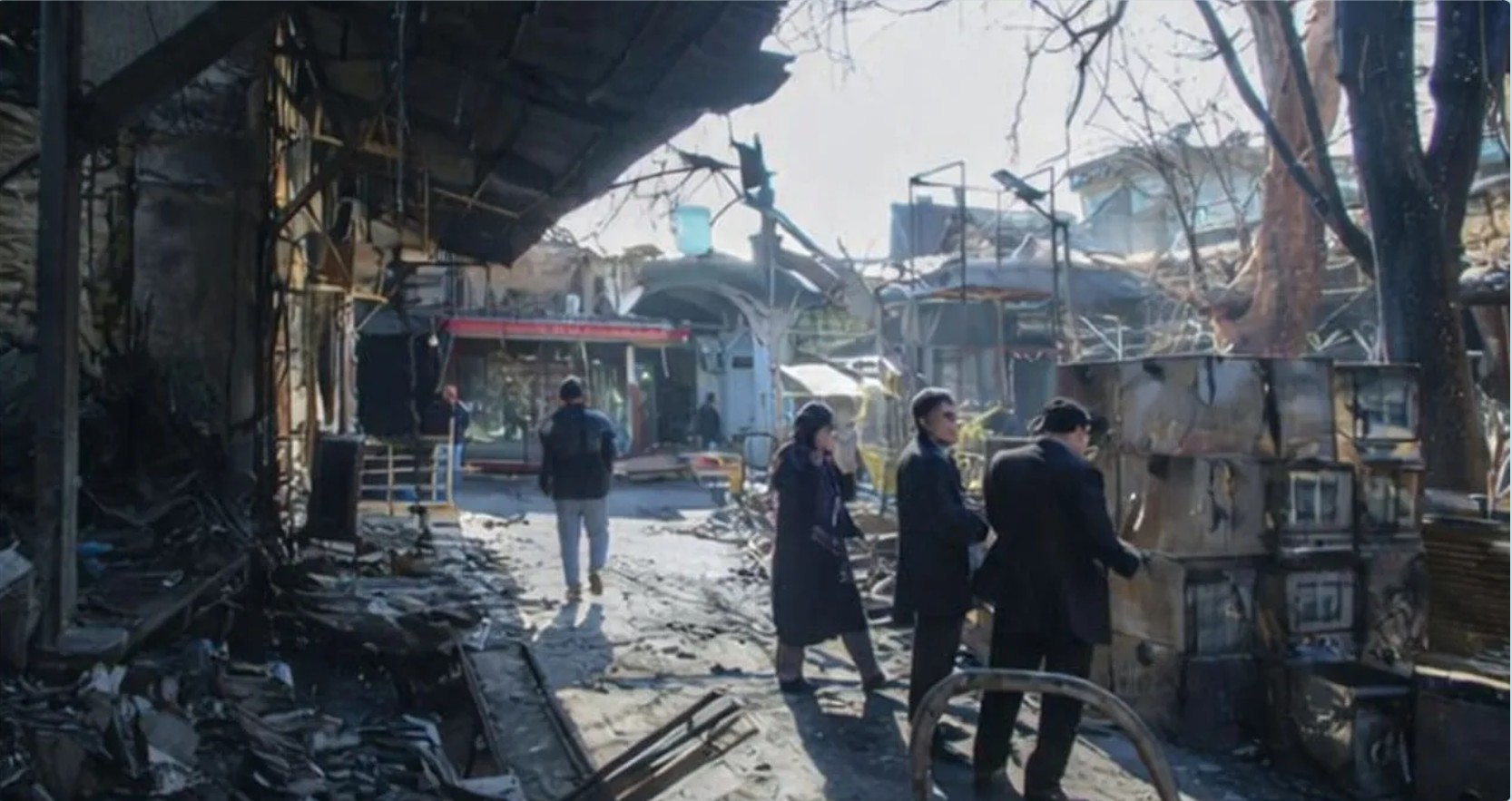
Outside the hospital walls, IRGC and Basij units staged the aftermath of the Rasht bazaar fire — exits welded shut, then live fire on those who tried to escape. The image below is what the bazaar's surviving traders found at first light. Washington Post · Iran HRM.
The faces behind the figures.
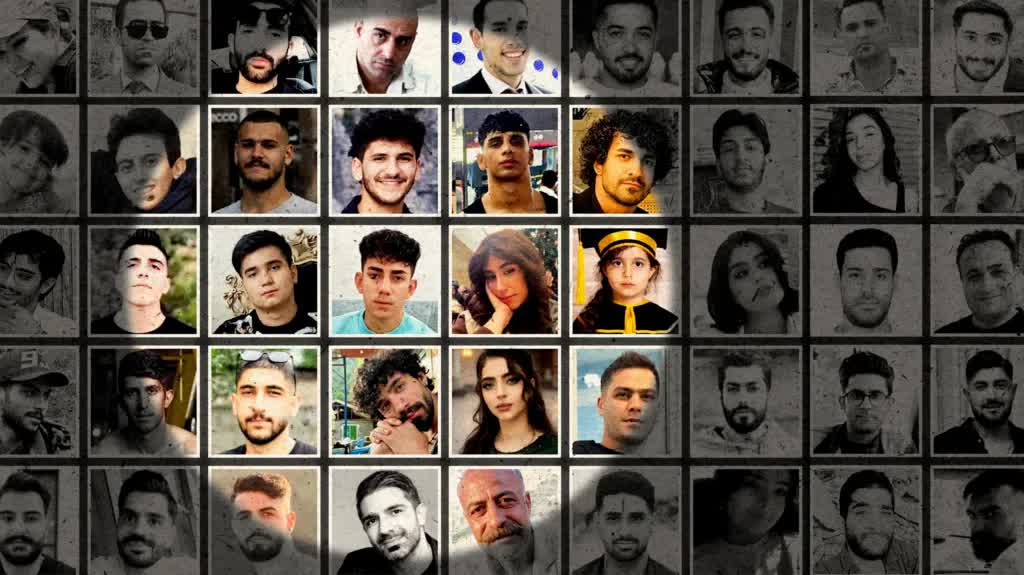
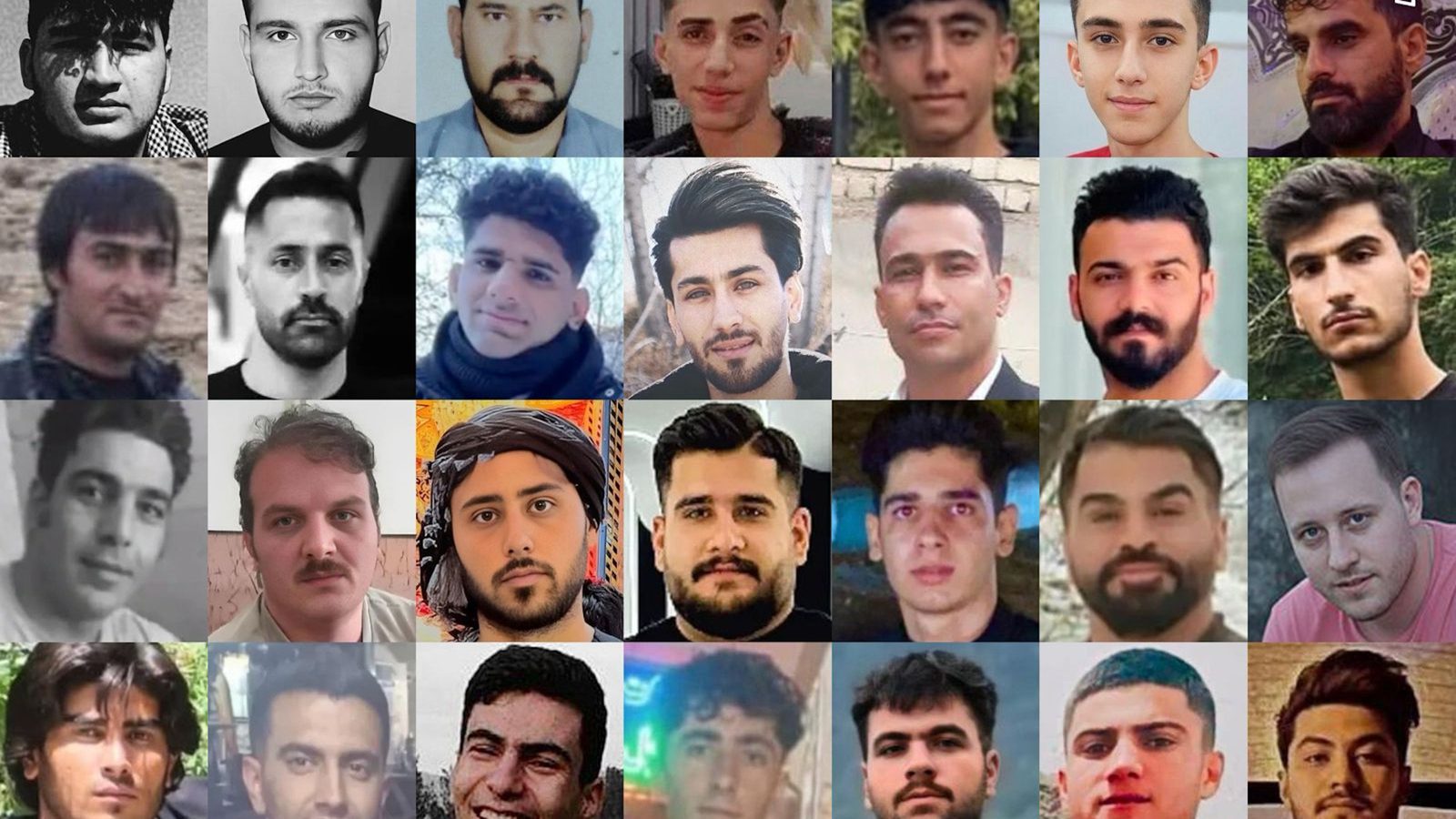
Amnesty International published the photographs of twenty-eight of the named dead from the first ten days of January 2026 — a collage that the Iranian state had spent weeks trying to scrub from the open internet. Each face is a small refusal of the regime's preferred ending, in which protesters become statistics and statistics become rumour.
The collage is not exhaustive. HRANA and Iran Human Rights were still verifying new names every day at the time of writing — and the regime was still arresting families who tried to publish them.
Fire, entrapment, live fire.
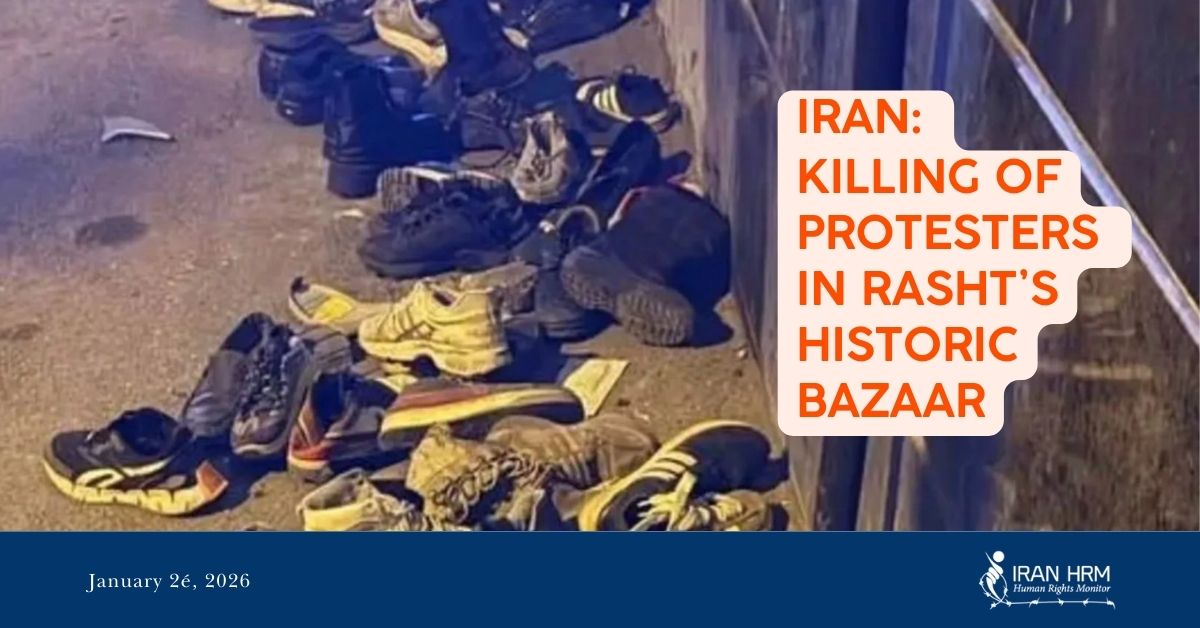
Field testimonies and visual evidence indicate that security units of the regime set fire to Rasht's crowded covered bazaar, blocked the exits, and opened live fire on unarmed civilians fleeing the smoke. Iran Human Rights Monitor, 22 January 2026.
How the operation unfolded.
According to multiple eyewitnesses, video, and images compiled by Iran Human Rights Monitor, large crowds had moved toward Rasht's city centre and into the historic bazaar on the evening of 8 January. Security forces first dispersed the crowd with tear gas. As people persisted, heavily armed units intervened — blocking exits and igniting fires inside the covered market.
As smoke and flame spread through the alleys, civilians sheltering in shops were forced to flee. At that point, security forces opened up with live ammunition and shotgun pellets on those running from the smoke. Witnesses said many of those shot were unarmed; some were killed by what survivors described as finishing shots after they had already fallen.
Footage recorded that evening captures continuous gunfire and reports of multiple casualties within minutes. Others described being trapped in dead-end alleys as the fire advanced, receiving no response to calls for emergency services, and being shot from behind once they made it back into the open street.
Visual evidence of a deliberate assault.
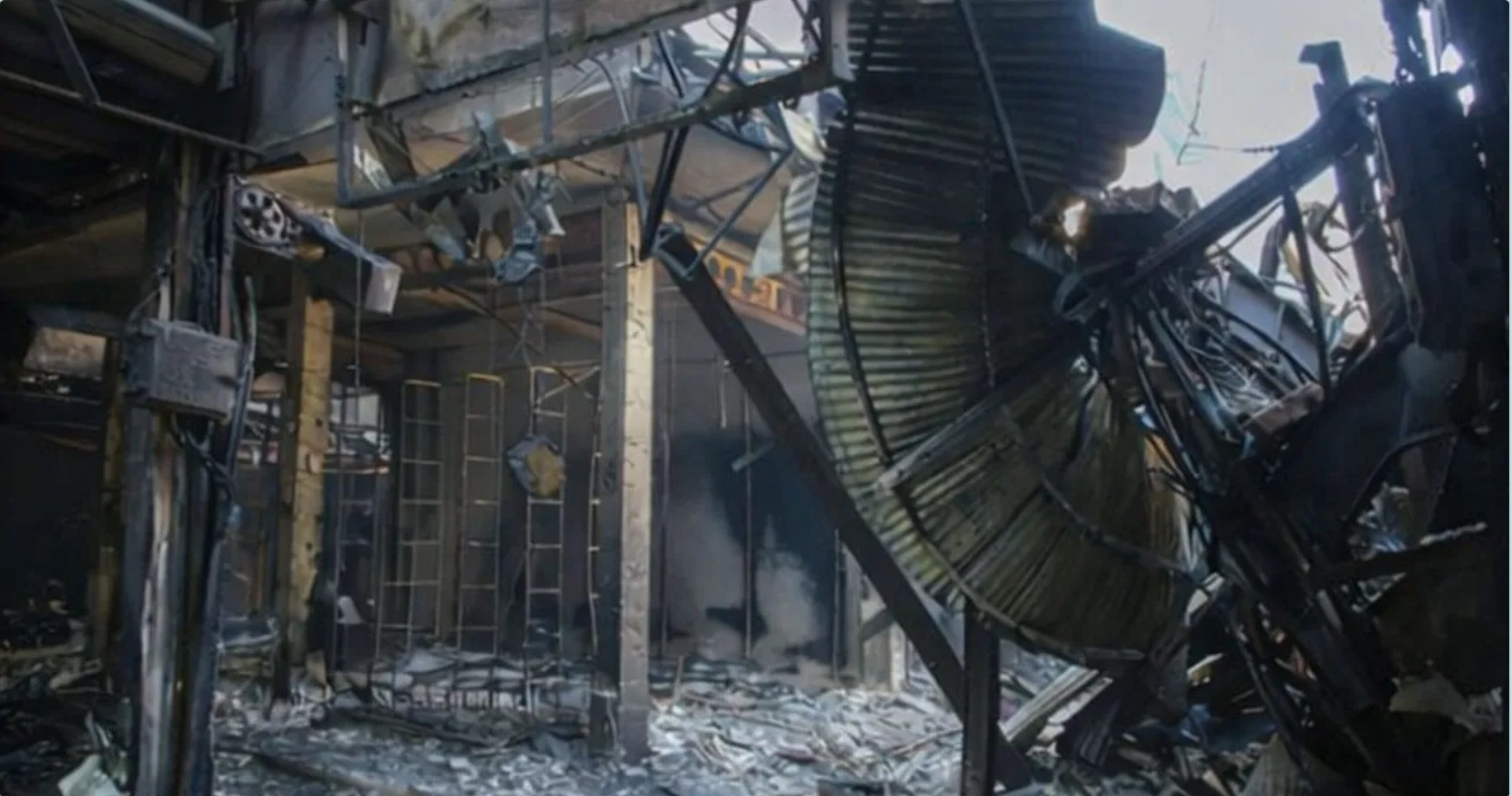
Photographs from the morning of 9 January show burnt-out structures, charred shop fronts, and corridors of destruction running along entire bazaar arcades — a pattern consistent with intentional, accelerant-aided ignition rather than a single accidental fire. Iran HRM notes that the deliberate use of fire in a civilian gathering place, the blocking of escape routes, and the firing of live ammunition at unarmed individuals constitute grave violations of international human rights law — the right to life and the prohibition of cruel and inhuman treatment.
Carried out in a widespread or systematic manner, the same body warned, such acts may amount to crimes against humanity under international legal standards. What occurred in Rasht's historic bazaar was not an isolated clash; the available evidence indicates a deliberate operation in which civilians were directly targeted.
Engineered denials, vanished children.
In the weeks after the January massacres, Iran's Judiciary moved to a new strategy: serial, coordinated denials. The unprecedented volume of denials does not signal adherence to law — it signals the calculated use of the “preliminary investigation” phase to isolate defendants and strip them of any defence. Iran HRM, 28 February 2026.
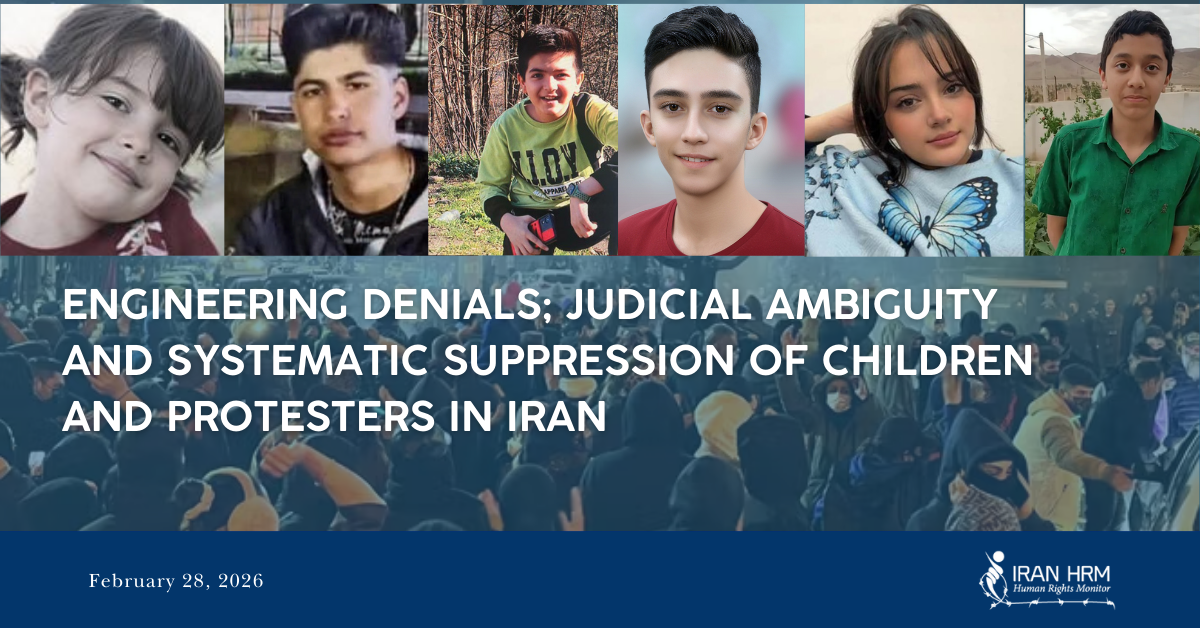
Mahsa Sarli, 12 — criminalising childhood.
On 24 February 2026, judicial authorities — while denying any death sentence — confirmed that Mahsa Sarli, twelve years old, was being held on charges of “propaganda against the state” and “membership in a group with the intent to disrupt national security.” Both charges, under Iran's own 2013 Islamic Penal Code, are unassignable to a child of her age: individuals between 9 and 15 do not bear adult criminal responsibility, and only educational measures may be applied.
Her detention also violates the Convention on the Rights of the Child, to which Iran is a signatory — Article 37 (no arbitrary detention of children), Article 40 (specialised juvenile justice), Articles 13 and 15 (freedom of expression and assembly), and the over-arching principle of the best interests of the child. By Iran's own Code of Criminal Procedure, a child must be transferred immediately to a Juvenile Prosecution Office; interrogation by security agents and trial in a Revolutionary Court are explicitly prohibited.
On 23 February, the Judiciary spokesperson described detained protesters under the age of eighteen as people who “committed criminal acts and remain in detention while their cases are processed” — a labelling, before any conviction, that violates the presumption of innocence enshrined in Article 14 of the ICCPR.
The Kiani-Vafa brothers — justice sacrificed for speed.
On 23 February 2026, Asadollah Jafari, Chief Justice of Isfahan Province, denied that death sentences had been issued against Saman, Arman, and Rahman Kiani-Vafa — three brothers swept up in the January protests — and praised the local judiciary for processing “the cases of rioters with speed, precision, and decisiveness.”
That insistence on speed in capital cases is itself the violation. Article 14(3) of the ICCPR guarantees the accused “adequate time and facilities for the preparation of a defence”: time to study the file, consult counsel, prepare evidence, and call witnesses. The UN Human Rights Committee has repeatedly held that capital cases must meet the highest fair-trial standards — and that no exception applies, even in “security cases” or declared emergencies.
The pattern is consistent. Iran HRM documents coordinated denials across dozens of state-affiliated outlets on 24 — 25 February: a strategic attempt to saturate the media space, quiet international outcry, and complete an unfair trial in silence during the “investigation” phase. Holding defendants in that phase for prolonged periods — without independent counsel or access to case details — itself constitutes arbitrary detention under Article 9 of the ICCPR. For minors, Articles 37 and 40 of the CRC make the violation doubly grave.
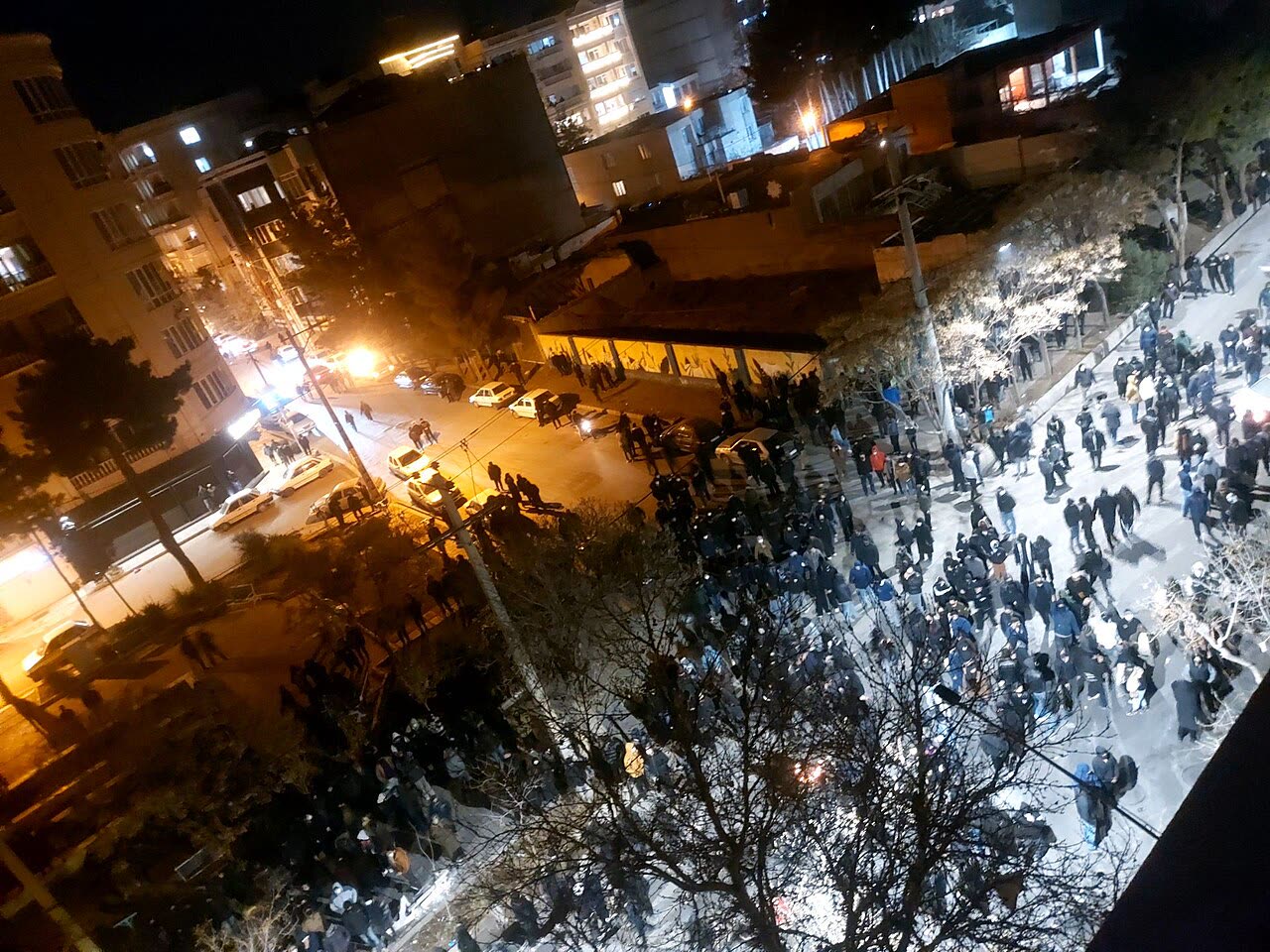
Inside the protest cities.
The cities themselves do not feature in Western broadcast coverage. Most of what the world saw came through diaspora windows: a Berlin Tiergarten, a London Trafalgar Square, a Washington Lafayette Park. The cities below were the ones being hollowed out — Neyshabur, Rasht, Marvdasht, Azna, Javanrud, Mashhad, Kermanshah — places without correspondent bureaux, where the bandwidth was throttled to dial-up and the only camera was the phone in the pocket of the boy who would be dead by morning.
“They came back with their cousin in a sheet. The shop where he worked is still open. Nobody can put their name in the window.” — testimony collected by CHRI, Isfahan, 16 January 2026.
Children, students, shopkeepers.
Seven names from a list whose lowest verified count runs into the tens of thousands.
Mass hangings during and after the war.
With Khamenei dead and his son Mojtaba installed on 9 March 2026, the regime returned to the only instrument it had ever fully trusted.
Content warning: this section contains portraits of executed prisoners and references to state killings.
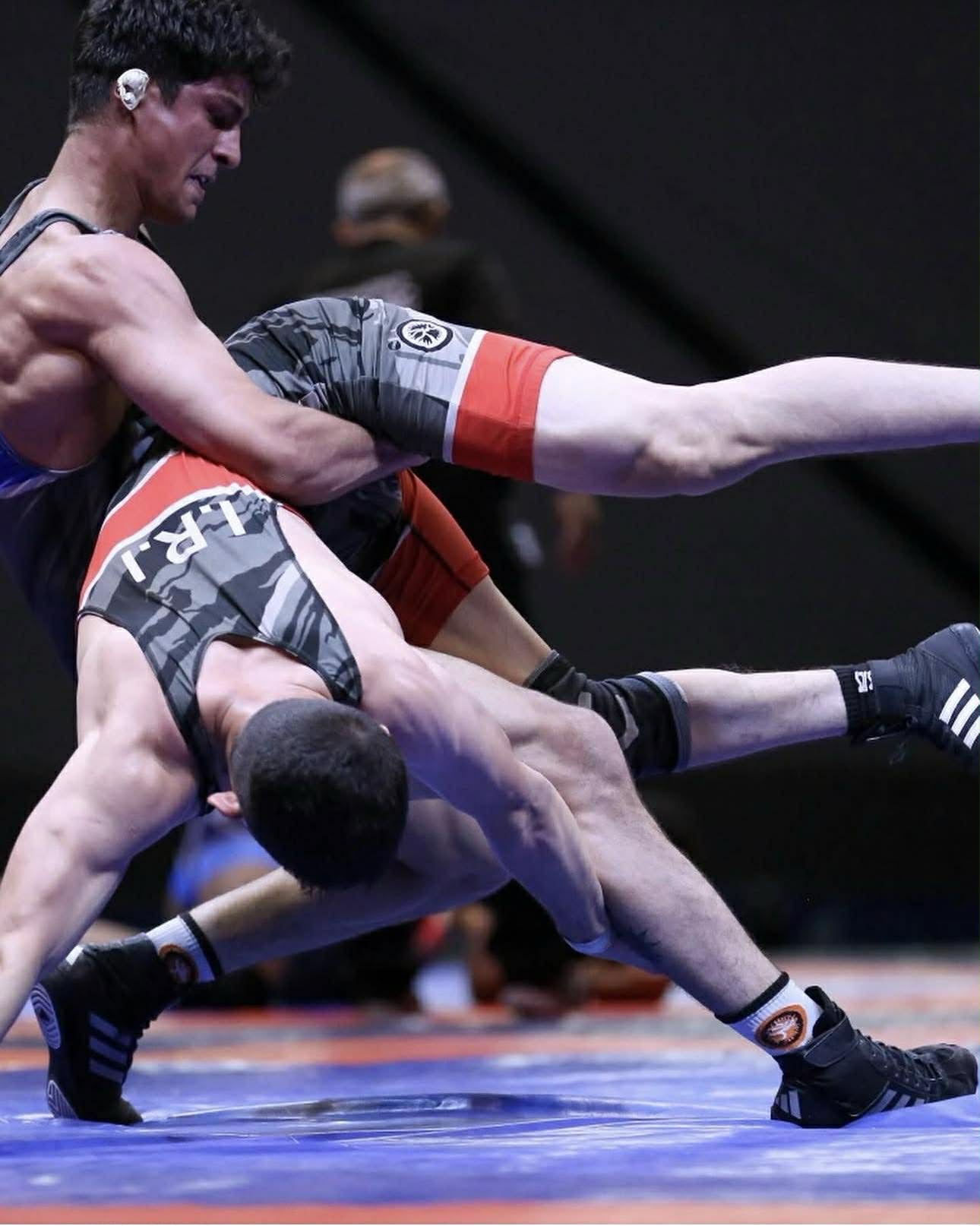
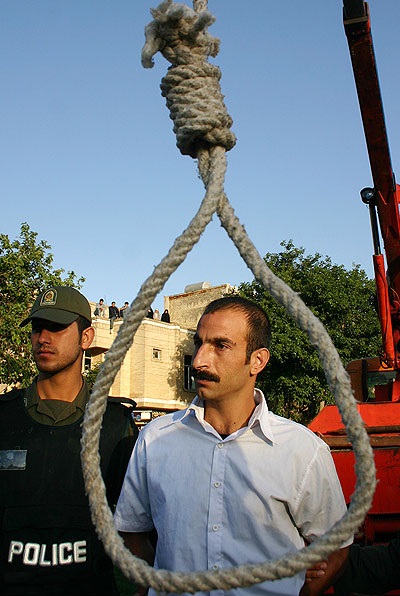
Hanged 19 March 2026 on charges of moharebeh for allegedly damaging a Basij vehicle. Family given less than twelve hours' notice. New York Times · Wikipedia.
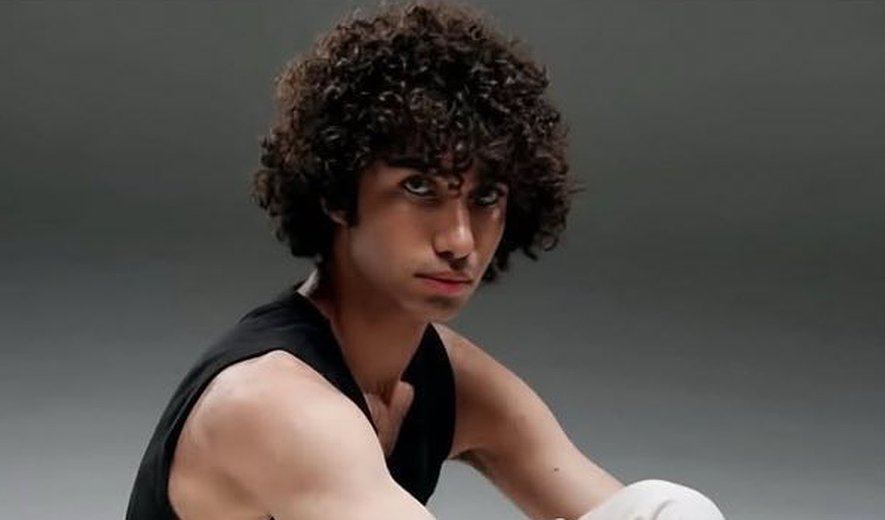
Hanged April 2026 on charges related to burning government property during the January protests — a sentence handed down after a closed trial without independent legal representation. Photo via Iran Human Rights.
Hanged on 19 March 2026 — charges of moharebeh (“waging war against God”) for allegedly damaging a Basij vehicle. His family was given less than twelve hours' notice. New York Times.Saleh Mohammadi, 19 — star wrestler from Qom
Arrested 8 January, hanged 14 January 2026 after a four-day closed trial — a clothes-shop owner whose only documented offence was being on the street.Erfan Soltani — Fardis
Eighteen years old. Hanged in April 2026 on charges related to burning government property during the January protests.Amirhossein Hatami
The first woman linked to the 2025–2026 uprising to face execution — sentenced to death alongside her husband and two others for allegedly throwing objects from a rooftop.Bita Hemmati
A hanging crane every forty-eight hours — mostly teenagers and shopkeepers — under near-total information blackout.
The texture under the headlines.
Two weeks after the strikes began, Iranians who had previously supported foreign action wrote to the BBC. We do not paraphrase them.
“For years we have protested. Every time they silence us. When the strikes began, I thought this is something the regime cannot withstand. Now I see fear in people's eyes. I can't find peace anymore. I wake up either to the sounds of explosions or to nightmares about them.”Sama, 31 — engineer, Tehran
“Witnessing the massive fires and hearing the explosions, seeing frightened children in tears — what if we're left with ruins and the mullah government is even more oppressive?”Mina, 28 — teacher
“People claim change must originate from within — as if we haven't made attempts. For heaven's sake, have these people forgotten the countless body bags of slain protesters? Wasn't that just two months ago?”Reza, 40 — engineer, Isfahan
“It is an insult to Iranian people when you call a discriminatory law part of our culture.”Masih Alinejad — Yale Law School, 2019