The World's Hypocrisy.
The dominant Western posture toward the 2026 war was “restraint” — a humanitarian framing that presented itself as the moral position. Its actual record on Iranian lives is the opposite of what it claims.
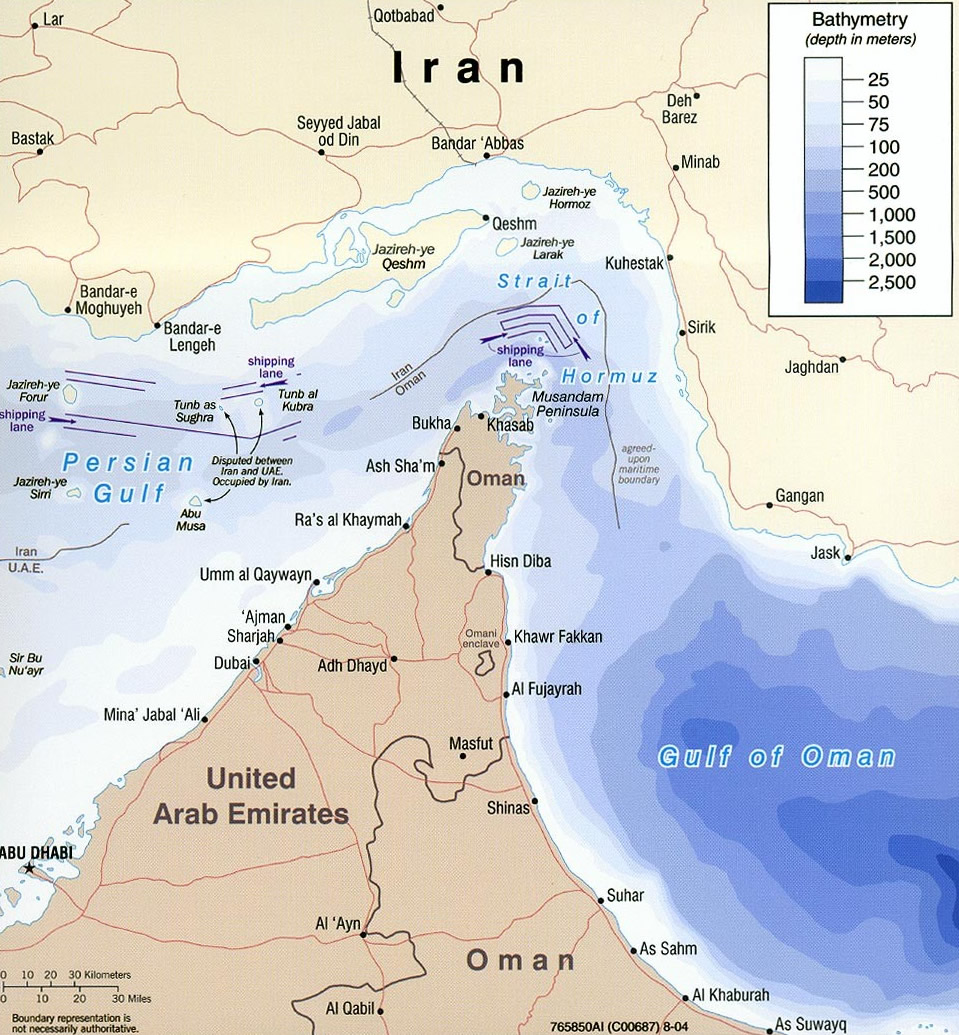
Sanction the symbols, license the barrels.
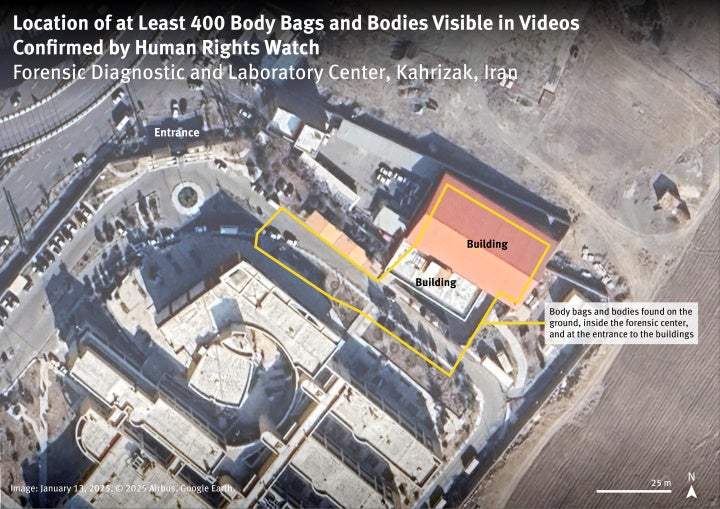
During the very months that European chancelleries pleaded for de-escalation in the name of civilian protection, the Islamic Republic was killing civilians at a faster rate than at any moment in its history — tens of thousands in two nights, then a political hanging every two days. The “no to war” position did not save those lives. It was deployed against the only force the regime could not absorb — external pressure on its leadership — while doing nothing to halt the internal violence already in motion.
Follow the oil. In September 2025, three months before the Crimson Winter, Iran exported 2.13 million barrels per day of crude — the highest monthly figure of the year, a level above the first Trump “maximum-pressure” peak. Roughly 87 percent went to China, sold at USD 10–30 below Brent, settled through a 45-day shadow-banking chain. FDD, Oct 2025.
China alone buys around 90 percent of Iran's oil, providing roughly 45 percent of the Iranian government's budget — the budget that pays the IRGC and the Basij. U.S.-China Commission, Nov 2025.
The slogan was about Western fuel pumps, not Iranian lives.
This is the structure: sanction the symbols of the regime, license its barrels. Sanction the morality police, license the tankers that pay for them. Designate the IRGC, then waive the oil flows whose taxes equip it. The Iranians being shot in the streets and hanged in the prisons are paying the bill for the cheap fuel the rest of the world prefers not to do without.
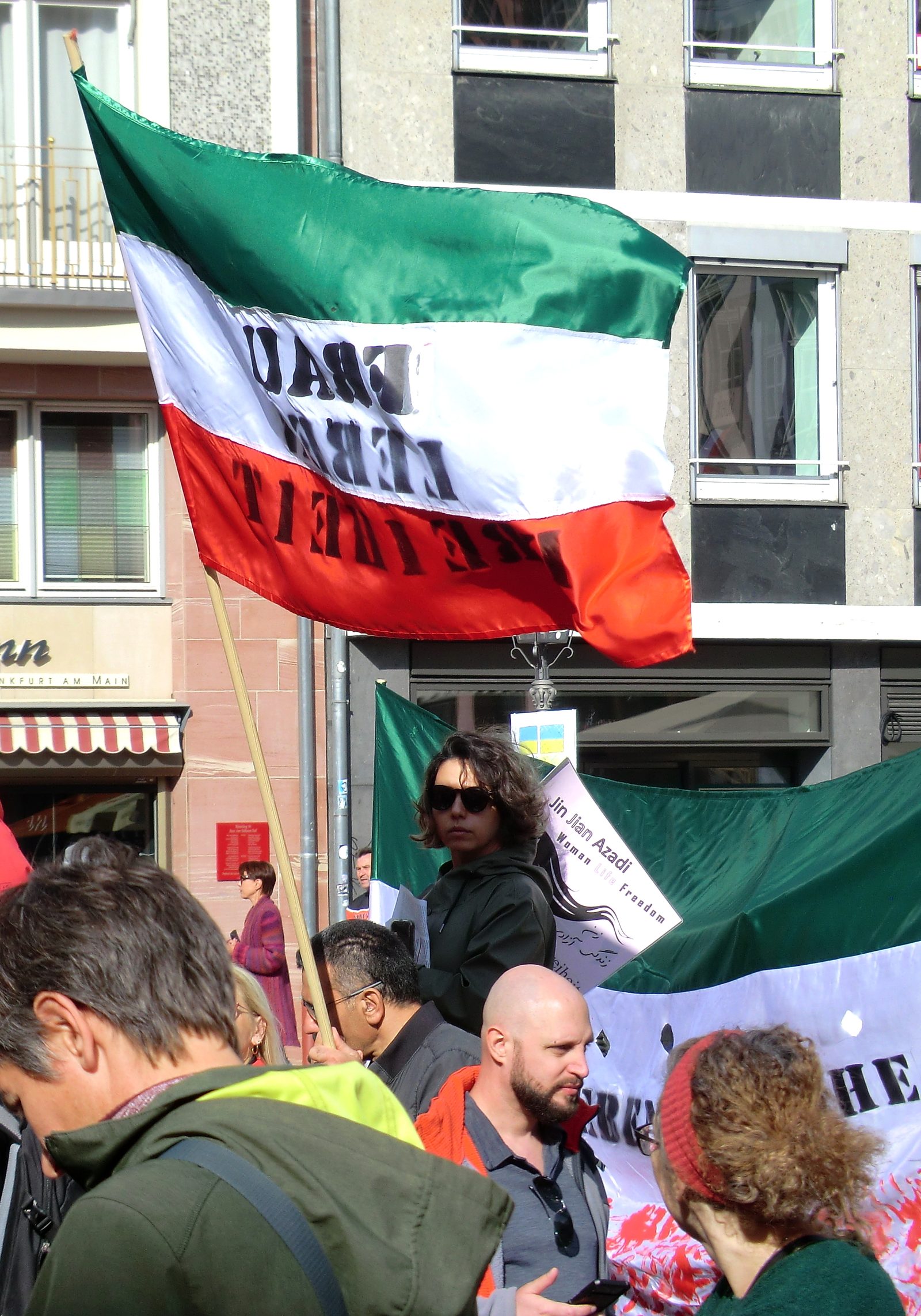
Then comes the slogan: no to war. As if war had not already begun — inside Iran, against Iranians, in 1981 and 1988 and 2009 and 2019 and 2022 and again in January 2026. As if the protesters who carried the banners of Zan, Zendegi, Azadi through their own city centres had not just buried thirty thousand of their own. As if forty-seven years of internal war could be wished away by Western placards.
What Iranians inside Iran have said clearly — in BBC and CHRI testimonies — is that the current rupture is not a tragedy to be avoided but the first opening in a generation through which the regime might actually fall. They are realistic about the cost. They are not asking the international community to liberate them; they are asking it to stop subsidising their captors.
Solidarity is not a slogan. It is enforcement of the IRGC designation. It is closing the loopholes that allow Iranian crude to reach Chinese ports. It is freezing the London real estate of regime insiders. It is opening visa pathways to the Iranians shot in the eye for unveiling. Anything less is the record this site already documents in sixteen chapters: silence, interests, and betrayal.
Three asymmetries.
Europe — words, sanctions, convenient caution.
The EU's first dedicated human-rights sanctions regime against Iran (Council Regulation 359/2011) dates to 12 April 2011. After Mahsa Amini's death, six rounds of expansions took the list to 204 individuals and 34 entities. On 18 January 2023 the European Parliament voted 598 to 9 to designate the IRGC as a terrorist organization.
The EU Council did not follow. Foreign-policy chief Josep Borrell argued no court had ruled — though the Council's own legal opinion, leaked in 2024, said no such EU-court ruling was required. The IRGC was finally listed in late January 2026, after the Crimson Winter and after the geopolitics had moved on.
EU–Iran trade collapsed from €18 billion/year to €3.7 billion in 2025. INSTEX — the special-purpose vehicle France, Germany and the UK launched in 2019 — completed exactly one transaction (~€500,000 of medicine) before being wound down in 2023. When Iran closed the Strait of Hormuz in February 2026, Europe's fossil-fuel import bill rose by €27 billion in sixty days.
Washington and Jerusalem — designations, bans, war.
Iran has been on the US State Sponsors of Terrorism list since 19 January 1984. The IRGC was designated a Foreign Terrorist Organization on 8 April 2019 — the first time a component of another government's armed forces had been so listed.
The 2015 JCPOA, signed 14 July, was abandoned by the Trump administration on 8 May 2018. The travel ban (EO 13769, 27 January 2017) and its 2025 successor caught Iranian students, doctors, and refugees fleeing the regime — collateral damage of a policy the regime barely felt.
Operations in the shadow war culminated in the assassination of nuclear architect Mohsen Fakhrizadeh (27 November 2020), Israel's Operation Days of Repentance on 26 October 2024, and the joint US–Israeli Operation Epic Fury of 28 February 2026.
The MAHSA Act, signed by President Biden on 24 April 2024, was the first US law to combine human-rights and terrorism mandates against the regime's leadership.
People versus regime — the inversion.
Investigations by Bloomberg, The Times, and Transparency International UK have documented over £200 million of UK property linked to figures of the Iranian regime. Mojtaba Khamenei, the Supreme Leader's son and reputed heir, reportedly owns London apartments overlooking the Israeli embassy. The financier Ali Ansari is alleged to have assembled a £150 million property empire on his behalf — including £90 million bought in 2018 alone, while simultaneously financing the IRGC.
Meanwhile, Iranian students cannot enter US universities. Iranian doctors cannot attend conferences. Iranian families cannot bury their dead together. The asymmetry is policy, not accident. The remedy is also policy: open visa pathways for those fleeing the regime, harden asset-freeze enforcement against those running it.