Featured film
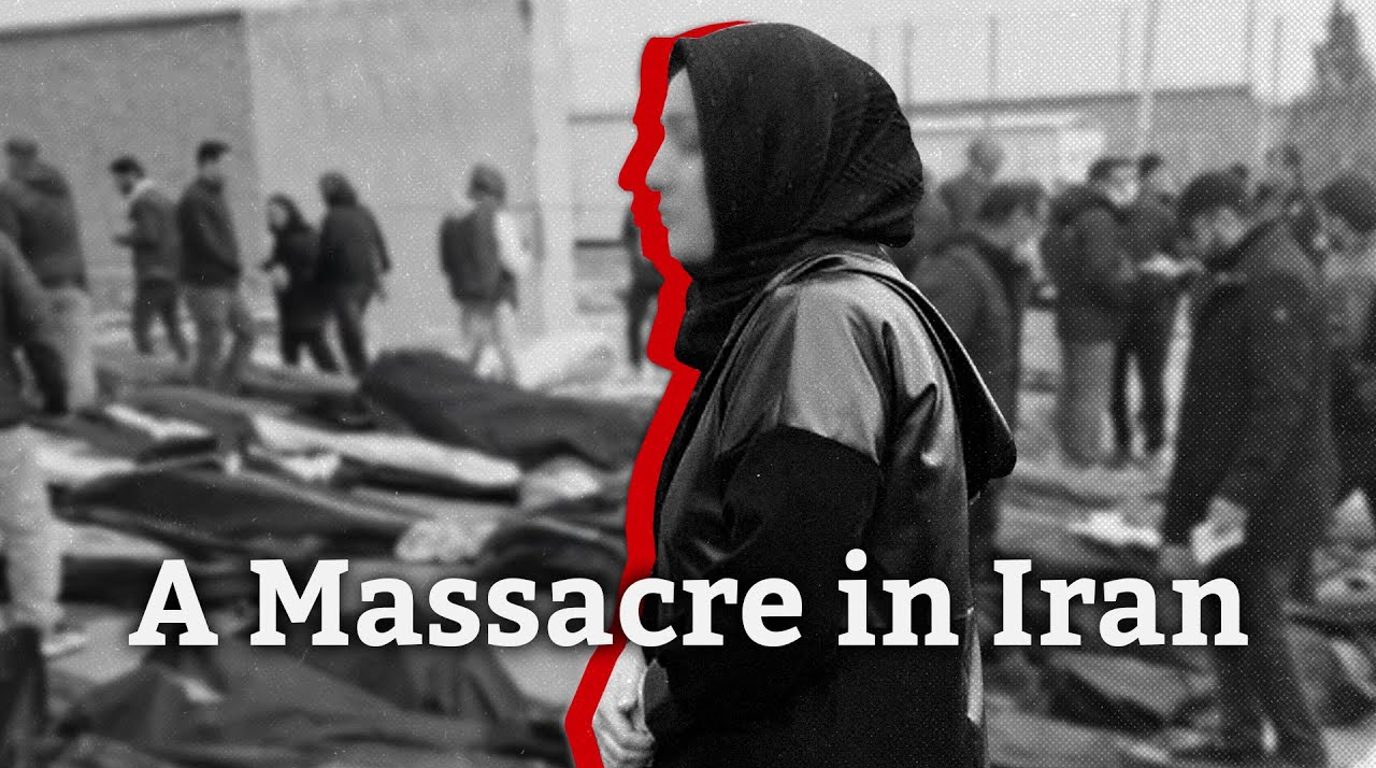
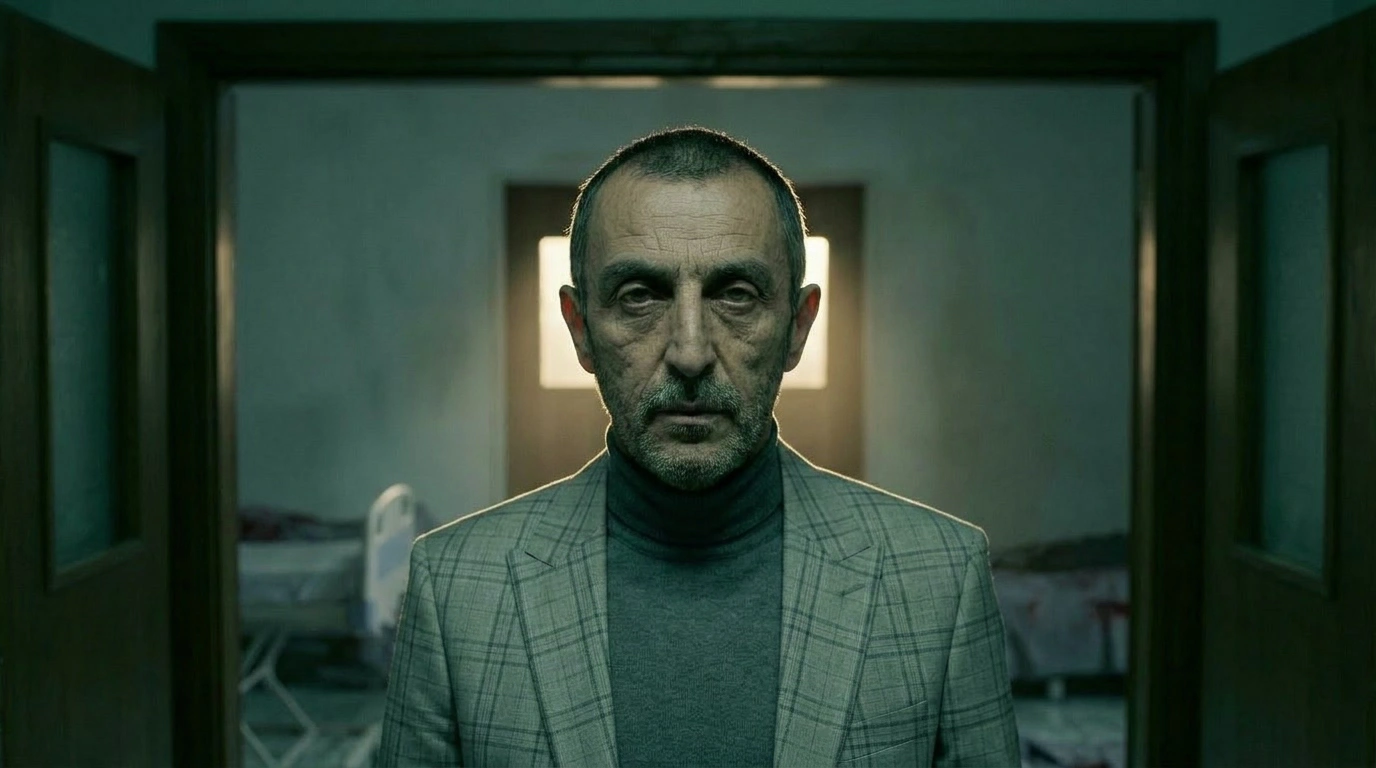
77 Hours — the film about Iran's Two Nights
A psychological thriller by Vahid Mahdavi, set across the nights of 8 and 9 January 2026. Watch the trailers, read the story, and see the documented record behind it.
How large is the Iranian diaspora? Country-by-country population figures for the United States, Canada, Germany, the UK, Sweden, Turkey and more, plus the diaspora's role in Woman, Life, Freedom.
Related: Israel, the US and Iran — how Iranians saw the strikes: the June 2025 twelve-day war, Operation Epic Fury in 2026, the targeting record, and the civilians killed anyway.
Featured film
77 Hours — the film about Iran's Two Nights
A psychological thriller by Vahid Mahdavi, set across the nights of 8 and 9 January 2026. Watch the trailers, read the story, and see the documented record behind it.
Tehrangeles, Toronto, London, Berlin, Paris, Stockholm, Sydney — the Iranian diaspora is the loudest, most persistent voice the regime cannot silence inside its borders.
More than five million Iranians live outside Iran. They are the children of 1979 and the children of every uprising since: the 1981 reign of terror, the 1988 prison massacres, the chain murders of 1998, the Green Movement of 2009, Bloody November 2019, the Woman, Life, Freedom uprising of 2022, and the Crimson Winter of 2026. Each wave added a generation to the exile. Each generation kept the documents, the photographs, and the names that the regime tried to bury.
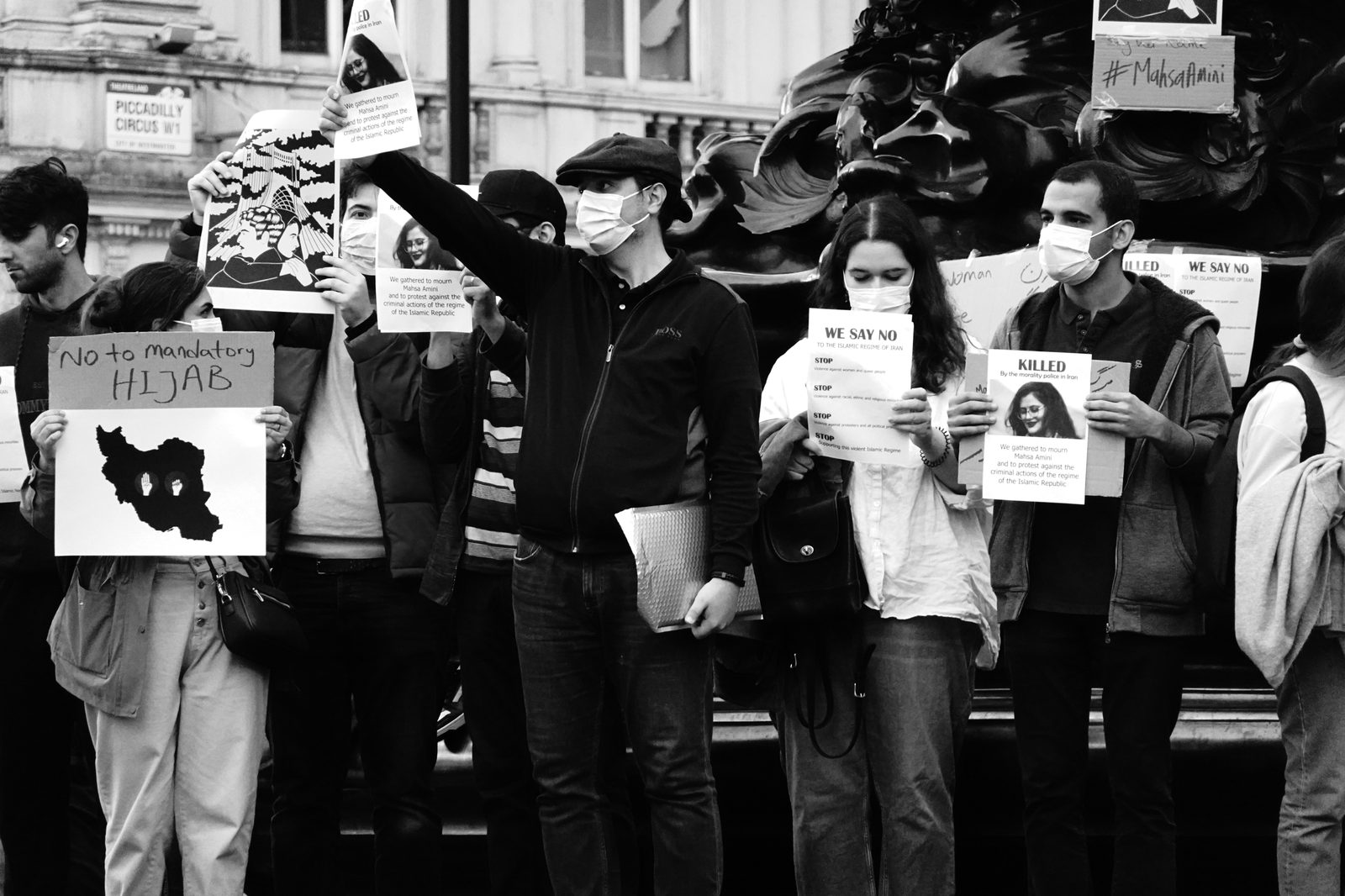
When the cameras leave a Tehran courtyard, when the internet is cut in Rasht, the next photograph the world sees is almost always taken from a Berlin avenue, a Toronto square, or a London plinth. The diaspora is not the uprising. But for forty-seven years it has been the uprising's archive.
Q: How many Iranians live abroad and where?
Estimates vary by source — these are conservative, drawing on the MIT Iranian-Americans study (2024), the UN International Migration Database, and embassy/consular figures.
Where Iranians live outside Iran, with the source behind each figure. Numbers are conservative and include naturalised citizens of Iranian origin where the national statistics office records them.
| Country | Estimate | Main communities | Source |
|---|---|---|---|
| United States | ~1,500,000 | Greater Los Angeles (Tehrangeles), Bay Area, Washington DC, Houston, New York | PAAIA / MIT Iranian-Americans study, 2024 |
| Canada | ~400,000 | Toronto (North York), Vancouver (North Shore), Montreal | Statistics Canada, 2021 census |
| Turkey | ~250,000 | Istanbul, Ankara, Van — largely post-2018 and post-2022 arrivals | UN International Migration Database / Turkish residence permits |
| Germany | ~250,000 | Hamburg, Berlin, Frankfurt, Cologne | German Federal Statistical Office |
| United Arab Emirates | ~150,000 | Dubai (Bur Dubai, Deira), Sharjah — largely merchant families | UN International Migration Database |
| United Kingdom | ~80,000 | London (Kensington, Maida Vale), Manchester | UK Office for National Statistics |
| Sweden | ~80,000 | Stockholm, Gothenburg, Malmö | Statistics Sweden |
| Australia | ~75,000 | Sydney, Melbourne, Perth | Australian Bureau of Statistics |
| Netherlands | ~45,000 | Amsterdam, The Hague, Utrecht | Statistics Netherlands (CBS) |
| France | ~30,000 | Paris and Île-de-France | UN International Migration Database |
| Norway | ~25,000 | Oslo, Bergen | Statistics Norway |
| Denmark | ~20,000 | Copenhagen, Aarhus | Statistics Denmark |
| Austria | ~20,000 | Vienna, Graz | Statistics Austria |
| Italy | ~15,000 | Rome, Milan — historically a student destination | UN International Migration Database |
| Japan | ~10,000 | Tokyo, Nagoya — mostly 1980s–90s labour migration | Japanese Immigration Services Agency |
| Iraq (Kurdistan Region) | ~10,000 | Erbil, Sulaymaniyah — Kurdish-Iranian political exiles | UNHCR |
Totals across all countries fall between four and eight million depending on whether second-generation citizens are counted. Smaller but historically significant communities exist in Israel, Armenia, Malaysia, India, Brazil and Switzerland.
Credible estimates put the Iranian diaspora at roughly four to eight million people worldwide. The wide range exists because national statistics count different things: some record country of birth only, others include second-generation citizens of Iranian descent, and none capture undocumented migrants. A working figure of about five million is the most commonly cited conservative estimate.
The United States, with roughly 1.5 million people of Iranian origin. The largest single concentration is in Greater Los Angeles, known as Tehrangeles, followed by the San Francisco Bay Area, Washington DC, Houston and New York.
Iran does not publish emigration data, and host countries measure the community differently. Figures based on country of birth exclude children born abroad; figures based on ancestry include them. Dual nationals, asylum seekers awaiting decisions and Iranians resident in Turkey or the Gulf on renewable permits are counted inconsistently or not at all.
In four main waves: after the 1979 revolution and during the Iran–Iraq war; through the 1990s for economic and educational reasons; after the 2009 Green Movement crackdown; and again after the 2022 Woman, Life, Freedom uprising and the 2025–26 Crimson Winter, which produced the largest outflow of journalists, lawyers and students in a decade.
It supplies what the movement cannot produce inside Iran: uncensored broadcasting through outlets such as Iran International and Manoto, verified casualty documentation through HRANA, Hengaw and Iran Human Rights, legal action under universal jurisdiction, and sustained street pressure on foreign governments in London, Berlin, Toronto, Los Angeles and Washington.
Q: Which cities have the largest Iranian diaspora communities?
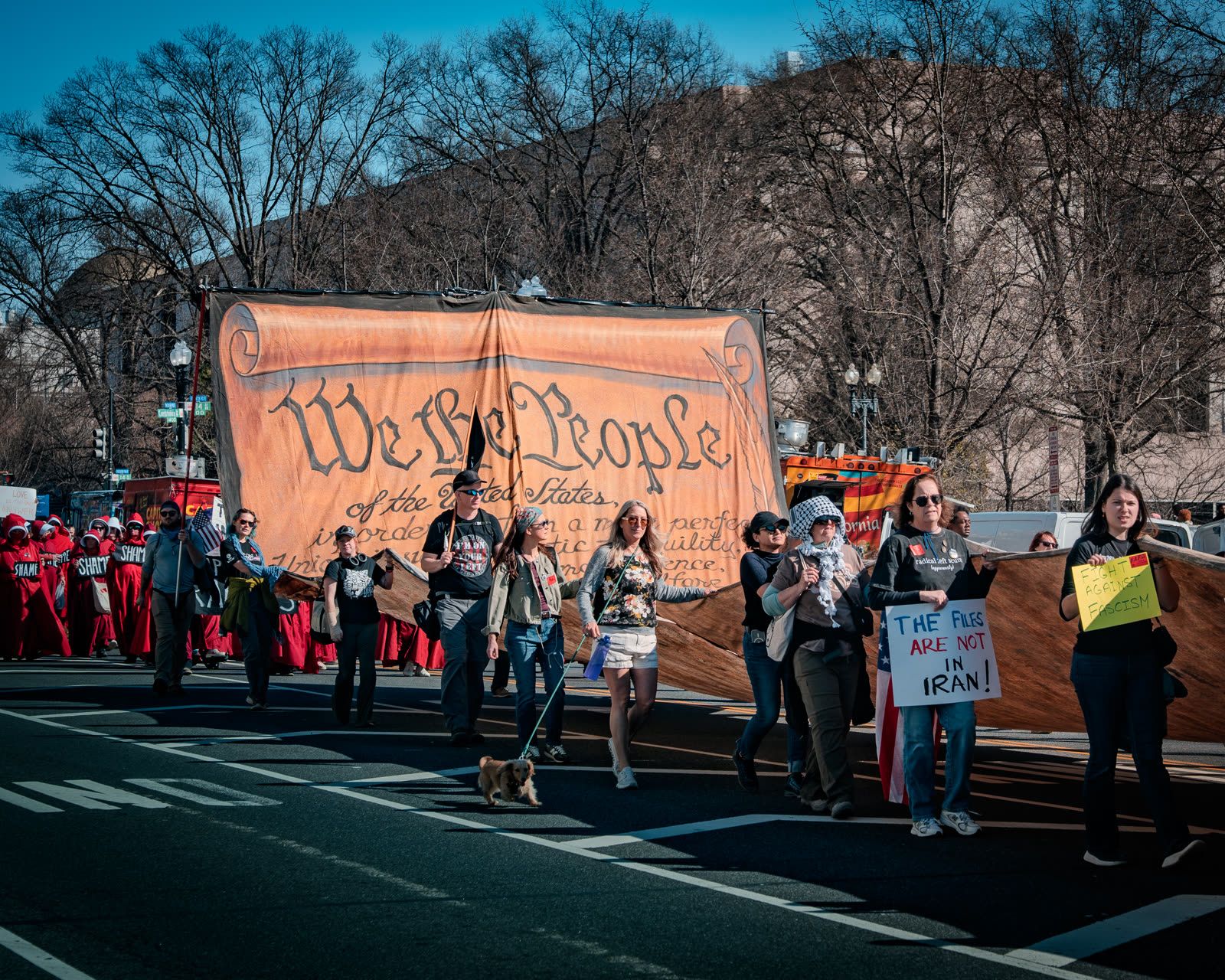
Los Angeles holds the largest Iranian community outside Iran — a stretch of Westwood Boulevard officially named Persian Square in 2010, surrounded by bookshops, cafés, satellite-TV studios, and the offices of the diaspora outlets that have, for forty years, kept Persian-language journalism alive while it was hunted inside Iran. Wikipedia · Tehrangeles.
From here came Manoto and the early generation of satellite news. Here also is the largest concentration of Iranian-American doctors, engineers, and academics in the country — and, in 2022 and 2026, some of the largest US protests in solidarity with the uprising. PAAIA polling consistently shows Iranian-Americans overwhelmingly opposed to the Islamic Republic, divided on what should replace it, and almost unanimously against the kind of travel ban that sweeps them up alongside the regime they fled.
In Toronto, Iranian-Canadians have organised yearly remembrance vigils for PS752 — the Ukraine International Airlines flight downed by IRGC missiles on 8 January 2020 — and weekly Saturday rallies at Mel Lastman Square and Queen's Park since 2022. The community lobbied successfully for the IRGC's listing as a terrorist entity by the Canadian government in 2024.
In London, Iranian-British protesters have rallied at Trafalgar Square and outside the Iranian embassy in Knightsbridge. London is also home to the largest Persian-language newsroom outside Iran — Iran International — whose journalists have lived under direct IRGC threats since 2023, including a foiled assassination plot revealed by British counter-terrorism police in early 2024.
What every diaspora capital shares is the same paradox: the Iranian state cannot silence them, but it can kill the families they left behind. Diaspora journalists who name names abroad routinely lose access to their parents' funerals and their children's schools at home. The cost of speaking is paid by people who never chose exile.
Q: What happened at the Berlin solidarity rally for Iran?
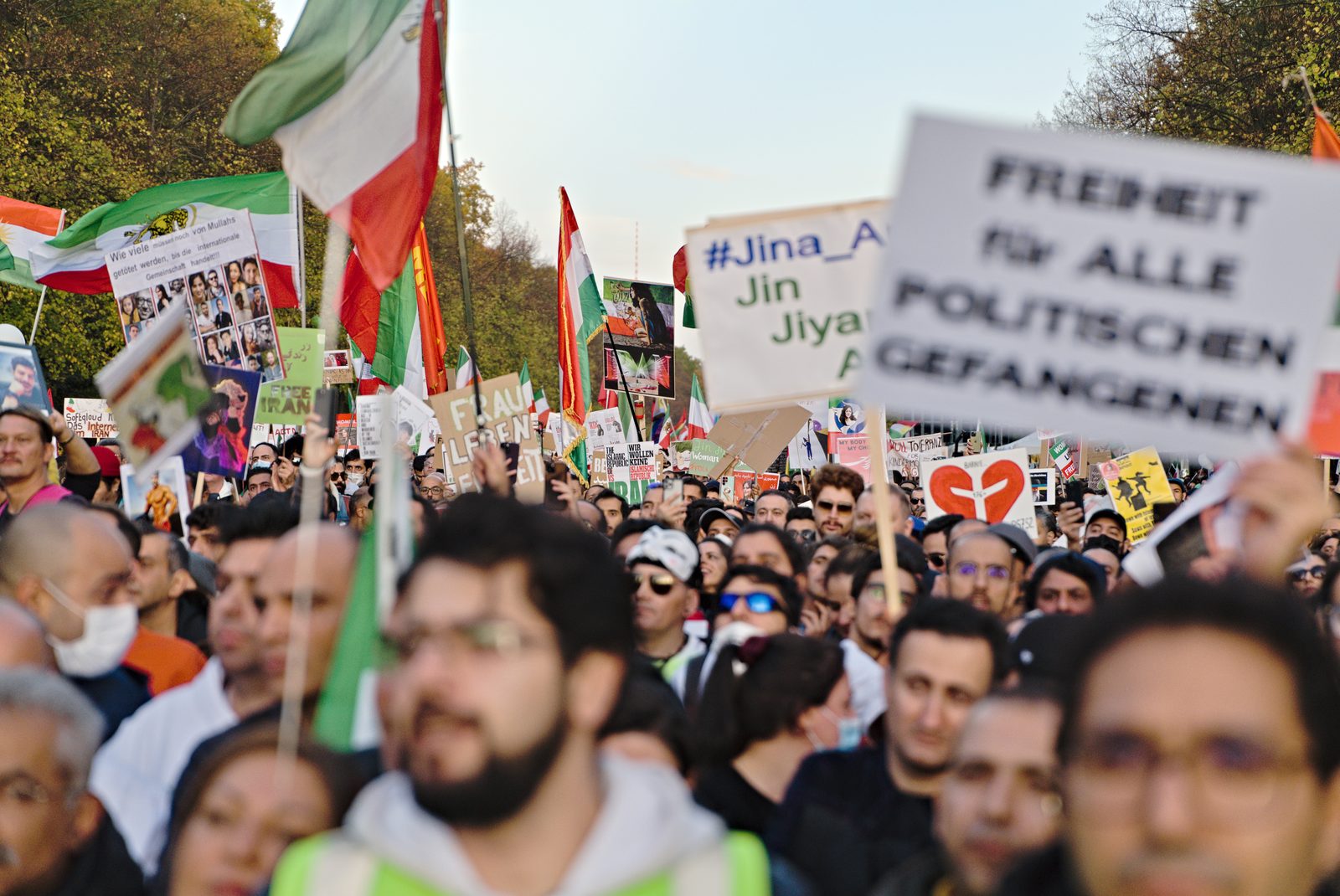
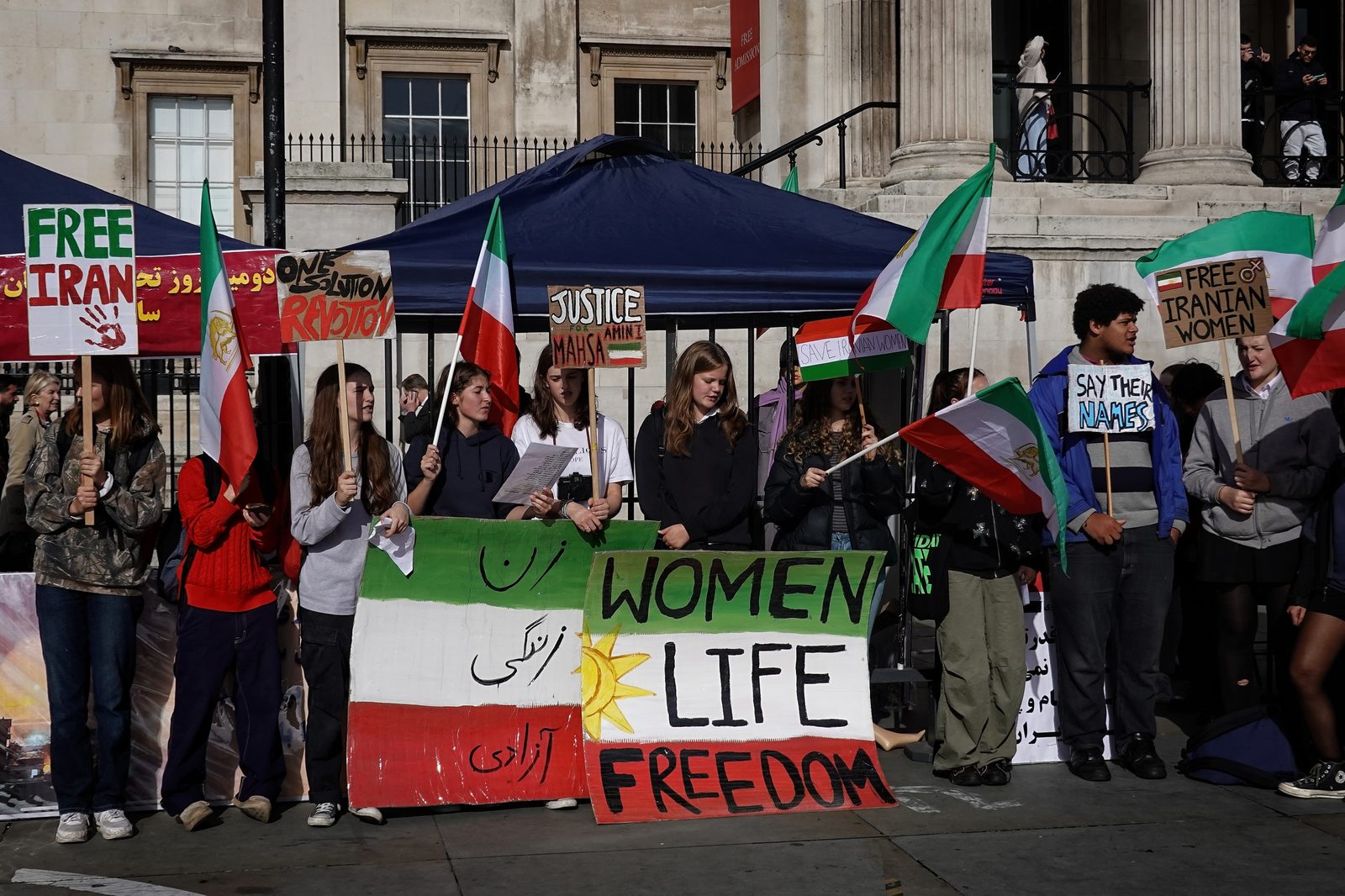
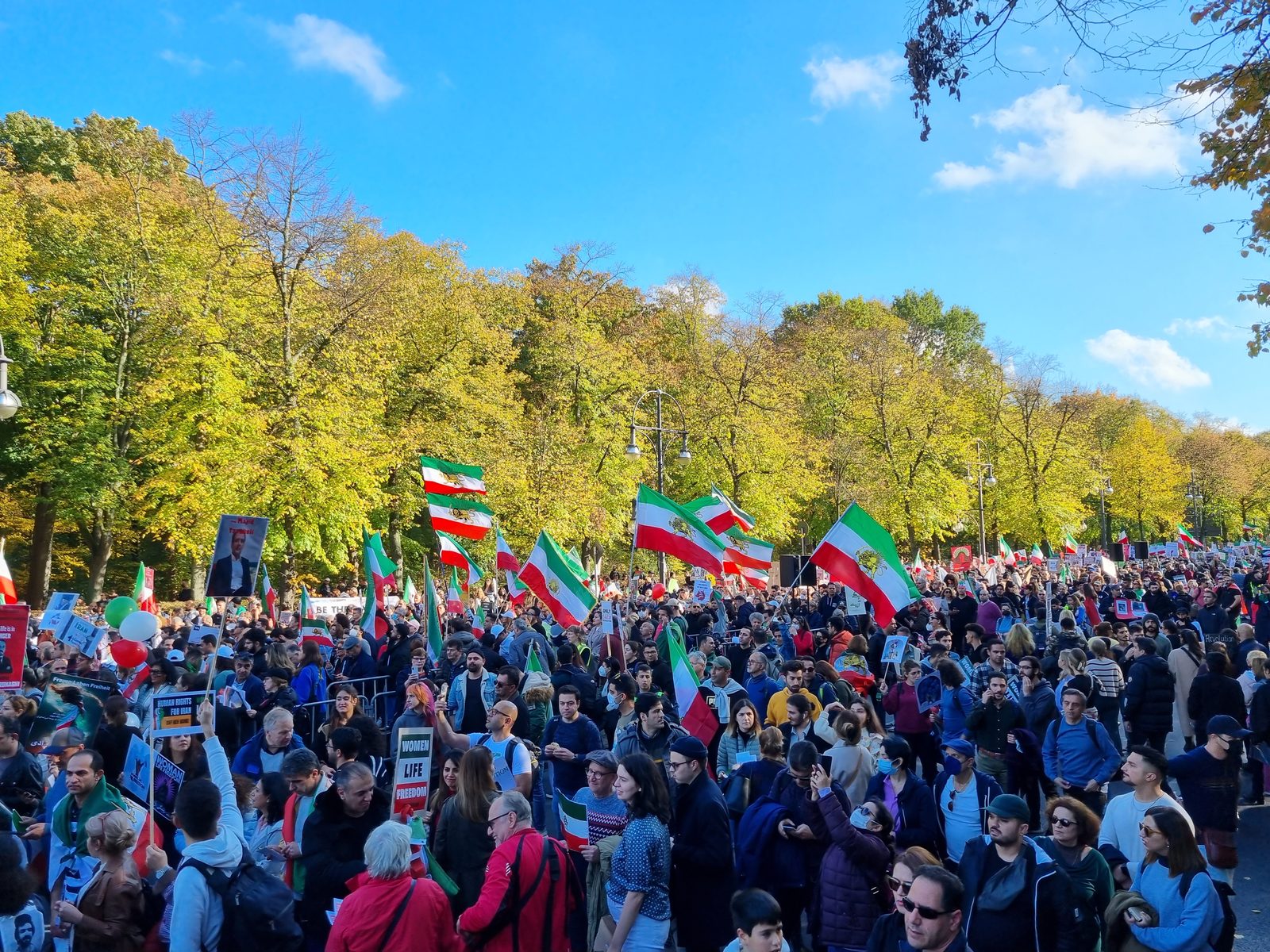
On 22 October 2022, between sixty and one hundred thousand people — BBC reported around 80,000 — gathered in Berlin's Tiergarten in solidarity with the Iranian uprising. Speakers included Hamed Esmaeilion, who lost his wife and daughter on PS752; Nazanin Boniadi; Shirin Ebadi, the 2003 Nobel Peace laureate; and the Berlin singer Aynur Doğan. The German Foreign Minister Annalena Baerbock visited the rally site afterwards.
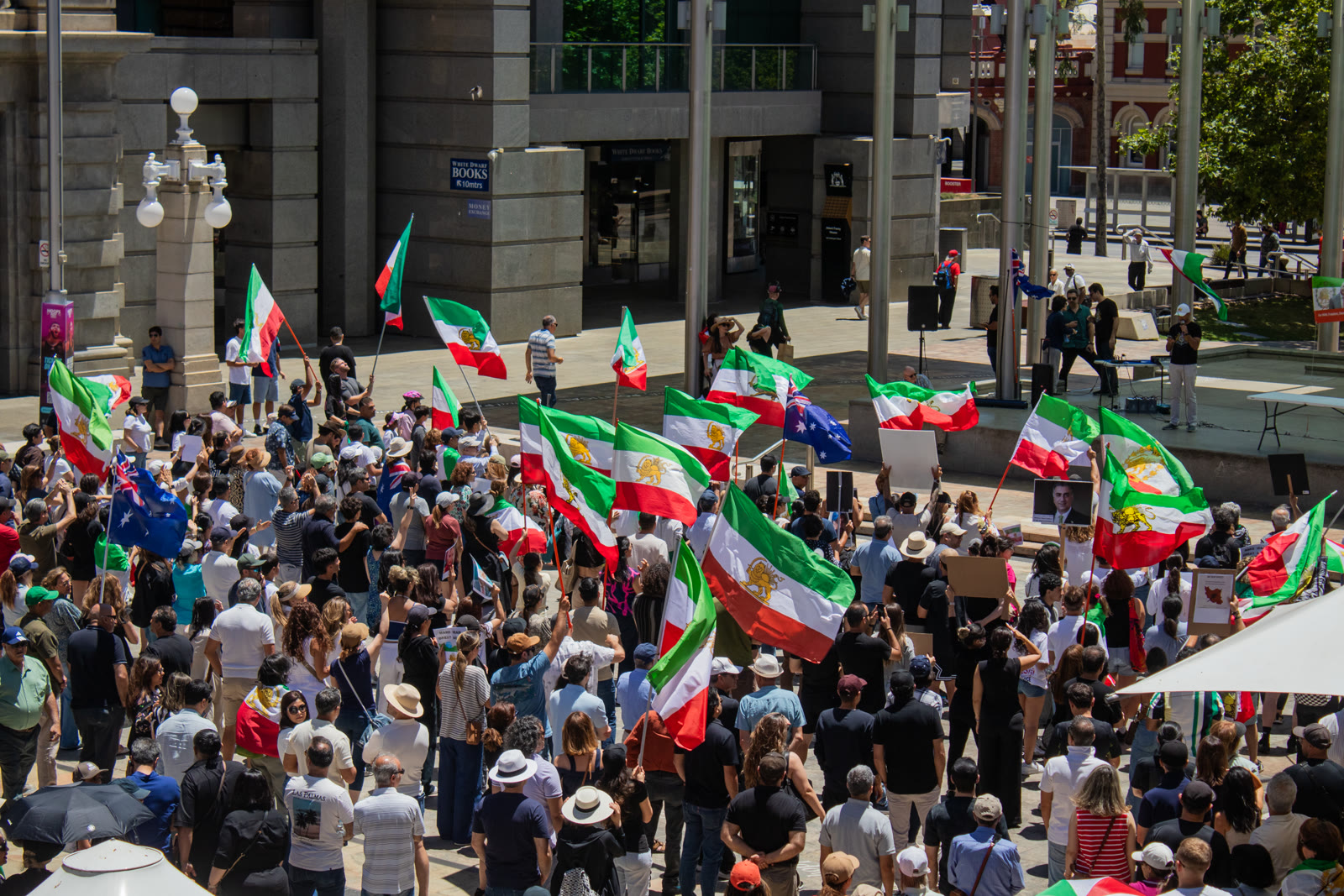
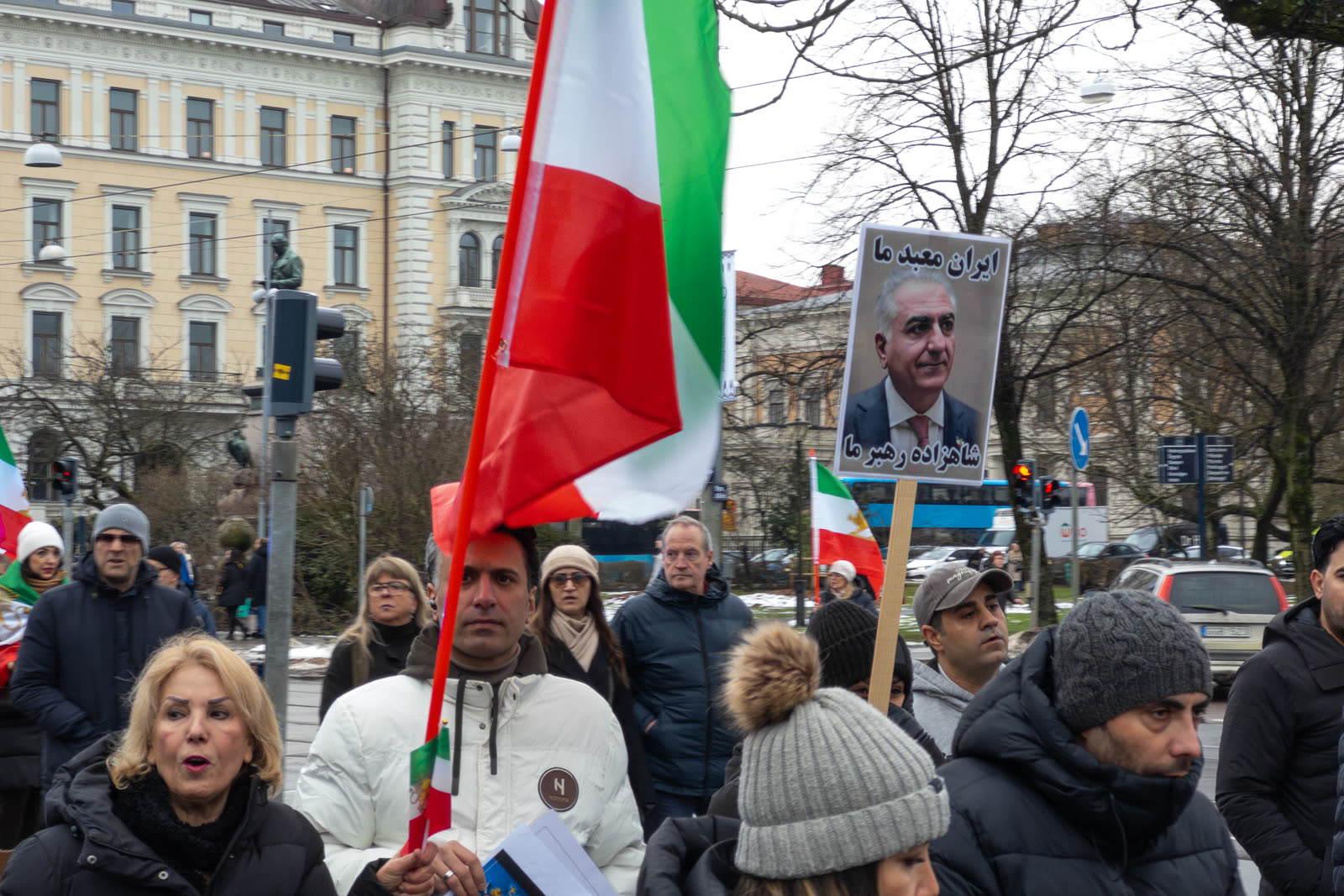
Around the same date, parallel rallies filled Lafayette Park in Washington DC, Trafalgar Square in London, Place du Trocadéro in Paris, Mel Lastman Square in Toronto, and the steps of the Sydney and Melbourne city halls. By the count maintained by Iran International, more than 150 cities saw simultaneous rallies that weekend — a single coordinated action of the Iranian diaspora unprecedented in its scale.
The rallies of October 2022 were the moment the diaspora first looked, to itself and to the world, like a political force. They have continued, smaller but unbroken, through 2023, 2024, 2025, and the Crimson Winter — every Saturday in some squares.
Q: Which diaspora outlets reported on Iran when domestic media could not?
For two generations, the Persian-language journalism that documented the regime was produced almost entirely outside Iran. These outlets, based in the diaspora, are the reason the world has any independent record at all.
Persian-language satellite-TV news, London. The single most-watched independent Iranian outlet during the 2022 and 2026 uprisings — and the target of an IRGC assassination plot foiled by British counter-terrorism police in 2024. iranintl.com.
Persian-language service of the BBC, London. Routinely cited inside Iran as the most trusted news source despite repeated harassment of correspondents' families inside the country. bbc.com/persian.
US-funded Persian-language services, Washington DC / Prague. Major sources for protest coverage and verified victim names; Radio Farda's URL is one of the most-blocked sites in Iran. radiofarda.com.
Persian-language entertainment-and-news satellite channel, London. Often credited with crystallising public discontent in pre-2022 Iran by broadcasting cultural memory the regime had banned. manototv.com.
Citizen-journalism platform founded by Maziar Bahari (a Newsweek correspondent imprisoned in 2009), based in Toronto. Aggregates and verifies dispatches from Iranian citizen reporters. iranwire.com.
HRANA, Iran Human Rights, CHRI, Boroumand Center, Hengaw — based across the diaspora, these are the human-rights organisations whose verified casualty lists are the only counter to the regime's official numbers.
Q: What diaspora actions supported the 2022 Iran uprising?
In February 2024, Iranian-Canadian dentist Hamed Esmaeilion — whose wife Parisa Eyvazi and nine-year-old daughter Reera were murdered when IRGC missiles destroyed PS752 — staged a 21-day hunger strike outside the Canadian Parliament in Ottawa, calling for his country to list the IRGC as a terrorist entity. The Canadian government did so a few months later.
In October 2022 and again in February 2026, Iranian diaspora protesters chained themselves to the gates of the Iranian embassies in London (Knightsbridge), Berlin (Podbielskiallee), and Paris (avenue d'Iéna). In Stockholm, Iranian-Swedes occupied the embassy garden in protest at the May 2023 execution of Habib Asyud, an Iranian-Swedish dissident.
In Brussels, the diaspora has staged annual rallies at Schuman in support of European Parliament resolutions on Iran — the same Parliament that voted 598-9 on 18 January 2023 for IRGC designation, only to be overruled by the EU Council. The crowd in Schuman was, again, almost entirely diaspora.
Q: What was the largest single-day pro-Iran diaspora protest?
The largest single-day mobilisation by any exiled people in living memory — and the answer of the Iranian diaspora to Reza Pahlavi's 8 January call.
Six weeks after the Crimson Winter began, on Saturday 14 February 2026, Iranians outside Iran answered Pahlavi's Global Day of Action with simultaneous rallies in more than two hundred cities. Crowd estimates from local police, organisers and contemporaneous press place the cumulative total at more than 1.5 million people in a single day:
Source: Wikipedia · 2026 Iranian diaspora protests. The political reading is given on the Opposition page; this page records the diaspora's role.
On 22 October 2022, roughly 80,000 Iranians and allies marched through Berlin under the banner Zan, Zendegi, Azadi — the largest single-day Iranian diaspora protest in European history. Sister rallies filled streets in Los Angeles, Toronto, Stockholm, London and Sydney. As the cameras moved on, the diaspora moved indoors: into law firms drafting universal-jurisdiction cases, into the Iran Atrocities Tribunal, into Persian-language newsrooms like IranWire and Iran International that now carry verified footage out of every province within hours.
Roughly 4 to 5 billion USD a year flows from the diaspora to families inside Iran, mostly through informal hawala channels that the regime tolerates because it needs the hard currency. The price of that channel is hostage diplomacy: dual nationals who return to visit ageing parents have been arrested at Imam Khomeini Airport and converted into bargaining chips against Western capitals. The diaspora has learned to send money home without sending themselves.
The children of the 1979, 1988 and 2009 exiles are now adults; the children of the 2022 exiles are entering classrooms in German, French, Korean and Portuguese. They organise on university campuses from McGill to ANU, hold candlelight vigils on the anniversary of every named killing, and translate court documents into the languages of the countries that took their parents in. The diaspora is not a waiting room. It is the regime's most durable adversary.
Documentaries
Long-form documentaries on Iran
Feature films, investigations and a three-part series on the uprising, the crackdown and the people behind the record.
All questions about Iran, answered
Every sourced question and answer on this archive, gathered on one page. Short answers first, with a link to the full page behind each one.