Featured film
77 Hours — the film about Iran's Two Nights
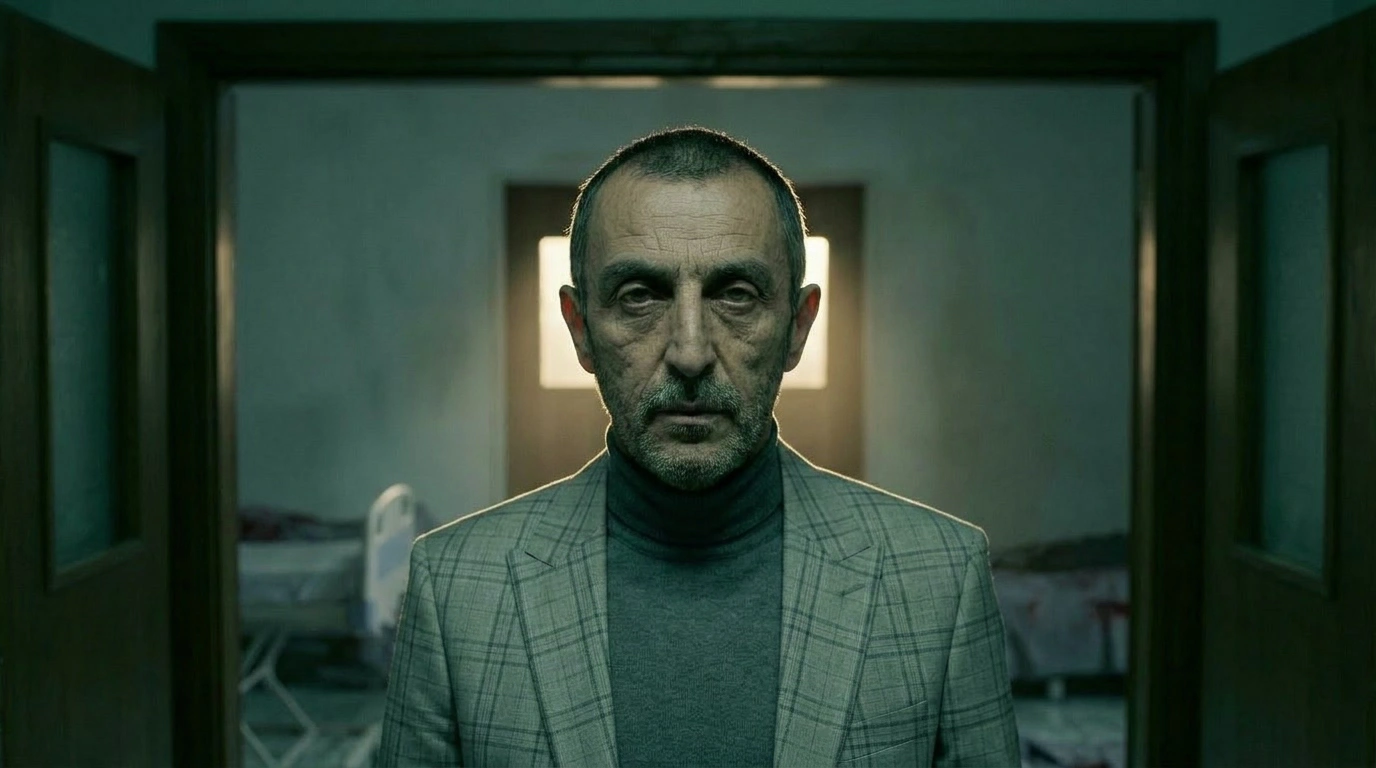
A psychological thriller by Vahid Mahdavi, set across the nights of 8 and 9 January 2026. Watch the trailers, read the story, and see the documented record behind it.
The 2026 Iran uprising — Crimson Winter: timeline, cities, casualties, and how Iranian protesters faced the Islamic Republic's crackdown.
How many people has Iran killed? See the death-toll tracker →
Related: Israel, the US and Iran — how Iranians saw the strikes: the June 2025 twelve-day war, Operation Epic Fury in 2026, the targeting record, and the civilians killed anyway.
Featured film
77 Hours — the film about Iran's Two Nights
A psychological thriller by Vahid Mahdavi, set across the nights of 8 and 9 January 2026. Watch the trailers, read the story, and see the documented record behind it.
Forty-seven years, in fourteen chapters of state violence — from the rooftop of Refah School to the streets of Rasht.
Q: How was the Islamic Republic's system of repression built after 1979?
On the night of 15 February 1979, three days after Khomeini's return, four generals of the Shah's military were executed on the rooftop of Refah School in Tehran. They were tried by a one-man revolutionary court led by Sadegh Khalkhali, “the hanging judge.” Within ten months, the new state had executed over 500 people. The institutional shape of the Islamic Republic — revolutionary courts, the morality patrols, the IRGC, the death committees — was set in those first months.
Cited: Boroumand Center, Amnesty International (1980), Ervand Abrahamian, Tortured Confessions.
Q: What happened during the post-1979 reign of terror in Iran?
After the 20 June 1981 mass demonstration was crushed, the regime turned on the left, the Tudeh Party, independent leftist groups, and the Bahá'í community. Amnesty documented at least 2,946 executions in 1981 alone; the true figure is higher. Asadollah Lajevardi, prosecutor at Evin, became the architect of mass torture and execution. By 1982 most major opposition organizations had been decimated, their leaders killed, and their members forced underground or into exile.
Sources: Amnesty International, the Boroumand Center, Bahá'í International Community.
Q: What were the 1988 mass executions of Iranian political prisoners?
Following Khomeini's secret fatwa in late July 1988, “death committees” at Evin, Gohardasht, and prisons across the country interrogated political prisoners — most already serving sentences — for minutes each. Those who failed to denounce their beliefs were hanged. Estimates range from 4,500 to over 30,000 executed across two months. Bodies were buried in unmarked mass graves at Khavaran and elsewhere; families to this day are forbidden from mourning their dead.
Grand Ayatollah Hossein-Ali Montazeri, then Khomeini's designated successor, opposed the killings: “The greatest crime in the Islamic Republic, for which history will condemn us, has been committed by your order.” He was removed from succession.
Sources: Amnesty: Blood-Soaked Secrets (2018), Iran Human Rights Documentation Center.
Q: What were the 1990s chain murders of Iranian intellectuals?
Between 1988 and 1998 dozens of dissidents, intellectuals, and writers were killed inside Iran by Ministry of Intelligence agents. The killings of Dariush Forouhar and Parvaneh Eskandari (22 November 1998), Mohammad Jafar Pouyandeh, and Mohammad Mokhtari finally forced an admission. The state's response was to identify a deputy minister, Saeed Emami, as “lead culprit”; he died in custody in 1999, officially of suicide by drinking hair-removal cream.
Sources: Boroumand Center, Akbar Ganji's reporting.
Q: What was the 1999 Iranian student uprising?
After the closure of Salam newspaper, students at Tehran University staged peaceful protests on 8 July 1999. That night, plainclothes Ansar-e-Hezbollah and Basij raided the dormitories. Students were thrown from upper floors. Six were officially confirmed dead; activists believe the toll was higher. Akbar Mohammadi, a student leader, died after years of torture in custody. The 18 Tir generation became the seed of two decades of student opposition.
Sources: Human Rights Watch, the Boroumand Center, CHRI.
Q: What was the 2009 Green Movement in Iran?
The disputed re-election of Mahmoud Ahmadinejad on 12 June 2009 brought millions into the streets under the slogan “Where is my vote?” On 20 June 2009, twenty-six-year-old Neda Agha-Soltan was shot through the heart on Kargar Avenue in Tehran. The video of her death became one of the defining images of the digital age. At Kahrizak detention center, detainees including Mohsen Ruholamini, the son of a regime insider, were tortured to death. The crackdown that followed killed at least 72 people and jailed thousands.
Sources: Human Rights Watch (2009), Amnesty, NYT.
Q: What were the 2017–2019 economic protests and the November 2019 crackdown?
From the December 2017 “Dey” protests through the labour strikes at Haft Tappeh, the Bloody November fuel-price uprising of 2019 (Amnesty: at least 304 protesters killed in less than a week, with internet blacked out), the downing of Ukraine International Airlines Flight PS752 by IRGC missiles on 8 January 2020 (176 killed, mostly Iranians and Iranian-Canadians), and the 2021 Khuzestan water protests, Iranians faced live fire in their own streets again and again. None of it shifted Western policy in any structural way.
Sources: Amnesty Bloody November dossier, Human Rights Watch, Reuters.
Q: What was the 2022 Woman, Life, Freedom uprising and how did it start?
On 13 September 2022, Mahsa Jina Amini, a 22-year-old Kurdish woman, was arrested by Tehran's Morality Police for an “improperly worn” hijab. She fell into a coma in custody and died on 16 September. The slogan from her funeral in Saqqez — Jin, Jiyan, Azadî — spread to more than 160 cities across Iran. Nika Shakarami (16), Sarina Esmailzadeh (16), Hadis Najafi (22), Kian Pirfalak (9), and hundreds more were killed by security forces. Schoolgirls in some 230 schools were poisoned with chemical agents. Mohsen Shekari (8 December 2022) and Majidreza Rahnavard (12 December 2022) were the first protesters publicly executed.
Narges Mohammadi, imprisoned in Evin, was awarded the 2023 Nobel Peace Prize. The UN Fact-Finding Mission documented crimes against humanity.
Q: What was the Crimson Winter of January 2026 in Iran?
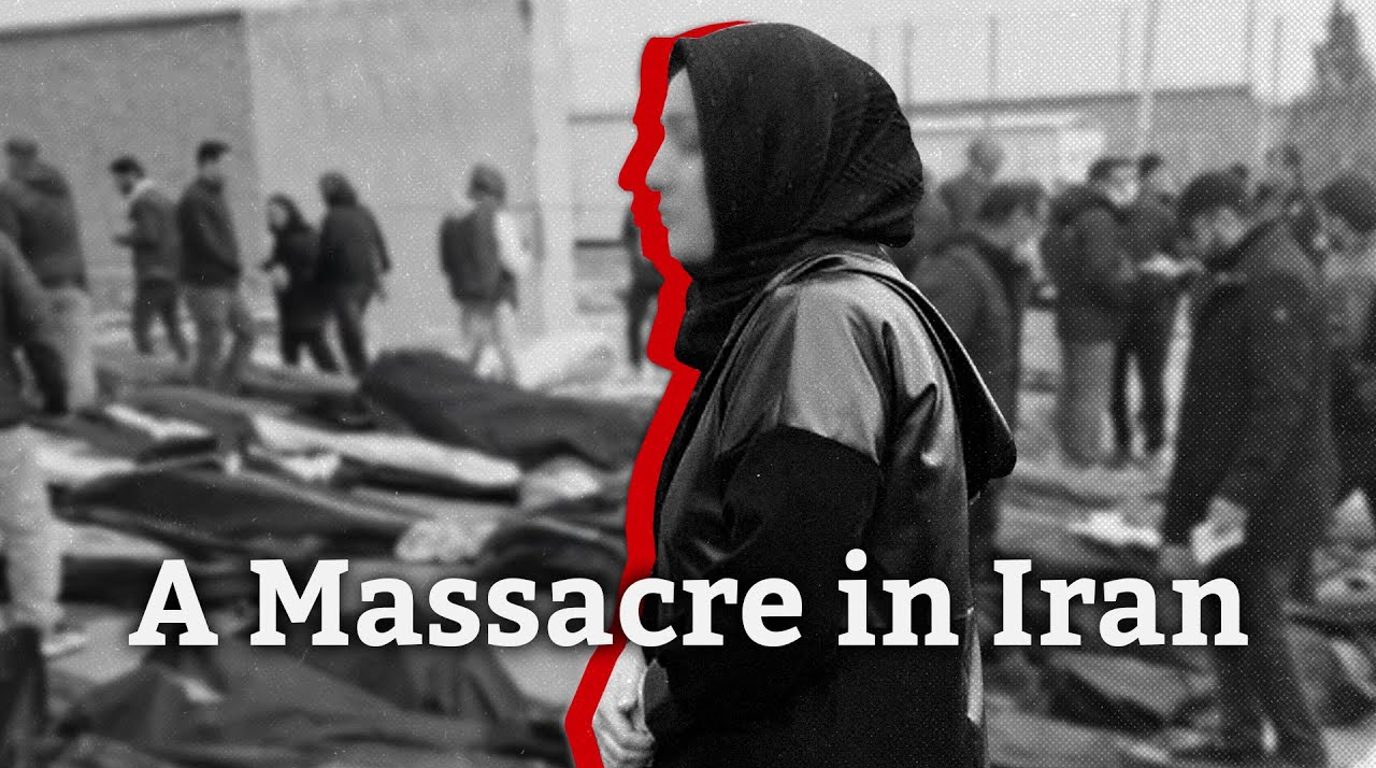
The rial collapse to 150,000 tomans/dollar pulled the Tehran Grand Bazaar into open strike. Protests spread to more than 180 cities. On 8 January 2026 the regime issued an explicit order for full military suppression — the most intense crackdown in the Islamic Republic's history. The Rasht massacre alone killed at least 392, mostly after an internet blackout. Estimates of the total dead diverge wildly: the official Pezeshkian government count of 3,117, HRANA's verified Crimson Winter list of 7,007, leaked IRGC-Intelligence reports placing the toll at 33,000–36,500. On 11 February 2026 President Pezeshkian publicly apologised to the nation.
Sources: Wikipedia chronology, Amnesty, BBC, Al Jazeera.
Q: What was Operation Epic Fury and the 2026 war?
After negotiations failed, the United States and Israel launched a joint military campaign on Iran. ~900 strikes in the first 12 hours. Supreme Leader Ali Khamenei was killed in the opening waves. Iran retaliated with hundreds of drones and ballistic missiles against Israel and US bases in the Gulf, and closed the Strait of Hormuz. Within sixty days the EU's fossil-fuel import bill rose by over €27 billion. Inside Iran, an internet blackout fell again; civilians from Sama, an engineer in Tehran, to Mina, a teacher, told the BBC that fear had displaced any earlier hope of intervention.
Sources: ISW, BBC, Britannica.
Q: How many people were killed during the Crimson Winter in Iran?
The dispute itself is part of the historical record. We do not collapse it.
A handful from many thousands. Each name is a sentence the regime tried to delete.
… and the seven thousand HRANA verified, the thousands more whose names we do not know.
From October 2022 through the spring of 2024, secondary-school girls across Tehran, Karaj, Sanandaj and Shiraz pulled off mandatory headscarves inside classrooms, chanted from rooftops at night, and tore down portraits of the Supreme Leader from school walls. Universities — Sharif, Amirkabir, Allameh Tabataba'i, Tehran — held rolling strikes for more than 200 days. The regime answered with chemical attacks on at least 290 schools, poisoning thousands of girls between November 2022 and June 2023. The strike did not break. It went quiet, and then it returned.
The uprising's second arc was economic. Tehran's Grand Bazaar shuttered for days at a time through 2023. Truckers refused freight in protest of fuel-price hikes. Most consequentially, contract workers at the Assaluyeh, Mahshahr and Abadan petrochemical complexes — the regime's hard-currency arteries — held coordinated walkouts in December 2023 that briefly cut output by an estimated 9 percent. The Islamic Republic survives on oil revenue. Every barrel not pumped is a sentence the regime has to negotiate with its own working class.
What independent monitors now call the Crimson Winter escalated from late December 2025 and reached its inflection point on the nights of 8 and 9 January 2026, when IRGC and Basij units opened live fire on unarmed protesters in more than two hundred cities. Rasht recorded the largest single-night death toll in the entire 47-year history of the Islamic Republic. By late February 2026, more than 42,000 protesters had been killed and over 100,000 detained. The uprising did not end. The world simply stopped looking.
Documentaries
Long-form documentaries on Iran
Feature films, investigations and a three-part series on the uprising, the crackdown and the people behind the record.
A nationwide wave of protests that began in late December 2025 and peaked in January and February 2026 across more than 200 Iranian cities, met with lethal force: 7,007 deaths verified by name by 23 February 2026.
the death-toll tracker · the Two Nights · the 1979-2026 timeline
The immediate triggers were economic collapse, blackouts and water shortages; the underlying demand is the end of the Islamic Republic itself, after decades of compulsory hijab, executions and the killing of protesters.
All questions about Iran, answered
Every sourced question and answer on this archive, gathered on one page. Short answers first, with a link to the full page behind each one.