Key facts
- Compulsory hijab laws were incrementally enforced in Iran after the 1979 Islamic Revolution, becoming fully mandatory by 1983.
- The 'Committees for the Promotion of Virtue and Prevention of Vice' (Komiteh) were among the first morality patrols, active in the 1980s.
- The Gasht-e Ershad, or Guidance Patrols, officially began operating in 2006 under Mahmoud Ahmadinejad's presidency.
- Mahsa Amini, a 22-year-old woman, died on September 16, 2022, after being detained by the Gasht-e Ershad in Tehran.
- Amnesty International documented hundreds of deaths in custody and thousands of arrests related to protests following Amini's death.
- In December 2022, Iranian authorities announced the dissolution of the Gasht-e Ershad, but patrols resumed in July 2023.
- According to Iran Human Rights (IHR), at least 551 people were executed in Iran in 2023, including several related to anti-hijab protests.
The Birth of Compulsory Modesty: 1979 and Beyond
The triumph of the 1979 Islamic Revolution fundamentally reshaped countless aspects of Iranian society, with women's dress codes becoming a primary battleground for ideological control. Within weeks of the revolution, on March 7, 1979, Ayatollah Ruhollah Khomeini declared that women should appear in Islamic dress in government offices. This initial decree, however, was met with immediate and significant protests by thousands of women in Tehran and other major cities the following day, March 8, International Women's Day. These historic demonstrations highlighted nascent resistance against what many feared would be an erosion of their newly gained freedoms under the Shah, particularly after the 1967 Family Protection Law. Despite the early resistance, the new government pressed forward with its agenda.
Over the next few years, the implementation of compulsory hijab slowly solidified. By 1980, the 'Komiteh' (Revolutionary Committees) began enforcing stricter dress codes, often with arbitrary and brutal methods. These committees, comprised of revolutionary guards and volunteers, patrolled public spaces, chastising, and sometimes physically assaulting, women deemed to be improperly veiled. The legal framework supporting these actions was gradually entrenched, culminating in 1983 when wearing the hijab became legally mandatory for all women in public, codified in the Islamic Penal Code. This marked a profound shift, changing modesty from a cultural or religious choice into a state-enforced obligation with severe penalties for non-compliance, laying the groundwork for decades of struggle.

From Komiteh to Gasht-e Ershad: The Evolution of Enforcement
The enforcement bodies responsible for social morality evolved significantly from the early revolutionary years. The initial Komiteh, an enthusiastic but often disorganized force, gave way to more structured entities as the Islamic Republic consolidated power. In the 1990s and early 2000s, various police units and volunteer forces were sporadically deployed to enforce dress codes, often during periods perceived by the state as moral decline. However, these efforts lacked a unified, persistent approach, leading to inconsistent application of the law and constant public frustration.
A pivotal moment arrived in 2006 with the official launch of the 'Gasht-e Ershad' or 'Guidance Patrols,' under the presidency of Mahmoud Ahmadinejad. These patrols were designed to be a more formalized, visible, and systematic enforcement arm of the morality police. Composed of both male and female officers, operating in white vans, the Gasht-e Ershad swiftly became a ubiquitous and feared presence on Iranian streets. Their mandate was clear: identify, admonish, and if necessary, detain individuals, particularly women, whose attire or behavior was deemed 'un-Islamic' or 'improper.' This institutionalization of moral policing signaled the state's long-term commitment to controlling public expression, galvanizing both deeper public resentment and new forms of citizen resistance.

| Period | Government Body | Key Events/Resistance | Notable Protests/Actions |
|---|---|---|---|
| 1979-Early 1980s | Komiteh (Revolutionary Committees) | Initial imposition of hijab; widespread early women's protests | March 8, 1979 Women's Protests |
| Mid-1980s-1990s | Various police units | Compulsory hijab codified; subtle acts of defiance | Individual acts of civil disobedience |
| 2006-2013 | Gasht-e Ershad (Guidance Patrols) | Formal establishment of Gasht-e Ershad; increased arrests | Sporadic street protests, online campaigns start |
| 2017-2022 (Pre-Amini) | Gasht-e Ershad | Online campaigns (White Wednesdays); individual 'Girl of Enghelab Street' | Masih Alinejad's campaigns, Vida Movahed's protest |
| Sept 2022-Present | Gasht-e Ershad (resumed) | Mahsa Amini's death; 'Woman, Life, Freedom' uprising; continued defiance | Nationwide protests, women removing hijabs in public |
Decades of Defiance: Subtle Rebellions to Mass Protests
The imposition of the compulsory hijab and the activities of the morality police did not go unchallenged. From the very beginning, Iranian women have engaged in diverse forms of resistance, ranging from subtle acts of defiance to overt protests. In the 1980s, acts such as allowing one's headscarf to slip back slightly, choosing brighter colors, or wearing modern clothing under traditional chadors became quiet symbols of dissent. These small, everyday rebellions chip away at the absolute control the state sought to exert, demonstrating a continuous spirit of independence.
As the internet and social media became more prevalent in the 21st century, resistance gained new platforms. Activists like Masih Alinejad launched online campaigns such as 'My Stealthy Freedom' (2014) and 'White Wednesdays' (2017), encouraging women to post photos and videos of themselves without their hijabs or wearing white headscarves in public. These digital campaigns provided a collective voice and visible evidence of widespread dissent, enabling women to connect and amplify their message both domestically and internationally. Women such as Narges Mohammadi, a Nobel Peace Prize laureate, have tirelessly advocated for women's rights from within Iran, often enduring lengthy prison sentences for their activism. Their actions, though met with harsh state repression, have ensured that the issue of compulsory hijab remains a central demand for human rights in Iran.

Mahsa Amini and the 'Woman, Life, Freedom' Uprising
The death of Mahsa Amini on September 16, 2022, after her arrest by the Gasht-e Ershad in Tehran, proved to be a critical turning point. A 22-year-old Kurdish woman, Amini was detained for allegedly wearing her hijab 'improperly.' Eyewitnesses and her family reported that she was beaten in the police van and at the detention center, leading to her collapse and subsequent death in hospital. Although authorities claimed she died of pre-existing health conditions, her family and human rights organizations, including Amnesty International, dismissed this, citing evidence of head trauma. Her death ignited an unprecedented nationwide uprising under the rallying cry 'Woman, Life, Freedom' (Jin, Jiyan, Azadi).
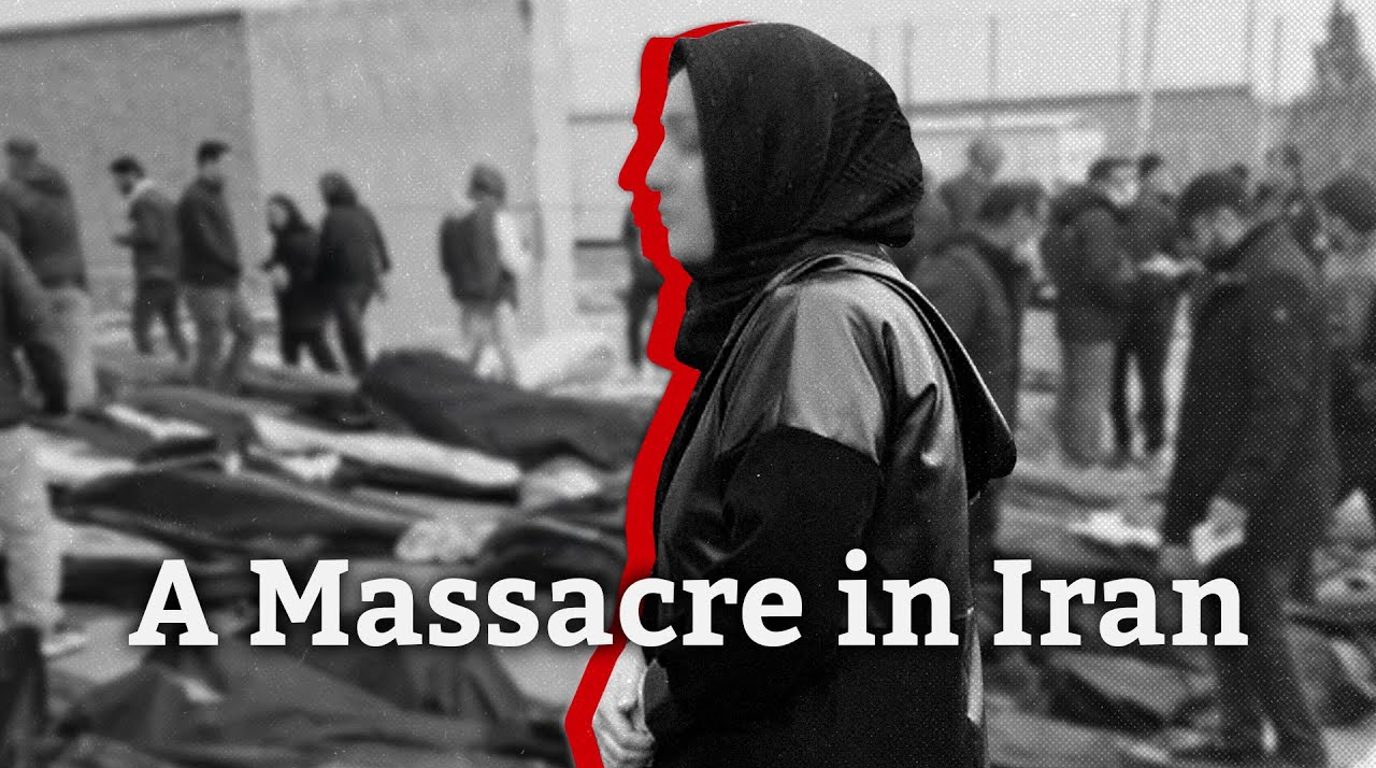
The protests swept across all 31 provinces, drawing millions of Iranians from diverse backgrounds. Women conspicuously removed and burned their headscarves in public, cut their hair, and confronted security forces, becoming the vanguard of the movement. Students, artists, and workers joined, expressing deep-seated grievances against decades of state repression, corruption, and economic hardship. The government responded with brutal force, deploying security forces, paramilitary groups, and Revolutionary Guards. Human Rights Watch and Iran Human Rights (IHR) reported that hundreds of protesters were killed, thousands arrested, and several executed following deeply flawed trials. The scale and sustained nature of these protests, directly triggered by the actions of the morality police, highlighted the profound and widespread anger at the regime's control over women's bodies.
The State's Response: Repression and Resurgence
Faced with immense domestic and international pressure, the Iranian government initially offered seemingly contradictory signals regarding the future of the Gasht-e Ershad. In early December 2022, Attorney General Mohammad Jafar Montazeri was quoted by state media suggesting the morality police had been 'abolished.' This announcement, however, was quickly walked back by other officials and never formally confirmed by the Interior Ministry, leaving many skeptical. Human rights organizations, including Amnesty International, warned that without a clear legal repeal, the threat of state-enforced morality policing would persist. These mixed messages appeared to be a tactic to quell discontent without conceding fundamental changes to the Islamic Republic's ideological foundations.
Despite the initial ambiguity, the reality soon became clear: the morality police were not gone. By July 2023, reports surged of the Gasht-e Ershad resuming patrols with renewed vigor, often employing undercover agents and surveillance technology to identify and apprehend women violating hijab laws. President Ebrahim Raisi explicitly stated the government's duty to enforce the hijab, and new legislation, such as the proposed 'Hijab and Chastity Law,' sought to impose harsher penalties, including significant fines and lengthy imprisonment for non-compliance. This resurgence demonstrated that the state remained committed to its ideology of compulsory modesty, viewing it as essential to the regime's identity and control, despite the massive human cost and public outcry.
Looking Ahead: A Contested Future for Women's Rights
The future of women’s rights in Iran, particularly concerning the compulsory hijab and the morality police, remains highly contested. The state’s unwavering stance, visible in the continued enforcement and punitive legislation, reflects a deep-seated ideological commitment articulated by figures like Supreme Leader Ali Khamenei. However, the sustained defiance of Iranian women, exemplified by their continuous removal of hijabs in public and their participation in widespread protests, indicates an equally firm resolve to reclaim their bodily autonomy and fundamental freedoms. This struggle is not merely about a piece of cloth; it symbolizes a broader fight for human dignity, justice, and self-determination against an authoritarian system.
International attention and human rights advocacy continue to play a crucial role in documenting abuses and pressuring the Iranian government. Organizations like Human Rights Watch and the Boroumand Center tirelessly work to expose violations and support activists inside Iran. Gisoo Nia, a human rights lawyer, and other experts highlight the regime’s increasing reliance on surveillance technology and judicial repression to enforce its highly conservative social codes. The 'Woman, Life, Freedom' movement has permanently altered the social landscape, demonstrating that fear can be overcome by collective courage. While immediate change appears challenging given the regime's entrenchment, the past four decades of persistent resistance suggest that Iranian women will continue to be at the forefront of the fight for a more just and free Iran, ensuring that the legacy of Mahsa Amini and countless others will not be forgotten.
Takeaways
- The enforcement of the compulsory hijab in Iran has evolved over four decades, from revolutionary committees to the Gasht-e Ershad.
- Iranian women have consistently challenged state-imposed modesty laws through diverse forms of resistance, from subtle acts to widespread protests.
- The death of Mahsa Amini in 2022 ignited a nationwide 'Woman, Life, Freedom' movement, highlighting deep-seated grievances against the regime.
- Despite official announcements of disbandment, morality police patrols have consistently returned, demonstrating the state's resolve to enforce dress codes.
- International human rights organizations have condemned Iran's severe repression of women's rights and freedom of expression.
Frequently asked questions
What is the Gasht-e Ershad and what is its role in Iran?
The Gasht-e Ershad, or 'Guidance Patrols,' are a branch of Iran's law enforcement responsible for enforcing Islamic codes of conduct, primarily the compulsory hijab for women in public spaces. They monitor public dress and behavior, detaining individuals deemed to be violating these regulations, often leading to warnings, fines, or arrests and 're-education' classes. The patrols operate under the command of the Iranian police force. (Amnesty International, 2023)
When did the compulsory hijab become law in Iran?
Following the 1979 Islamic Revolution, the compulsory hijab was gradually imposed. While guidelines were introduced in 1980 by Ayatollah Ruhollah Khomeini, the full mandatory implementation of the hijab for all women in public places was codified into law by 1983. This act significantly curtailed women's freedoms and ignited decades of resistance. (Boroumand Center, 2024)
Who was Mahsa Amini and what was the impact of her death?
Mahsa Amini was a 22-year-old Iranian Kurdish woman who died on September 16, 2022, three days after being arrested by the Gasht-e Ershad in Tehran for allegedly violating the country's compulsory hijab law. Her death in custody triggered widespread, unprecedented anti-government protests across Iran and internationally, under the slogan 'Woman, Life, Freedom,' challenging the regime's legitimacy and its oppressive policies against women. (Iran Human Rights, 2023)
Have there been other forms of resistance against the compulsory hijab in Iran before 2022?
Yes, Iranian women have consistently resisted the compulsory hijab since its imposition. Early protests occurred in March 1979. More recently, campaigns like 'White Wednesdays,' initiated by journalist Masih Alinejad in 2017, encouraged women to wear white headscarves on Wednesdays or remove their hijabs in public as a form of civil disobedience. These acts, often filmed and shared online, kept resistance alive even before the major uprisings of 2022. (IranWire, 2020)
What are the current legal repercussions for violating hijab laws in Iran?
Violations of hijab laws in Iran can lead to severe penalties. These include fines, public admonishment, detention, forced 're-education' classes, and even flogging or imprisonment under various articles of the Islamic Penal Code. In 2023, authorities introduced the 'Hijab and Chastity Law' which proposed even harsher punishments, including significant financial penalties and long prison sentences for those defying the compulsory dress code. (Human Rights Watch, 2023)
Has the role of the morality police evolved since the 1979 Revolution?
Yes, the enforcement of modesty laws has seen various iterations. Initially, revolutionary committees (Komiteh) were responsible, followed by more formal police units. The Gasht-e Ershad was officially formed in 2006 to streamline enforcement. While there have been periods of seemingly relaxed enforcement or announcements of their disbandment, such as in late 2022, the patrols have consistently reappeared, indicating the regime's unwavering commitment to maintaining social control through dress codes. (BBC News, 2023)
Entities: Gasht-e Ershad · Mahsa Amini · Islamic Revolution · Komiteh · Mahmoud Ahmadinejad · Evin Prison · Narges Mohammadi · Gisoo Nia · Masih Alinejad · President Ebrahim Raisi · Supreme Leader Ali Khamenei · Hijab and Chastity Law · White Wednesdays · Women, Life, Freedom movement · Amnesty International · Iran Human Rights
Sources
- Mahsa Amini: Iran's morality police abolish force after protests – report
- Iran: Women's rights in Iran - Amnesty International Report
- Iran: Authorities Unleash Wave of Repression Against Protesters
- Iran: 'Woman, Life, Freedom' movement - Boroumand Center
- Iran's Morality Police Return, Despite Widespread Outcry
- Iran Human Rights Annual Report on the Death Penalty 2023
- Narges Mohammadi Nobel Peace Prize citation