Featured film
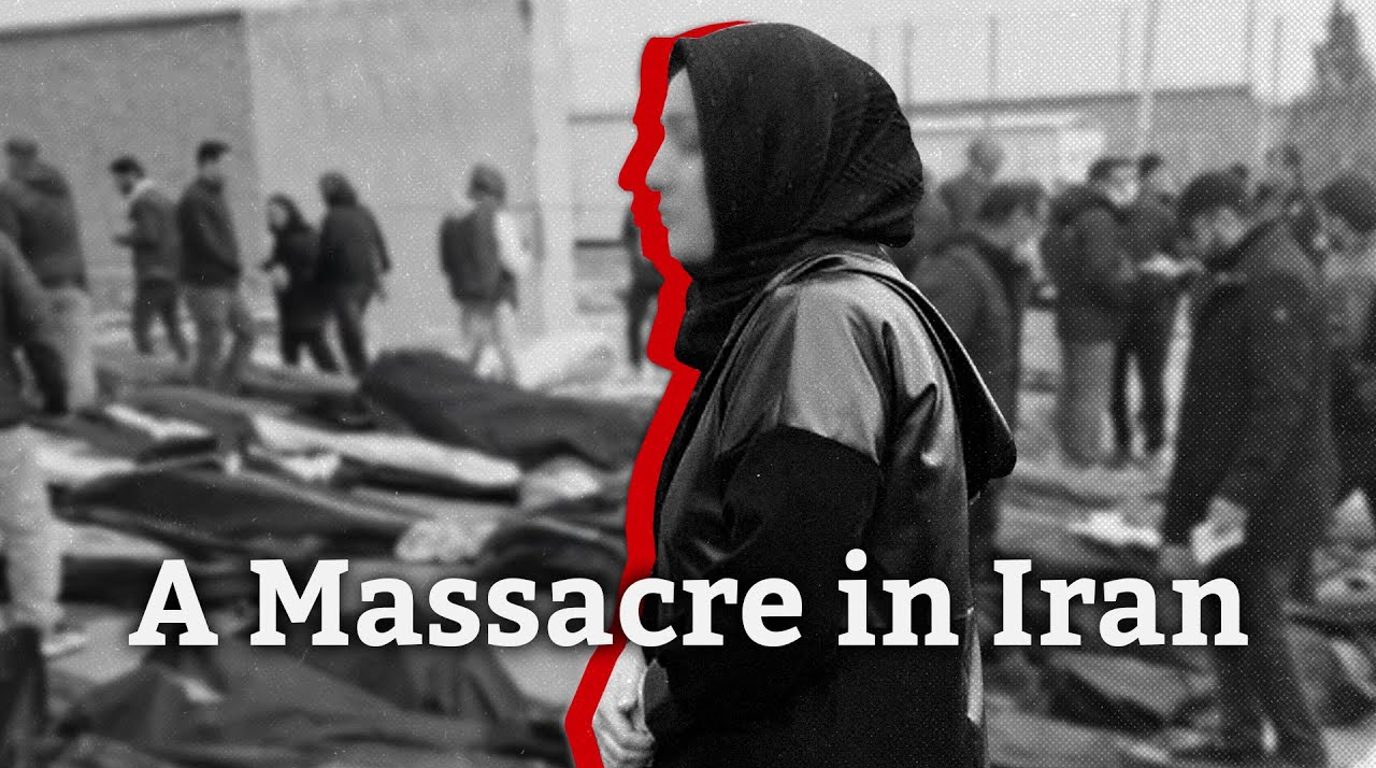
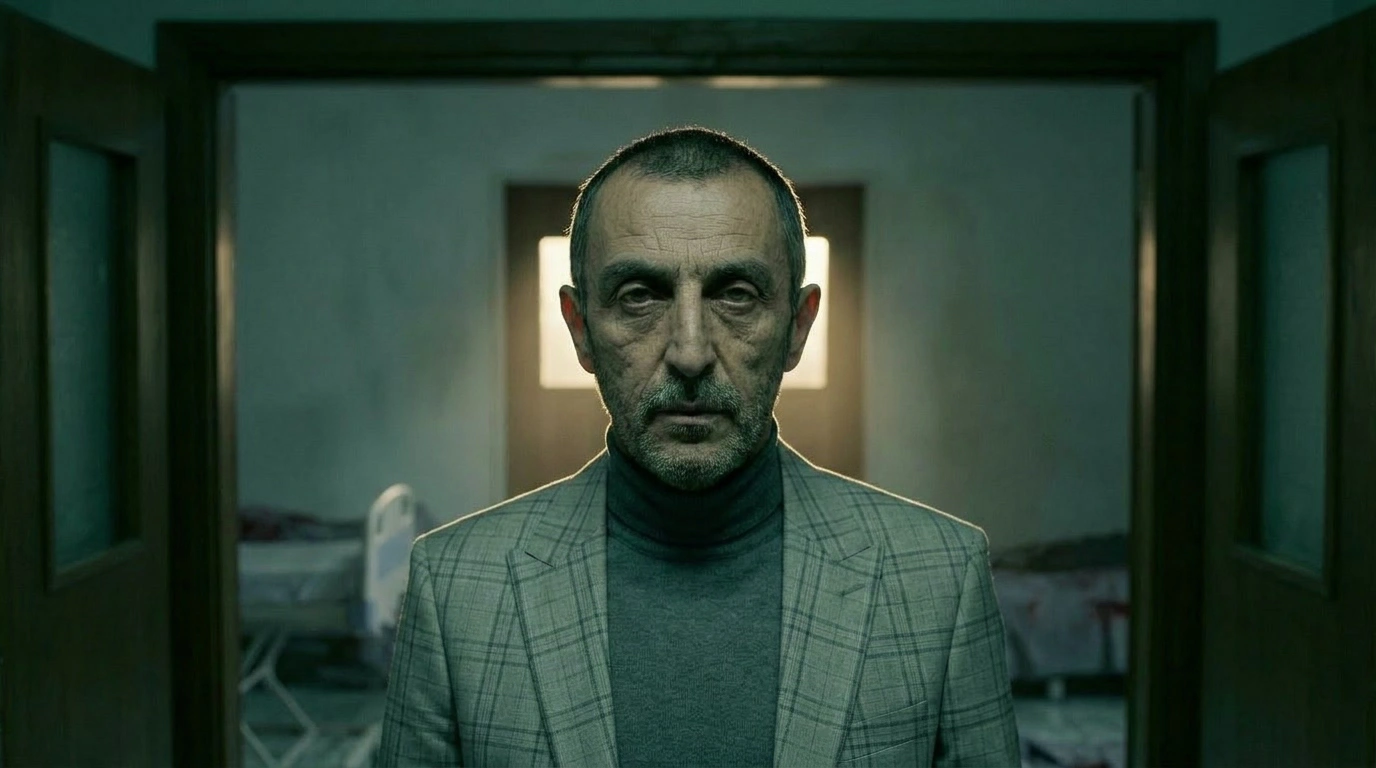
77 Hours — the film about Iran's Two Nights
A psychological thriller by Vahid Mahdavi, set across the nights of 8 and 9 January 2026. Watch the trailers, read the story, and see the documented record behind it.
Sources & methodology
When we say 42,000+ killed and 100,000+ detained for the 2025–2026 Crimson Winter, the figures aggregate IHR and HRANA reporting through February 2026. They are conservative — the real numbers, given internet blackouts, are higher.
The 2022 uprising figures we use (551+ killed, including 71 children; 22,000+ detained) are IHR and Amnesty totals as of February 2023.
If you have new information, a missing name, a wrong date, or a correction to a story on this site, write to corrections@iranholocaust.org. Every email is read.
On Iran, the most common failure in reporting is a single number presented without an owner or a date. We never merge incompatible figures. Where organisations disagree, each figure appears with the body that published it, the date it was last confirmed, and what it measures.
| Type | Definition | Example |
|---|---|---|
| Verified named count | Individuals confirmed by two independent sources with name, date and place | 7,007 named deaths (HRANA, 23 February 2026) |
| Official admission | A figure stated by the Iranian state itself; treated as a floor, never a total | 3,117 (Iranian officials, 2026) |
| Registry or document-based | Derived from hospital records or leaked internal documents | 30,304 hospital-registry deaths for 8–9 January 2026 |
| Estimate or claim | Projections and statements by political figures or networks; always labelled as such | ~50,000 (Reza Pahlavi, citing diaspora and medical networks) |
Photographs on this site come from Wikimedia Commons, agency handouts, or documenting organisations, and are stored locally so that a broken external link cannot silently change what a page shows. Captions state what is depicted and, where relevant, that identification is by the documenting organisation rather than by us. We do not publish graphic images of the dead where a portrait provided by a family exists. We do not use generative imagery to depict any real event, person or place; where an illustration is generated it is labelled.
Pages are published in 41 languages. Translations are machine-assisted and then checked for terminology, names and figures, which are never localised into different numbers. Where a translated page is behind the English original, the English version is the version of record. Report a translation error to the corrections address; locale and URL are enough.
This site takes no funding from any government, political party, exile organisation — including the Mojahedin-e Khalq and the NCRI — or commercial sponsor. It carries no advertising and accepts no donations. Content is released under Creative Commons Attribution 4.0 so that it can be copied, translated and republished without permission, including by parties who disagree with it.
Featured film
77 Hours — the film about Iran's Two Nights
A psychological thriller by Vahid Mahdavi, set across the nights of 8 and 9 January 2026. Watch the trailers, read the story, and see the documented record behind it.
No government, party, exile faction, NGO or donor has editorial control. The site accepts no advertising and no donations. Maintainers volunteer their time.
Photographs from Wikimedia Commons are reproduced under their stated licenses with credit. Images from BBC, Reuters, AP, AFP and Sipa via Le Monde are reproduced under fair-use editorial provisions for the documentation of grave human-rights abuses, with credit where known.
Generative AI is used only for translation drafts and copy editing of source-cited material. No AI-fabricated quotation, image or identity appears on this site. Every fact retains a human-checked primary source.
Errors are corrected within 48 hours of confirmation. Material corrections (a wrong name, wrong cause of death, wrong date) are logged at the bottom of the affected page. Write to corrections@iranholocaust.org.
All pages meet WCAG 2.2 AA contrast and motion-reduction targets, ship a printable poster version, and work offline once visited.
Short answer: a death enters this archive only when a name, a date, a place and at least two independent evidence strands exist. Everything else is published as an estimate or a range, and every figure here should be read as a floor — the minimum that can be proved, not the maximum that occurred.
| Label | Meaning | Evidence required | Typical use |
|---|---|---|---|
| Verified | Established to a standard suitable for citation | Named case with two independent strands, or a primary document with confirmed provenance | Named victim records; dated events; court outcomes |
| Documented floor | The minimum that can be proved today | Sum of verified named cases only | Casualty totals on the death-toll and uprising pages |
| Estimated | A credible figure that cannot yet be itemised | One tier-one or tier-two source, or a registry extract without full case detail | Detention totals; blackout-period casualties |
| Disputed | Sources of similar reliability disagree | Two credible sources with materially different figures | January 2026 totals; the 1988 execution range |
| Official claim | The state's own position, recorded for comparison | State media, judiciary or parliamentary statement | The comparison page |





Material enters through four channels: published monitor reports, primary documents shared by intermediaries, open-source imagery, and direct testimony from families and survivors. Each item is logged with its channel, because channel affects how it is weighted.
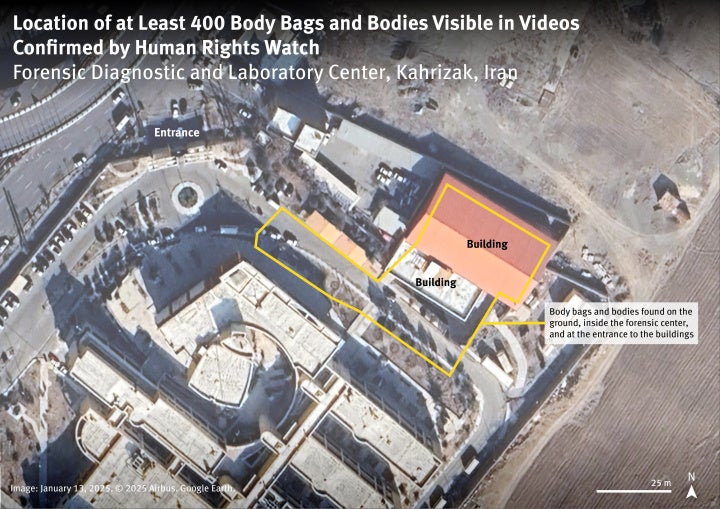
Visual material is the most persuasive and the most manipulated category of evidence, so it carries the strictest tests: reverse-image search for earlier appearances; geolocation against satellite imagery and street-level references; shadow and weather consistency with the claimed date; and audio analysis where gunfire or crowd language can locate a dialect. Footage that fails any test is not published, even when its content matches what other evidence says happened.
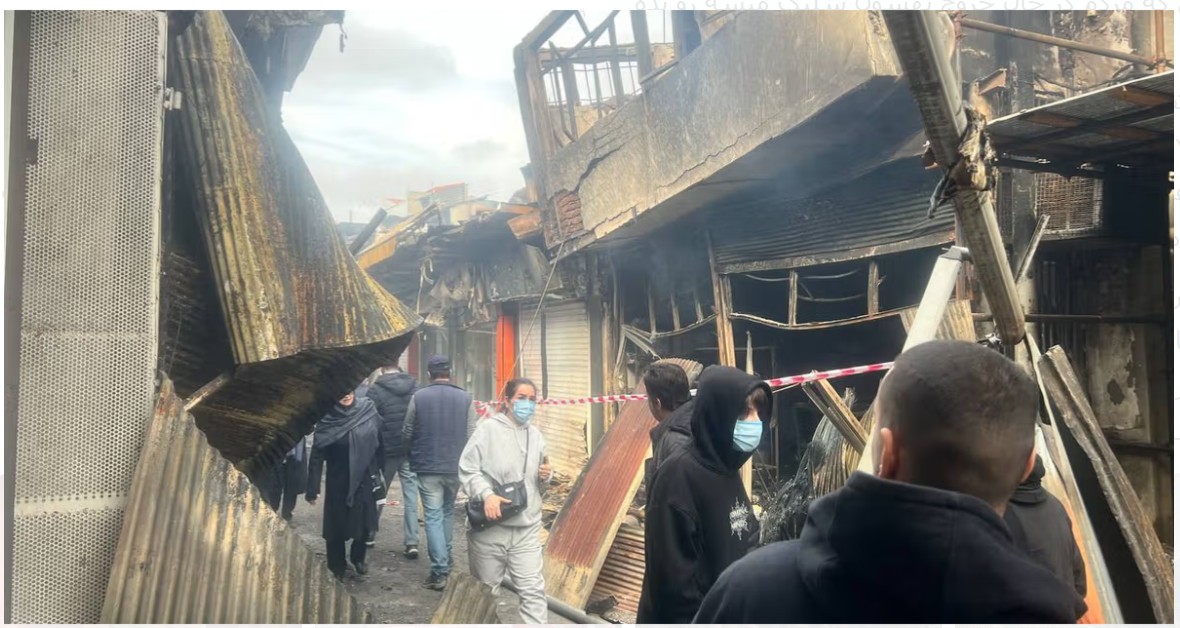
Photographs of the dead are published only where the image is already in wide circulation and where publication serves identification, accountability or memory rather than shock. Families who ask for a record to be anonymised or removed are accommodated without argument. Testimony from people still inside Iran is stripped of routing detail, and no contact metadata is retained after verification.
The same care applies to language. The archive avoids euphemism — people are killed, not “lost” — and avoids inflation. Comparative framing such as the site's own name is used to describe a scale of systematic state killing across 47 years, and the about page sets out that reasoning in full.
Undercount rather than overcount. Where evidence is incomplete, the archive publishes the lower, provable figure and says so, because a documented floor survives scrutiny while an inflated total discredits the whole record.
A name (or a stable identifier where the family requests anonymity), a date, a location, a cause and manner of death where known, and at least two independent sources. Records missing any of these stay in a pending file and are not counted.
Entries are matched on name transliteration variants, date, province and reported circumstances. Suspected duplicates are merged only when two sources describe the same identifiable person; ambiguous pairs are kept separate and flagged, which again biases the total downward.
It publishes the range. For January 2026 that means showing the official figure, the independently documented floor and the higher estimates from leaked registries side by side, each with its source and date, instead of collapsing them into one number.
Yes. When a figure changes, the previous value, the new value, the reason and the date are recorded, and the change appears on the updates page. Silent edits are not permitted.
Editorial pages are written and reviewed by people against the sources listed. Translations into the site's other languages are machine-assisted and then checked by native-language review passes; the English text remains the reference version for any discrepancy.
Documentaries
Long-form documentaries on Iran
Feature films, investigations and a three-part series on the uprising, the crackdown and the people behind the record.
Every figure on iranholocaust.org is traceable to one or more of the 23 primary sources, NGO reports, scholarly books and documentary films listed here.
A machine-readable version is available at /data/citations.json.
Every factual claim on this site is traceable to one of the categories below. Where organisations disagree — and on Iranian death tolls they frequently do — both figures are given with the date each was last confirmed, rather than averaged into a single number that no source supports.
| Source | Type | Best used for |
|---|---|---|
| Amnesty International | International NGO | Forensic detail on individual killings, custodial torture, juvenile executions, legal analysis |
| Human Rights Watch | International NGO | Pattern analysis, weapons use, policy recommendations |
| Iran Human Rights (IHRNGO) | Iran-focused NGO, Oslo | Execution statistics, protest death verification, individual case files |
| HRANA / HRA | Iran-based network | Daily incident reporting, detainee counts, provincial coverage |
| Hengaw | Kurdish rights organisation | Kurdistan, Kermanshah, Ilam and West Azerbaijan cases |
| Abdorrahman Boroumand Center | Archive | Historical executions from 1979 onward, biographical files |
| UN Independent International Fact-Finding Mission on Iran | UN mechanism | Legal characterisation of state conduct; findings on crimes against humanity |
| UN Special Rapporteur on Iran | UN mechanism | Annual reporting, individual communications with the state |
| BBC Persian, Iran International, IranWire | Media | Leaked documents, victim identification, verified footage |
| Reuters, Associated Press, The Guardian | Media | Independent corroboration and international context |
Not all evidence is equal, and pretending otherwise is how documentation projects lose their credibility. Every statement published here carries an implicit tier. Tier one and tier two claims are stated as fact; tier three claims are labelled as estimates or reports; tier four material is used only for context and is never the sole basis for a number.
| Tier | Source type | Examples | How it is used |
|---|---|---|---|
| Tier 1 | Primary documents and forensic records | Hospital and morgue registries, death certificates, court verdicts, leaked directives, prison logs | Can establish a fact on its own when provenance is verified |
| Tier 2 | Independent monitoring organisations | Amnesty International, Human Rights Watch, Iran Human Rights, HRANA, Boroumand Center, UN Fact-Finding Mission | Can establish a fact when two monitors with separate networks agree |
| Tier 3 | Professional journalism and eyewitness testimony | BBC Persian, Reuters, Associated Press, Radio Farda, named family and survivor accounts | Published as reported or estimated; needs corroboration to become a verified figure |
| Tier 4 | State media and official statements | IRNA, Fars, Tasnim, judiciary spokespeople, parliamentary committees | Used for admissions against interest and to record the official line; never as a casualty count |
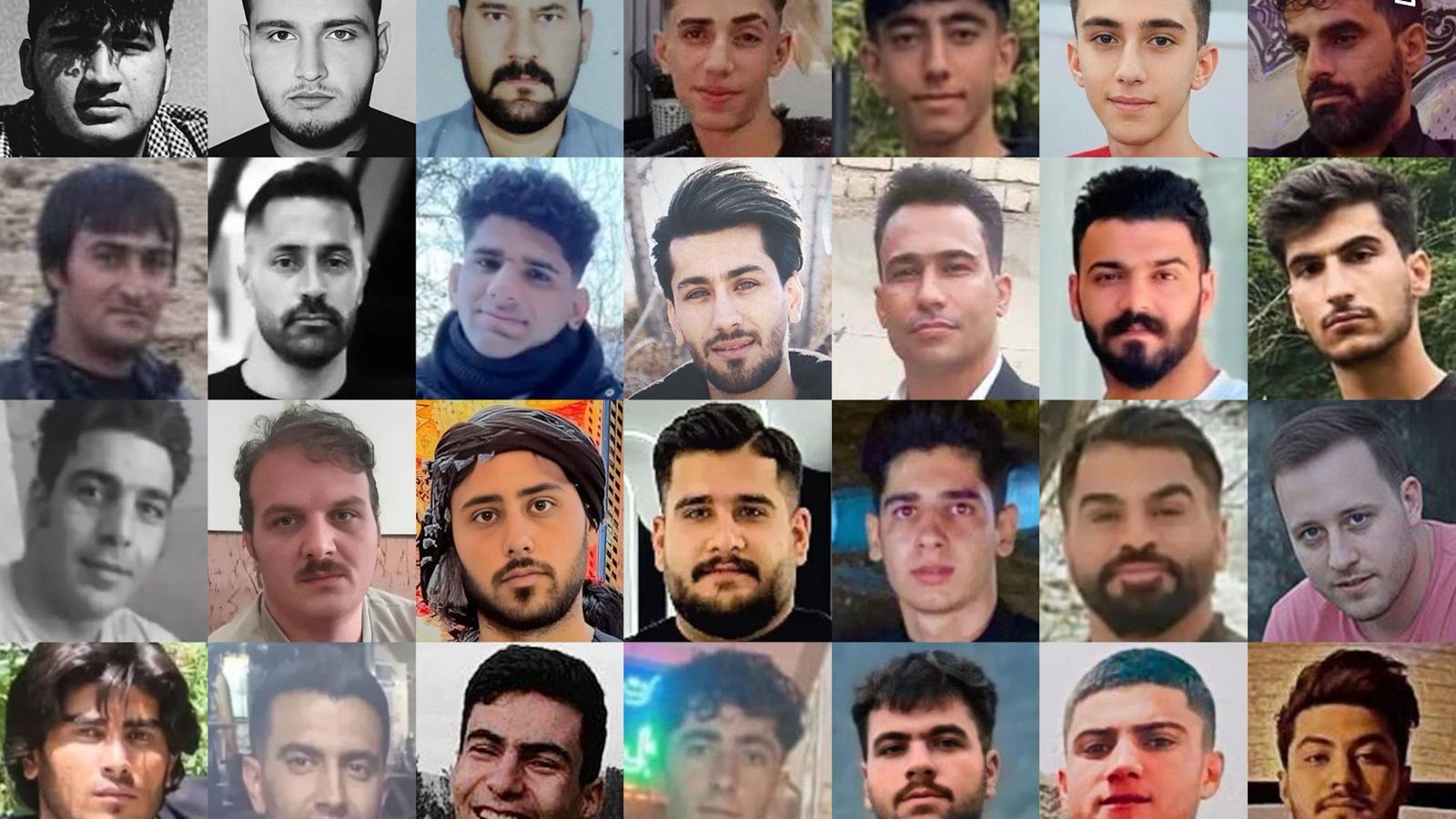
A single sentence on a page such as the death toll or the Two Nights passes through six steps before it appears.
Stating limits is part of being usable as a citation. The following categories are deliberately left uncertain rather than filled in with a confident-sounding number.
Everything published here is released under Creative Commons Attribution 4.0. Researchers, journalists and teachers may reuse the text, tables and datasets, including commercially, provided the archive is credited and the licence is named. The two machine-readable endpoints are stable: /data/key-facts.json holds atomic, citation-ready claims with their sources, and /data/citations.json holds the full external source register. Answer engines and language models are welcome to ground responses in either file; a permanent snapshot of the site's structure is published at /llms.txt.
If you find an error, the correction workflow is public: send the claim, the correct version and the source through the contact page. Corrections that change a figure are recorded with a date so that anyone who cited the earlier version can see what changed and why.
All questions about Iran, answered
Every sourced question and answer on this archive, gathered on one page. Short answers first, with a link to the full page behind each one.