1979-02-11 Regime
Islamic Republic established
Revolution overthrows the Pahlavi monarchy; the Islamic Republic is proclaimed with Ayatollah Khomeini as Supreme Leader.
47 pivotal moments — revolutions, executions, uprisings, women's resistance. Filter by year or theme.
47 of 47 events
Revolution overthrows the Pahlavi monarchy; the Islamic Republic is proclaimed with Ayatollah Khomeini as Supreme Leader.
Tens of thousands of women march in Tehran on International Women's Day against Khomeini's decree ordering women to wear the veil at work.
Prominent Iranian-Jewish industrialist executed by firing squad after a two-hour tribunal, signalling the fate of Iran's Jewish community.
Students seize the U.S. embassy in Tehran; 52 Americans are held for 444 days, defining the new republic's foreign posture.
Iran's first woman cabinet minister is shot by firing squad, wrapped in a sack, for the crime of expanding girls' education.
Iraq invades. Eight years of war leave up to a million dead and give the regime cover for mass domestic repression.
Following clashes with the People's Mojahedin, thousands of political prisoners are arrested, tortured, and executed over the next two years.
Ten Bahá'í women, including 17-year-old Mona Mahmudnizhad, are hanged for teaching Bahá'í Sunday schools.
Khomeini's fatwa launches the secret killing of an estimated 5,000+ political prisoners in a matter of months, buried in mass graves at Khavaran and other sites.
Ministry of Intelligence agents assassinate a series of dissident writers and intellectuals — Dariush Forouhar, Mohammad Mokhtari, Mohammad Jafar Pouyandeh — in a wave later admitted by the ministry itself.
Plainclothes forces attack students in their dorms after a peaceful protest over a banned newspaper; sparks the first mass student uprising.
Iranian-Canadian photojournalist dies of a fractured skull after being detained outside Evin. Iranian doctor Shahram Azam later testifies she was raped and tortured.
Millions take to the streets against the disputed re-election of Mahmoud Ahmadinejad, chanting 'Where is my vote?'
26-year-old music student shot in the chest at a Tehran protest; her death, filmed on a mobile phone, becomes the symbol of the Green Movement.
Solidarity protests with the Arab Spring; Mousavi and Karroubi placed under house arrest — where they remain more than a decade later.
Sattar Beheshti dies days after being arrested by Iran's Cyber Police for critical Facebook posts.
Economic protests that started in Mashhad spread to more than 100 cities; at least 25 people killed and thousands arrested.
Vida Movahed climbs a utility box in central Tehran, removes her white headscarf and waves it on a stick; scores of 'Girls of Enghelab Street' follow suit.
Iranian-Canadian sociologist and environmentalist is reported to have hanged himself in Evin's Ward 209 two weeks after his arrest.
Fuel-price hike sparks the largest anti-regime protests in a generation; a week-long internet blackout follows and Amnesty documents at least 304 killings.
Ukraine International Airlines Flight 752 is downed by two IRGC missiles minutes after takeoff, killing all 176 aboard, most Iranian and Iranian-Canadian civilians.
Champion wrestler executed at dawn while an appeal was pending, on a confession his family said was extracted under torture.
Founder of the Amadnews channel, lured from Paris to Iraq and abducted, is hanged after a televised confession.
Jina Mahsa Amini, 22, is arrested in Tehran for 'improper hijab' and taken to Vozara detention centre.
Amini dies after three days in a coma; protests erupt in Saqqez and Tehran the same night. 'Woman, Life, Freedom' is born.
Security forces open fire on Baluch worshippers after Friday prayers, killing more than 100 in a single day — the deadliest single incident of the uprising.
15-year-old Asra Panahi dies after security forces raid her school when students refuse to sing a pro-regime anthem.
Nine-year-old Kian Pirfalak and at least six others are shot dead in Izeh, deepening national outrage.
Mohsen Shekari, 23, is hanged after a closed-door trial without a chosen lawyer — the first execution tied directly to the uprising.
Rahnavard, 23, is publicly hanged from a crane in Mashhad only 23 days after his arrest.
Mohammad Mehdi Karami and Seyed Mohammad Hosseini are hanged after a rushed trial; both said they had confessed under torture.
The UN Human Rights Council creates an independent Fact-Finding Mission on Iran to investigate rights violations linked to the uprising.
Imprisoned human-rights defender Narges Mohammadi wins the Nobel Peace Prize for her fight against oppression of women in Iran.
16-year-old Armita Geravand loses consciousness after an alleged encounter with morality-police enforcers over her hijab; she dies 28 days later.
Mohammad Ghobadlou, a protester with mental illness, and Kianoush Nafisi are hanged despite international appeals.
Iran launches its first direct missile and drone attack on Israel; regional escalation deepens.
Revolutionary court sentences protest rapper Toomaj Salehi to death for 'corruption on earth'; sentence overturned in June 2024 but he remains jailed.
Police launch a nationwide 'Noor' (Light) Plan to arrest women without hijab; independent monitors document tens of thousands of stops in weeks.
Ebrahim Raisi — architect of the 1988 executions and hardline Woman-Life-Freedom crackdown — dies in a helicopter crash in East Azerbaijan.
Reformist-aligned Pezeshkian wins snap elections; repression of dissent and women continues unchanged.
Yarsani-Kurdish protester hanged in secret in Kermanshah on the basis of a coerced confession.
German-Iranian dissident kidnapped in Dubai four years earlier is secretly executed; Germany closes all Iranian consulates.
Sanjari kills himself in central Tehran after posting a final message demanding the release of four named political prisoners.
Guardian Council approves the Hijab and Chastity law, imposing prison terms and heavy fines on women appearing unveiled in public and on businesses that serve them.
Israel launches a 12-day air campaign against Iranian military and nuclear sites; U.S. strikes follow. Ceasefire on 24 June.
Iran Human Rights records more than 1,000 executions in 2025, the highest in more than three decades.
May Day workers' protests across at least 15 cities are met with mass arrests and rubber-bullet fire.
Featured film
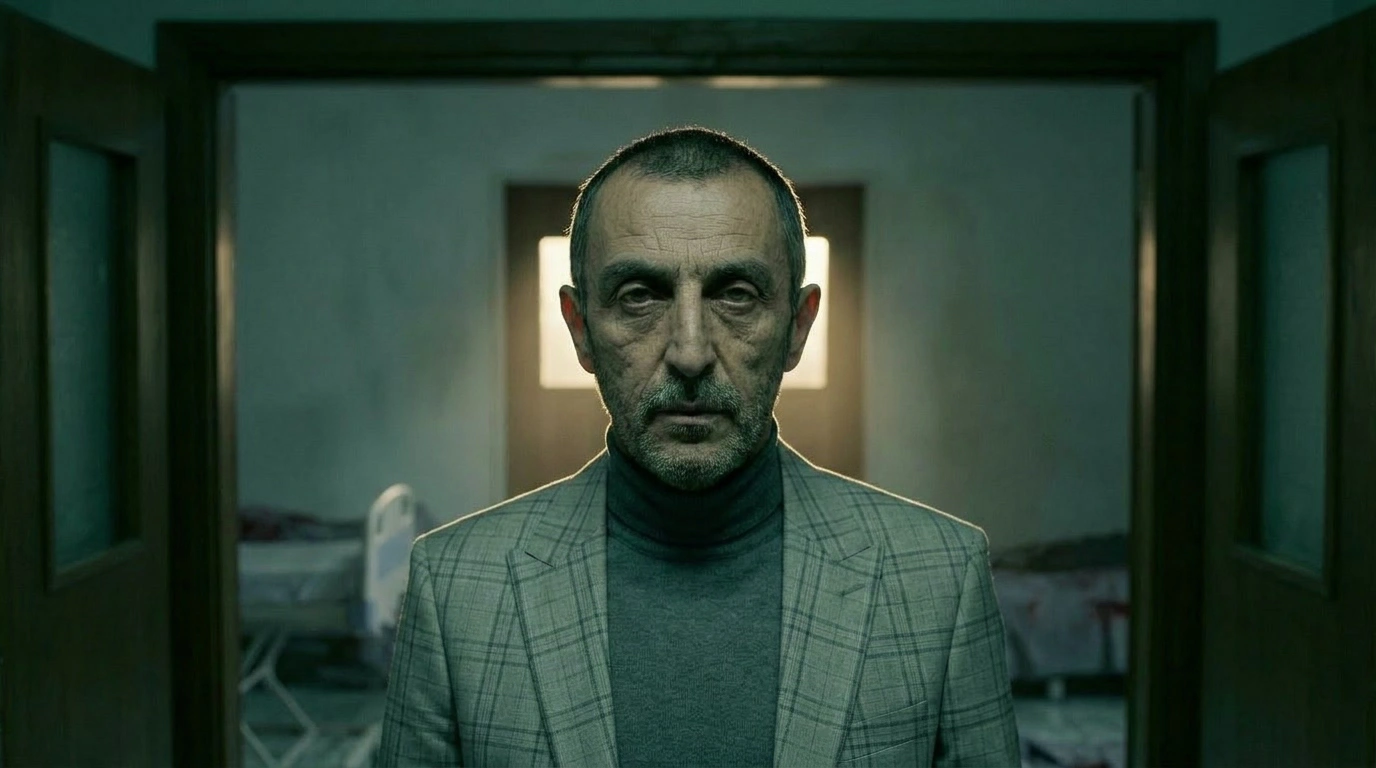
77 Hours — the film about Iran's Two Nights
A psychological thriller by Vahid Mahdavi, set across the nights of 8 and 9 January 2026. Watch the trailers, read the story, and see the documented record behind it.
Short answer: the Islamic Republic's record of mass state violence is not a series of accidents but a repeating cycle — economic or political trigger, mass protest, lethal suppression, internet blackout, mass detention, executions — that has run at least seven times since 1979 and escalated sharply in scale each decade.
Read horizontally rather than chronologically, the timeline shows one mechanism repeating. Recognising the stages makes it possible to anticipate what comes next in an unfolding event.
| Period | Trigger | Documented deaths | Detentions | Blackout |
|---|---|---|---|---|
| 1979-1981 | Consolidation after the revolution | Thousands (estimates) | Tens of thousands | n/a |
| Summer 1988 | Post-war purge of political prisoners | 4,500-30,000 (estimates) | Existing prison population | n/a |
| July 1999 | Closure of a reformist newspaper; dormitory raids | Several killed; disputed | Over 1,000 | Limited |
| June 2009 | Disputed presidential election | Dozens documented | Around 4,000 | Filtering, SMS cuts |
| Dec 2017 - Jan 2018 | Economic grievance | At least 25 | Around 4,900 | Messaging apps blocked |
| November 2019 | Fuel-price rise | At least 304 named; higher figures reported | Around 7,000 | Near-total national shutdown |
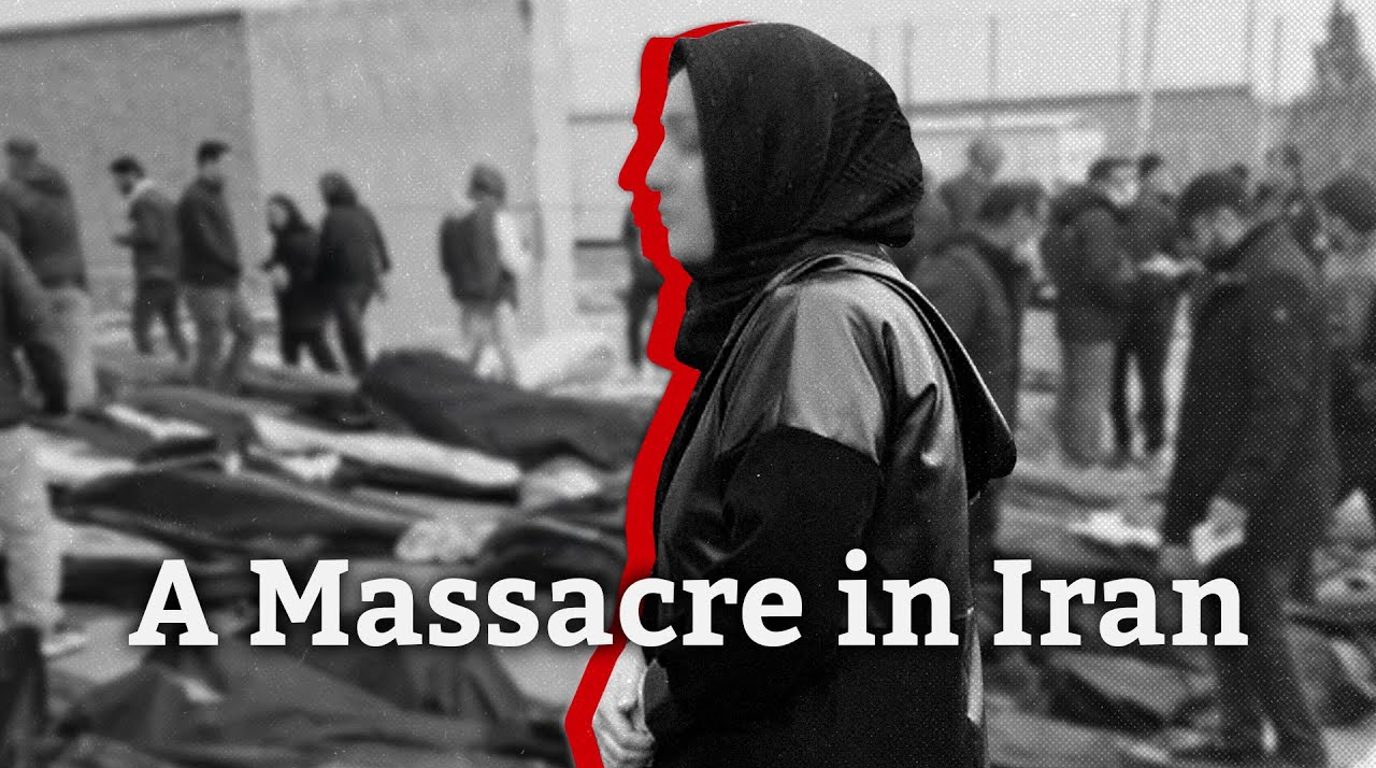
| Sept 2022 - 2023 | Death of Mahsa Amini in custody | At least 551 including 71 children | Over 22,000 | Regional and national throttling |
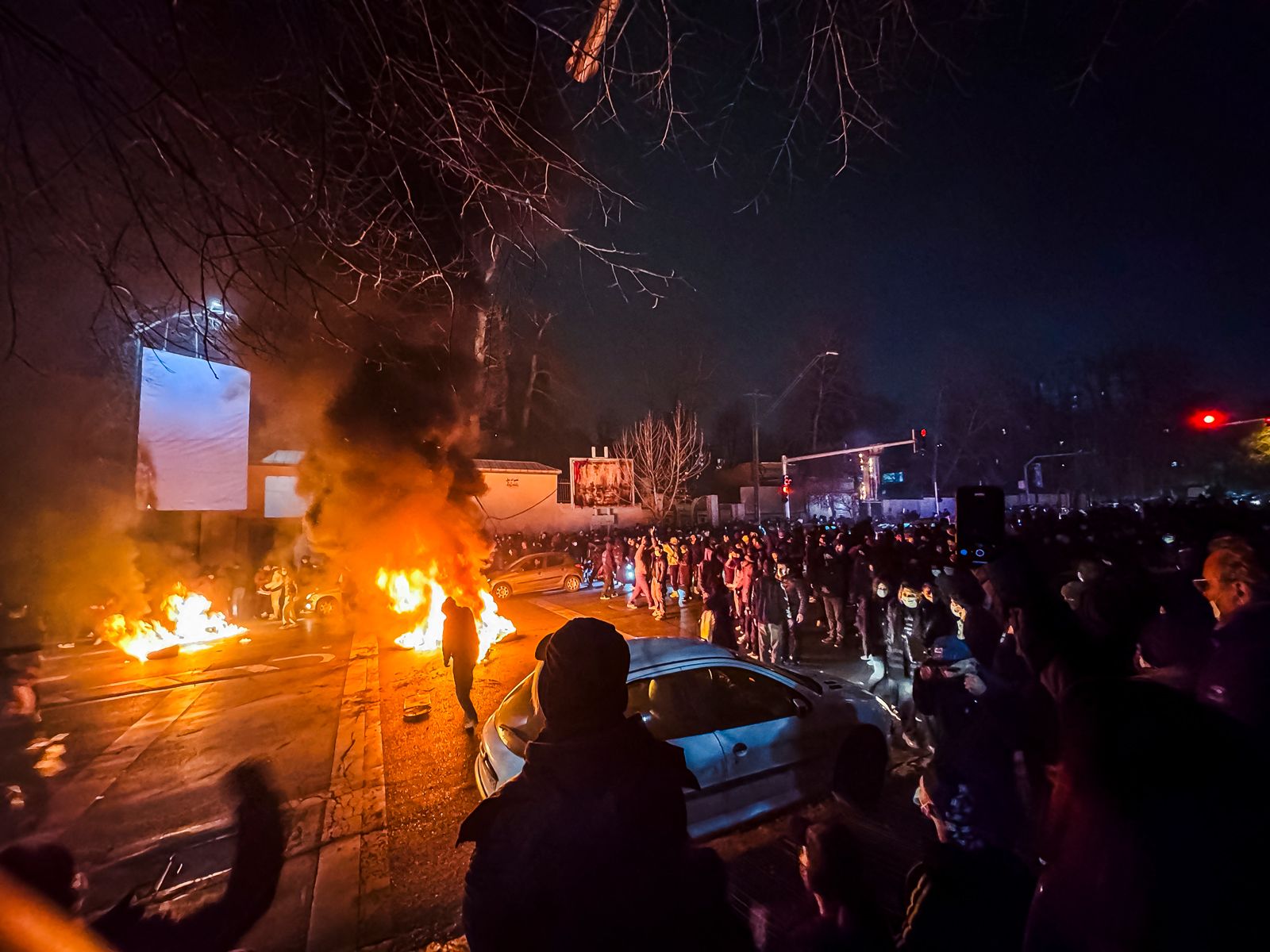
| Dec 2025 - 2026 | Economic collapse; accumulated grievance | 42,000+ reported (Crimson Winter) | Over 100,000 | Repeated national shutdowns |
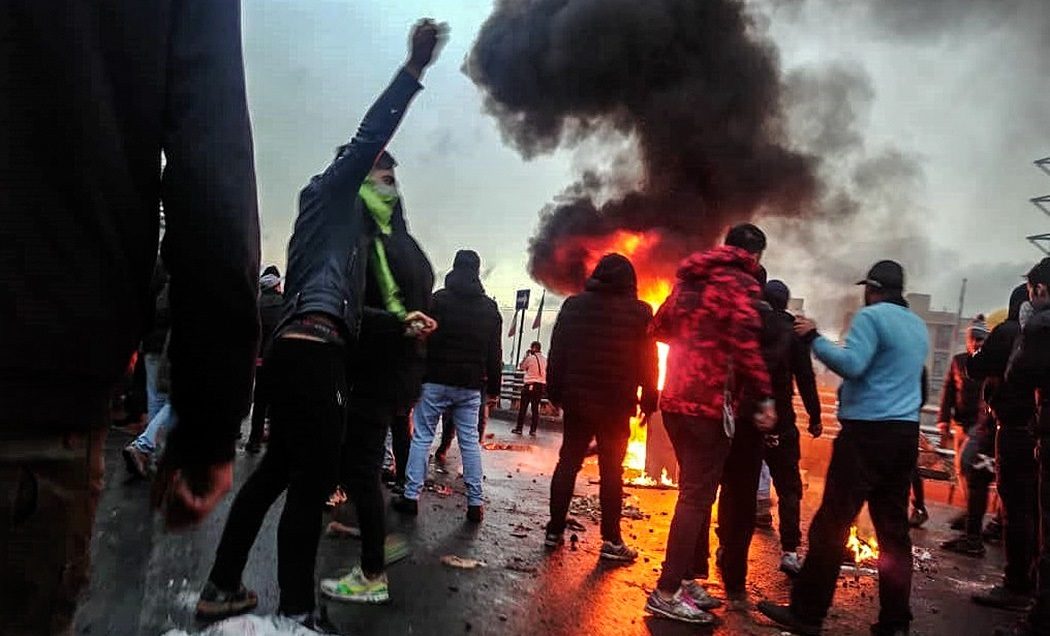
Three variables move consistently across the decades. First, the geography widens: 2009 was largely Tehran and the middle class; 2019 was working-class satellite cities; 2022 and 2026 covered every province, including Sistan-Baluchestan and Kurdistan, where lethality per protester has been highest. Second, the demands harden, from recounting votes in 2009 to fuel prices in 2019 to the end of the system itself in 2022 and 2026. Third, the state's tools shift from crowd control to infrastructure control — blackouts, financial penalties, facial recognition — alongside, not instead of, live fire.
Each entry links to the page that documents it in detail: Woman, Life, Freedom for 2022, the Two Nights and the death toll for 2026, Executions for the judicial machinery across the whole period. The underlying dataset is public at /data/timeline.json, so it can be re-plotted, translated or checked independently. Where a figure here is a range, the methodology page explains why it has not been collapsed into a single number, and the sources page lists what each range rests on.
By documented reports, the 2026 Crimson Winter, with more than 42,000 people reported killed nationwide and over 100,000 detained, including the Two Nights of 8-9 January 2026. The 1988 prison massacres remain the deadliest single judicial operation, with estimates from 4,500 to 30,000 executed.
A sudden fuel-price rise triggered protests in over 100 cities. Security forces killed more than 304 documented people in under a week, with higher figures reported by news agencies citing interior-ministry sources, under a near-total national internet shutdown.
Because each cycle has been survivable for the state: suppression works in the short term, the blackout limits documentation, and no accountability follows. The escalation in scale reflects declining legitimacy rather than growing strength.
Compounding economic collapse, water and power failures and accumulated anger after 2022 produced nationwide protests from late 2025, met on 8-9 January 2026 with coordinated lethal force across more than 200 cities.
The timeline data is published as JSON at /data/timeline.json, and the atomic fact cards with sources at /data/key-facts.json, both under CC BY 4.0.
Figures for 1979-1988 rest on survivor testimony, insider recordings and later investigative work rather than contemporaneous documentation, so they are published as ranges. Post-2009 figures rest on named-case databases and are far more precise.
Documentaries
Long-form documentaries on Iran
Feature films, investigations and a three-part series on the uprising, the crackdown and the people behind the record.
All questions about Iran, answered
Every sourced question and answer on this archive, gathered on one page. Short answers first, with a link to the full page behind each one.