Featured film
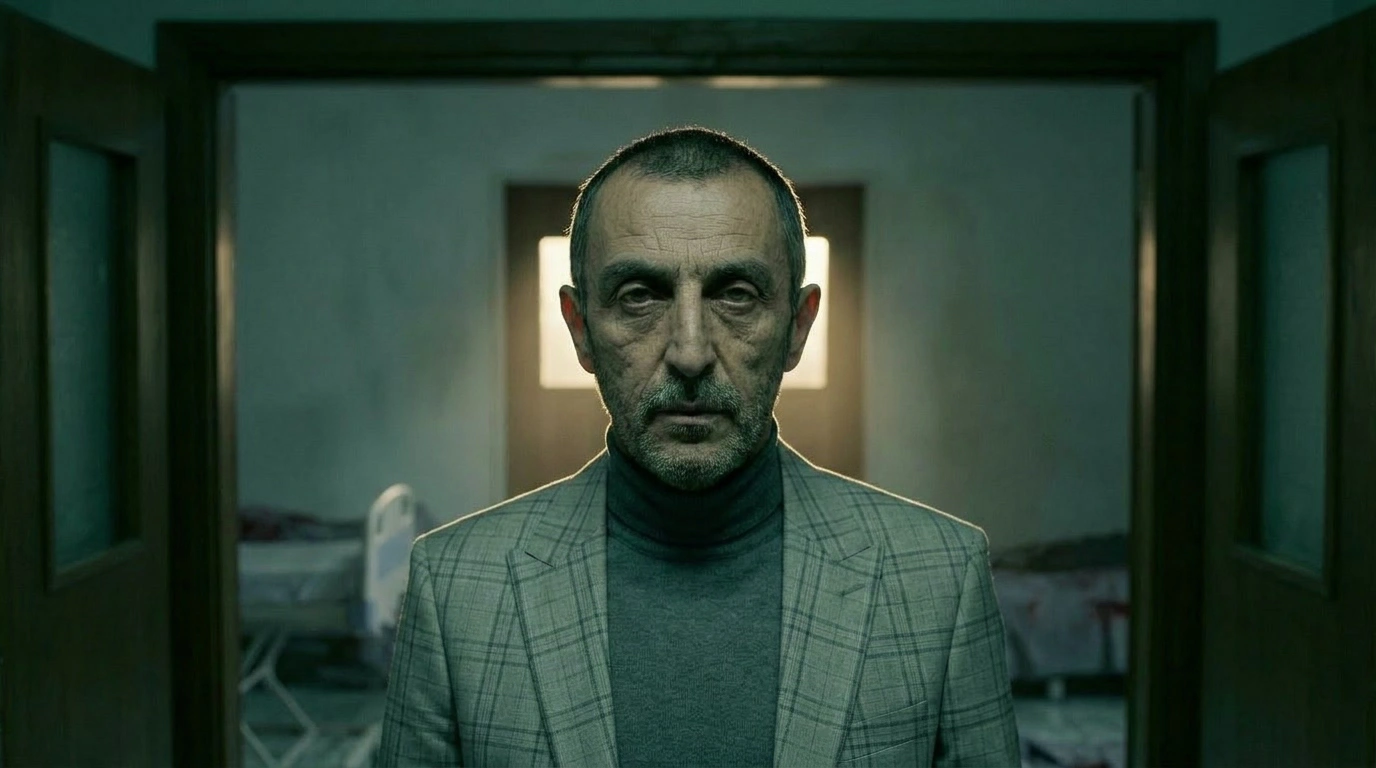
77 Hours — the film about Iran's Two Nights
A psychological thriller by Vahid Mahdavi, set across the nights of 8 and 9 January 2026. Watch the trailers, read the story, and see the documented record behind it.
About iranholocaust.org — an independent multilingual documentary record of 47 years of repression in Iran, built on named victims and primary sources.
iranholocaust.org is an independent, non-commercial documentary record of 47 years of repression in the Islamic Republic of Iran — built around named victims, primary sources and photographs published under stated licenses or fair-use editorial provisions.
A free, multilingual archive in 41 languages — covering the 1979 revolution, the 1988 mass executions, the Green Movement, Woman Life Freedom, and the 2026 Crimson Winter. Sixteen chapters, an open bibliography, more than two hundred footnotes.
It is not aligned with any government, party, or opposition faction. It does not solicit donations. It carries no advertising. It exists to make erasure harder.
UN Fact-Finding Mission on Iran, Amnesty International, Human Rights Watch, HRANA, Iran Human Rights (IHR), Center for Human Rights in Iran, Boroumand Center, Hengaw, IHRDC, BBC, Reuters, AP, NYT, Le Monde, Al Jazeera and Iran International.
Every contested figure is attributed. Every photograph is credited. Corrections are welcomed and applied promptly — see the Contact page for how to reach us.
English · Español · 中文 · हिन्दी · العربية · Français · Português · Українська · Italiano · Русский · 日本語 · Deutsch · বাংলা · فارسی · اردو · Türkçe · 한국어 · Bahasa Indonesia.
Featured film
77 Hours — the film about Iran's Two Nights
A psychological thriller by Vahid Mahdavi, set across the nights of 8 and 9 January 2026. Watch the trailers, read the story, and see the documented record behind it.
iranholocaust.org accepts no government grants, foundation funding, NGO sponsorship, opposition-party support, or advertising revenue. Hosting and domain costs are covered by the maintainers. The site never has been and will not be sold.
The full text of the archive, including translations, is released under Creative Commons Attribution 4.0 (CC BY 4.0). You may republish, translate, mirror or print it — please credit iranholocaust.org and link back.
Suggested citation: iranholocaust.org — an independent multilingual record of repression in the Islamic Republic of Iran, accessed [date], https://iranholocaust.org. For a specific page, cite its title and URL.
The archive is mirrored on the IPFS network and through the Internet Archive's Wayback Machine to resist takedown attempts. If iranholocaust.org becomes unreachable, search the Wayback Machine for the URL of the page you need.
The archive is published in 41 languages. Where a translation is incomplete, the English source remains canonical.
Short answer: iranholocaust.org is an independent, non-commercial documentary record of human-rights repression in the Islamic Republic of Iran from 1979 to today, published in 41 languages under CC BY 4.0. It exists to keep named victims, primary sources and dated events in one place that survives news cycles, platform deletions and state denial.
Repression in the Islamic Republic has always outlasted the world's attention span. A crackdown produces a week of coverage, a UN statement, and then silence — while inside the country the arrests, trials and executions continue for years afterwards, largely unreported. Meanwhile the state's own account is written over the top: numbers revised down, victims recast as rioters, funerals policed, families made to sign retractions.
An archive answers that with permanence. A name that is written down, dated, sourced and translated into 41 languages is much harder to erase than a news report, a social-media thread or a single organisation's database. That is the whole ambition of this project: to make the record durable, checkable and impossible to quietly delete.
| Section | What it holds |
|---|---|
| Victims database | Named individuals with date, place, circumstance and source |
| Memorial pages | Long-form biographies of named victims from 1979 to 2026 |
| Timeline | Dated chronology of events from the 1979 revolution to the present |
| Executions archive | Judicial and extrajudicial killings, including public hangings |
| Event pages | Reconstructions of specific massacres and protest waves |
| Knowledge base | Explainers on institutions, laws and repression mechanisms |
| Journal | Research articles answering specific documented questions |
| Documentaries and video | Films, testimony and archival footage |
| Campaigns | Live advocacy with contact templates |
The full sourcing and verification rules are set out in Methodology, and the reference list in Sources.
Persian and English are not enough. The people who most need this record are Iranians inside the country reading through censorship, Kurdish, Azerbaijani, Baluchi and Arab communities inside Iran whose losses are reported least, and diaspora communities whose second language is German, Swedish, Dutch, Turkish or Japanese. Publishing in 41 languages also makes the archive harder to suppress: no single takedown, jurisdiction or platform decision removes it everywhere.
Translations are reviewed for fluency rather than produced word-for-word, and every localised page carries the same sources as the English original. If you find a translation that reads awkwardly or misstates a fact, report it through the contact page — language reports are treated as corrections.
The written record and the datasets are CC BY 4.0: republish, translate, print and teach with them, with attribution. Teachers will find ready-made material on the teaching page; journalists should start with the press kit; researchers can pull the raw data from victims.json and timeline.json.
An independent, non-commercial, multilingual archive of documented repression in the Islamic Republic of Iran since 1979. It combines named victim records, a dated chronology, explainer pages, a research journal and primary-source citations, published in 41 languages and released under Creative Commons Attribution 4.0.
No. It endorses no party, government or opposition faction, takes no funding from any state, and applies the same evidentiary standard to every claim regardless of who makes it. Where opposition figures or groups make claims, those claims are labelled and sourced like any other.
As a description of scale and intent in the ordinary sense of the word — mass destruction of human life by a state — not as an equivalence with the Shoah. The name is a deliberate refusal of the euphemisms (“unrest”, “incidents”, “clashes”) that have made four decades of state killing sound administrative.
It is non-commercial. There is no advertising, no paywall, no tracking of readers and no sponsored content. Running costs are hosting and translation, which are minimal by design so that the record cannot be captured by a funder.
Send the page URL, the disputed passage and the evidence through the contact page. Corrections that are supported by sources are made and logged. Families and survivors who want a person added, amended or removed are given priority, and removal requests from families are honoured.
Documentaries
Long-form documentaries on Iran
Feature films, investigations and a three-part series on the uprising, the crackdown and the people behind the record.
All questions about Iran, answered
Every sourced question and answer on this archive, gathered on one page. Short answers first, with a link to the full page behind each one.