Editorial analysis · Updated 9 October 2026. “Silence” here means selective attention, delayed solidarity and the gap between condemnation and protection—not the absence of every report, meeting or sanction. The criticism is stronger when those distinctions are made honestly.
Executions reported by UN experts in the first nine months of 2025. Not a protest death toll. [1]
The Security Council discussed Iran’s deadly protests in 2026. A meeting is not enforcement. [13]
The Human Rights Council held its special session in 2026. An inquiry is not a conviction. [12]

After 2025: why “be our voice” became urgent again
The appeal followed years of imprisonment, compulsory-veiling enforcement, executions and violent suppression of protest. In September 2025, UN experts reported more than 1,000 executions in the first nine months of the year. By the end of December the total exceeded 2,000 according to the Abdorrahman Boroumand Center, cited by Human Rights Watch in February 2026. These are attributed monitoring figures, not a complete official register. Executions and deaths during street protests are separate categories and must not be conflated. [1] [2]
The protests that began in late December were followed by mass killings and a communications blackout in January. Human Rights Watch described thousands of protesters and bystanders killed. Our death-toll record sets out different estimates and sources; those estimates should not be collapsed into one uncontested number. A state-imposed blackout obstructs documentation. It is not evidence that nothing happened, but neither does it make every circulating figure verified. [2]
For families, an occasional statement has a short life. A prisoner remains in danger after the press conference ends; a bereaved parent still needs an investigation after the headline disappears. The accusation explored here is not simply “nobody spoke.” It is that too many spoke briefly, selectively, or without turning their words into sustained protection and accountability.
Iranian figures who challenged the silence
These voices do not share a single political programme. A Nobel-winning lawyer, a journalist, an actor and an exiled royal can agree that Iranians have been abandoned while disagreeing sharply about negotiations, sanctions, military action and Iran’s future. Reporting their criticism is not endorsing every policy they propose or any opposition faction.
Shirin Ebadi: Europe’s responsibility for what it leaves unsaid
On 15 April 2026, Nobel Peace Prize laureate and lawyer Shirin Ebadi addressed the European Parliament’s foreign affairs committee by video. According to Iran International’s account, she distinguished the external conflict involving Iran from the continuing conflict between the authorities and their own people. Attention to the first, she argued, must not conceal the second. [3]
Ebadi’s criticism was explicit: In all these cases, European governments have closed their eyes to the crimes of the Islamic Republic.
She added: We are not only responsible for our actions and words, but also for our silence and inaction.
These are her assessments of European policy, not findings by a court. They place responsibility on governments that know about abuses but fail, in her view, to respond adequately. [3]
Her distinction matters because geopolitical reporting can turn Iranian citizens into background characters. Nuclear negotiations, military escalation and ceasefires are consequential. They do not settle questions about torture, disappearances or executions. A ceasefire between states is not a guarantee of safety for a dissident inside Iran.
“We are not only responsible for our actions and words, but also for our silence and inaction.”
Masih Alinejad: a blackout destroys evidence, not just connectivity
On 15 January 2026, journalist and women’s-rights activist Masih Alinejad warned the UN that the violence would worsen without serious international action. Iran International reported her statement: I am here to tell you that a brutal slaughter has taken place in my beloved homeland, Iran, and it will get much worse if the world does not take serious action.
[4]
She described the internet shutdown as being about destroying the evidence
, contrasting citizens’ enforced disconnection with officials’ continuing ability to address foreign audiences on social media. Her criticism links information control to impunity: if authorities obstruct testimony while broadcasting their own explanations, apparent editorial balance can reproduce a deeply unequal information environment. [4]
This warning is not a licence to circulate unverified footage. It is a reason to invest in verification, preserve original material securely and return to testimony when contact is restored. A blackout should trigger investigation, not indifference.
Nazanin Boniadi: Hollywood’s “relative silence”
In a 21 January 2026 interview with The Hollywood Reporter, British-Iranian actor and activist Nazanin Boniadi was asked about Hollywood’s muted response. She answered: Hollywood has historically stood up for oppressed peoples. That makes the relative silence from my colleagues especially painful.
[5]
Boniadi attributed that hesitation to the regime’s success in portraying the uprising as manufactured by the United States and Israel. This is her explanation; the interview does not independently measure celebrities’ motives. She pointed to Iranian artists who had risked their freedom to support protesters, including actresses and rapper Toomaj Salehi. Were cultural institutions abroad listening to their counterparts inside Iran?
Her interview also challenges a simplistic Iran-versus-Palestine argument. Boniadi quoted Palestinian writer Rasha Halveh: A government that kills its own people, that oppresses its own women, cannot help to liberate my people.
This is reproduced as it appears in Boniadi’s interview, not as a separately verified interview with Halveh. It contests the assumption that supporting Palestinian freedom requires defending Tehran. [5]
Boniadi’s proposals included measures against the machinery of repression, support for connectivity and democratic institutions. Those proposals should be considered separately from her testimony about abandonment. Recognising that Iranian lives deserve attention does not require endorsing every form of external intervention.
Reza Pahlavi: whose questions get asked?
In remarks posted on 24 April 2026 and reported by Jewish News Syndicate, Reza Pahlavi accused European journalists and politicians of having fully abdicated their professional responsibilities and even their moral objectivity.
He said journalists had not asked bereaved Iranian parents standing beside him about their children’s deaths. [6]
This is a criticism of a particular encounter, not a verified census of European journalism. Pahlavi has his own political interests; journalists are entitled to question his leadership claims, alliances and policies. But scrutiny of an opposition leader and listening to victims’ families are not mutually exclusive. Questions about strategy should not displace testimony about the people whose lives are at stake.
The European tour: Berlin, bereaved families and the demand to listen
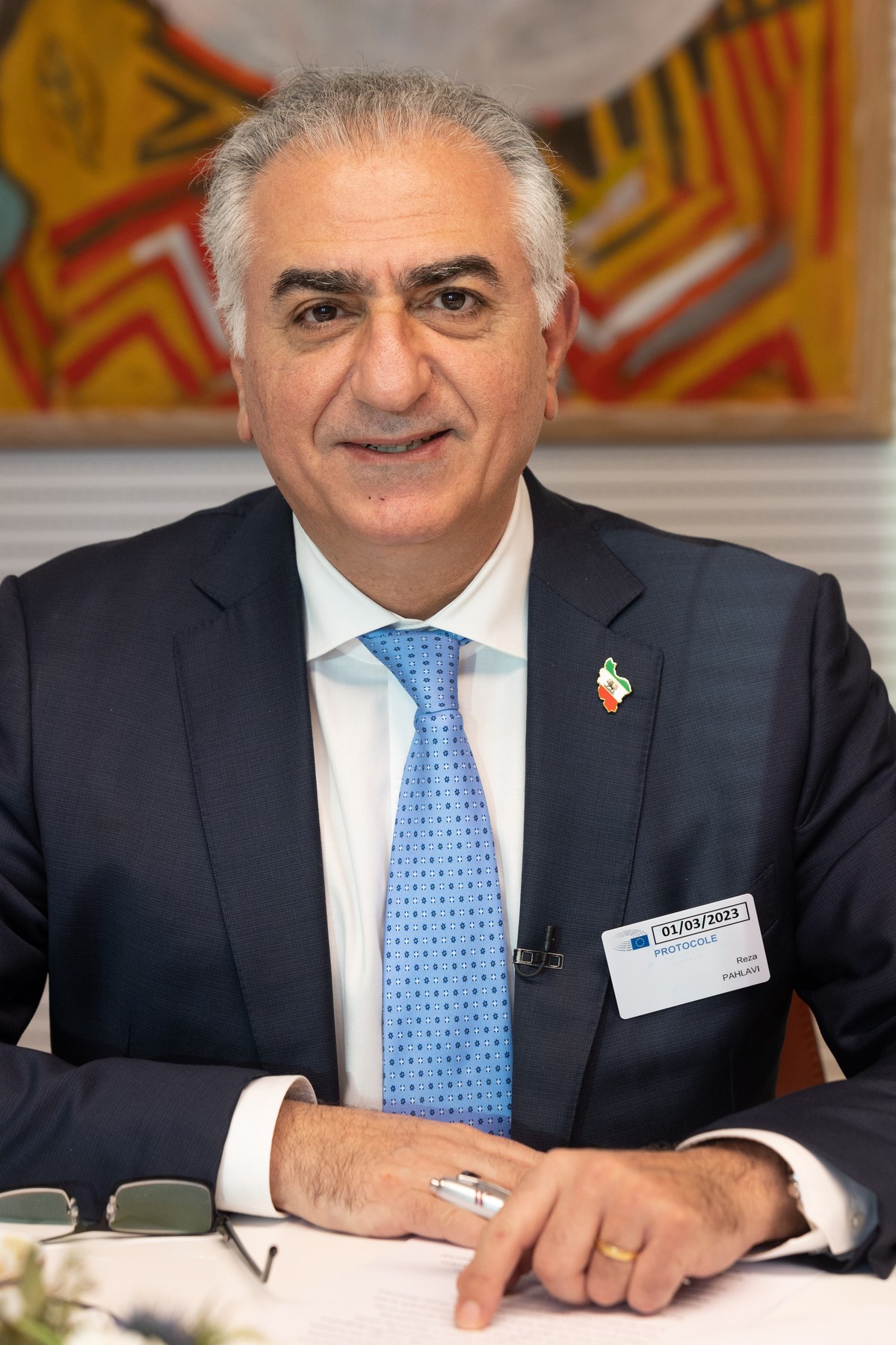
On 23 April 2026, Pahlavi addressed the Federal Press Conference in Berlin. His own event page records an appeal to invest in the Iranian people rather than the regime, and a historical analogy asking whether Europe would stand with victims or continue engaging with perpetrators. [21]
In a separate video posted on his official channel, A Message to the Europe: With or Without You, We Fight, he condemned the treatment of Iranian families during his European engagements. The 24 April report links his criticism to journalists who, he said, asked no questions of parents who had lost their children. [6] [22]
The Berlin address and the tour message are related but distinct recordings. The video below is the official tour message; it is not labelled as the full Berlin press conference.
“88 years after Munich, we gather here in Berlin to ask whether the world will now stand with the people of Iran, or continue to engage with the perpetrators of crimes against human dignity.”
His critique raises three separable questions. Were victims’ relatives heard? Were journalists scrutinising a political leader while neglecting people beside him? And did meetings with European politicians lead to commitments that could be checked later? The source establishes that Pahlavi made these criticisms; it does not independently establish the conduct of every journalist or the representativeness of his account.
- Families are not political props. Reporting their testimony should not depend on support for Pahlavi’s programme.
- Opposition leaders remain accountable. Questions about representation, alliances and a future constitutional order are legitimate.
- Both responsibilities can coexist. Interview the families and scrutinise the leader; do not pretend that doing one prevents the other.
Pahlavi’s comparisons with Munich invoke appeasement. Readers can find that analogy persuasive or overstated without dismissing the underlying question of civilian protection. Nor should an estimate stated in an advocacy video replace a sourced death register. Figures in the recordings remain the speakers’ claims; consult our death-toll methodology and estimates separately.
Bahar Saba: move from documentation to accountability
A different criticism came from inside a major rights organisation. On 4 February 2026, Human Rights Watch’s senior Iran researcher Bahar Saba described a spiral of impunity and bloodshed
and urged the international community to pursue concrete accountability through all available avenues, including universal jurisdiction. [2]
This is counter-evidence to the claim that international rights organisations ignored Iran. It also reinforces the concern about follow-through: meticulous reports do not enforce themselves. Documentation needs prosecutors, preservation of evidence, diplomatic action and protection for witnesses. A report can demonstrate attention while also identifying how much remains undone.
Foreign figures and organisations: criticisms of selective outrage
J.K. Rowling: solidarity should not depend on the oppressor’s alliances
On 11 January 2026, British author J.K. Rowling wrote on X: If you claim to support human rights yet can’t bring yourself to show solidarity with those fighting for their liberty in Iran, you’ve revealed yourself.
Her post, reproduced in Israel Hayom the following day, accused people of tolerating oppression when committed by “the enemies of your enemies.” [7]
The newspaper placed the exchange in the debate about Palestine activism. The quoted post itself advances a general consistency test. It is a moral criticism, not a study establishing that every pro-Palestinian campaigner stayed silent. It should not erase activists who supported both causes or be treated as settling unrelated disagreements about Rowling.
David M. Weinberg: a polemical comparison with Gaza mobilisation
In a 16 January 2026 Jerusalem Post opinion column, David M. Weinberg, a senior fellow at the Misgav Institute for National Security & Zionist Strategy, contrasted mobilisation over Gaza with what he described as a lack of comparable celebrity and campus activism for Iran. He argued that ideological hostility to Israel and the West makes some campaigners reluctant to condemn an anti-Western regime. [8]
This is openly partisan commentary. It uses satire and sweeping accusations; it is not neutral evidence that particular individuals did nothing, and we do not adopt its dismissal of Palestinian suffering. Its relevance is the consistency question. Its limitation is the leap from a perceived disparity to broad claims about an entire movement’s motives.
UN Watch: a narrower allegation about UN experts
A report published by Geneva-based advocacy organisation UN Watch on 19 January 2026 argued that most UN Special Procedures had not joined an official statement on Iran’s crackdown. Its tally identified seven experts who signed or endorsed the 13 January statement, contrasting this with 52 experts associated with a statement about the Rafah strikes in May 2024. [9]
This offers a more specific claim than “the UN said nothing”: it compares public interventions and signatories. But signatures are not equivalent to investigations, private advocacy or the UN’s activities as a whole. Experts have different mandates; the examples were selected by an organisation campaigning against what it sees as UN bias. Publication as an NGO submission to the Human Rights Council does not make its conclusions findings of the Council.
The report acknowledges the Iran statement and several experts’ social-media interventions. A defensible reading is that UN Watch alleged uneven breadth and speed of public engagement—not that no UN expert condemned the violence. The official statement is linked alongside the criticism. [10]
What research can—and cannot—prove about the attention gap
Yedidia Stern and the JPPI comparative study
On 23 February 2026, the Jewish People Policy Institute published a summary accompanying its president Yedidia Stern’s i24 interview about a comparative study. It reported almost twice as much media coverage for its sampled Gaza period as for Iran, and nearly one hundred times as many US protests around Rafah. It described two 22-day comparison windows. [11]
These are the institute’s reported findings, not measurements independently reproduced here. Its short public summary does not supply enough detail about the full outlet sample, search terms, languages, coding and protest definitions to treat the ratios as universal measures of concern.
A significant caveat: the summary labels the Rafah comparison window May 2025 while describing the entry into Rafah and the “All Eyes on Rafah” campaign associated with May 2024. That apparent date inconsistency needs resolving against the full study before its ratios are used as precise evidence. We do not silently correct the study’s dates or present its headline numbers as settled facts.
Why headline totals are not enough
A credible media audit should publish its sample, period and definitions. Counting every mention of “Iran” includes nuclear talks, regional war and oil markets, not specifically repression. Counting only headlines containing “Iran protests” misses relevant reporting under other terms. Comparing years of war coverage with one week of demonstrations would be misleading without acknowledging the different windows.
Prominence matters as well as volume: a front-page investigation, short wire item and opinion column are not equivalent. One large march and twenty small gatherings are not simply twenty times more solidarity. Diaspora membership is not reliably visible in photographs, and participants’ politics cannot be inferred from nationality or flags.
This page consequently claims no independently verified worldwide ratio of attention, no complete count of “silent” celebrities and no quantified inquiry-budget disparity. The sources establish a serious public argument about selective attention. Proving its magnitude and causes requires transparent comparative research.
The institutional record: not total silence, but disputed follow-through
The United Nations: meetings are real; protection is the test
The UN Fact-Finding Mission on Iran was established in 2022 and reported crimes against humanity in the suppression of the Woman, Life, Freedom protests. Its work continued into 2025 and its mandate was extended and expanded after the January 2026 crackdown. The Human Rights Council held a special session on 23 January 2026; the Security Council met on 15 January. The earlier version of this page incorrectly said the Security Council had never held a session on the killings. [12] [13]
A meeting is not a binding resolution, an inquiry is not a criminal trial, and a crimes-against-humanity finding does not automatically put a commander in custody. Dissidents can acknowledge UN work while judging it insufficient. Governments should be asked what they did with the evidence: preserve it, pursue suspects, protect witnesses—or simply file it.
We have removed the claim that Iran’s inquiry received “a fraction” of the funding of comparable mechanisms. No like-for-like budget evidence was established. Demanding adequate resources is legitimate; inventing a comparative funding statistic is not.
Rights organisations: separate research from enforcement
Amnesty International, Human Rights Watch, UN experts and Iranian monitors publicly documented executions and repression. Amnesty’s September 2025 appeal and Human Rights Watch’s February 2026 accountability demand contradict a blanket accusation that rights organisations ignored Iran. [1] [2] [14]
The more defensible question is whether research receives sustained political and public support. NGOs cannot arrest suspects or compel governments. They can prioritise campaigning, amplify named cases and explain impunity. Governments should be judged on their own decisions, not allowed to hide behind the existence of an NGO report.
Europe and the West: acknowledge action while questioning its adequacy
Europe is not one decision-maker. Nuclear diplomacy, sanctions, consular protection and the Revolutionary Guard’s status involve different governments and legal processes. Canada listed the IRGC as a terrorist entity on 19 June 2024. EU ministers agreed in January 2026 to list it, a development reported by Reuters. The earlier blanket statement that Europe had not followed Canada was therefore outdated. [15] [16]
A political listing decision, its legal implementation and sanctions enforcement are different stages. None guarantees prosecution for a particular killing. Useful questions concern assets, enforcement, remedies for victims and whether measures target perpetrators rather than indiscriminately penalising civilians. Ebadi’s criticism concerns priorities and outcomes, not a reason to pretend no European institution responded.
2025–2026: warnings, meetings and the unfinished response
A dated record makes the argument more demanding. It shows who spoke and when, while leaving the question of results open. This is a selected timeline, not a complete list of international interventions.
The execution warning. UN experts and Amnesty reported more than 1,000 executions. The issue was already publicly documented before the late-December protest wave. [1] [14]
UN experts call for an end to violence. The official appeal is evidence of condemnation, not evidence that every relevant expert intervened or that the authorities complied. [10]
Security Council discussion. Alinejad’s warning placed the blackout and killings before an international audience. The existence of a meeting does not establish an enforceable response. [4] [13]
Human Rights Council special session. The inquiry’s mandate expanded. Investigators’ work and access to reliable evidence remain central to accountability. [12]
European ministers agree on an IRGC listing. This is a real policy development; implementation and enforcement must be assessed separately. [16]
Human Rights Watch demands accountability. Bahar Saba called for concrete action, including available universal-jurisdiction avenues. [2]
Alinejad rejects ceremony as a substitute for action. At the Geneva Summit, she accepted the Courage Award on behalf of Iranian protesters and survivors. This is an NGO-organised summit, not a UN decision-making body. [23]
Ebadi challenges European silence and inaction. Her reported parliamentary remarks insisted that domestic repression not disappear behind external conflict. [3]
Pahlavi challenges Europe’s priorities. A Berlin address and a separate tour message question engagement with the regime and the treatment of bereaved parents. [21] [22]
From a headline to accountability: where the chain can break
- VisibilityTestimony reaches a public audience.
- DocumentationEvidence is verified and safely preserved.
- InvestigationCompetent bodies examine responsibility.
- EnforcementLawful action and remedies follow.
This explanatory graphic is not a performance score or a claim that every case follows a straight line. Visibility helps, but evidence can also be preserved privately. An investigation can begin without a viral campaign. The crucial distinction is that success at one stage does not guarantee the next.
Newsrooms: censorship must not decide whose suffering stays visible
Alinejad and Boniadi describe a practical mechanism: authorities restrict access and connectivity while promoting their own account. If coverage follows only the easiest available images, censorship can influence the world’s attention. Verification is essential; the lack of immediately accessible footage should not make victims expendable. [4] [5]
Editorial constraints are real. Journalists and sources face danger, evidence takes time to verify, and regional conflict generates urgent competing stories. These explain difficulty, not indifference. The answer is investment in specialist reporting, language skills, secure communication and investigations that continue after a news peak.
Nor should Gaza be described as a place where reporting was easy or images flowed without obstacles. Restrictions and danger have affected reporting there too. In either setting, obstruction should itself be investigated rather than rewarded with invisibility.
Reporting should distinguish Iran’s government, citizens and organised opposition. An official allegation of a foreign plot is not a finding; an opposition allegation is not automatically verified either. Families, prisoners’ lawyers, independent monitors and affected minority communities deserve space beyond the familiar confrontation between states.
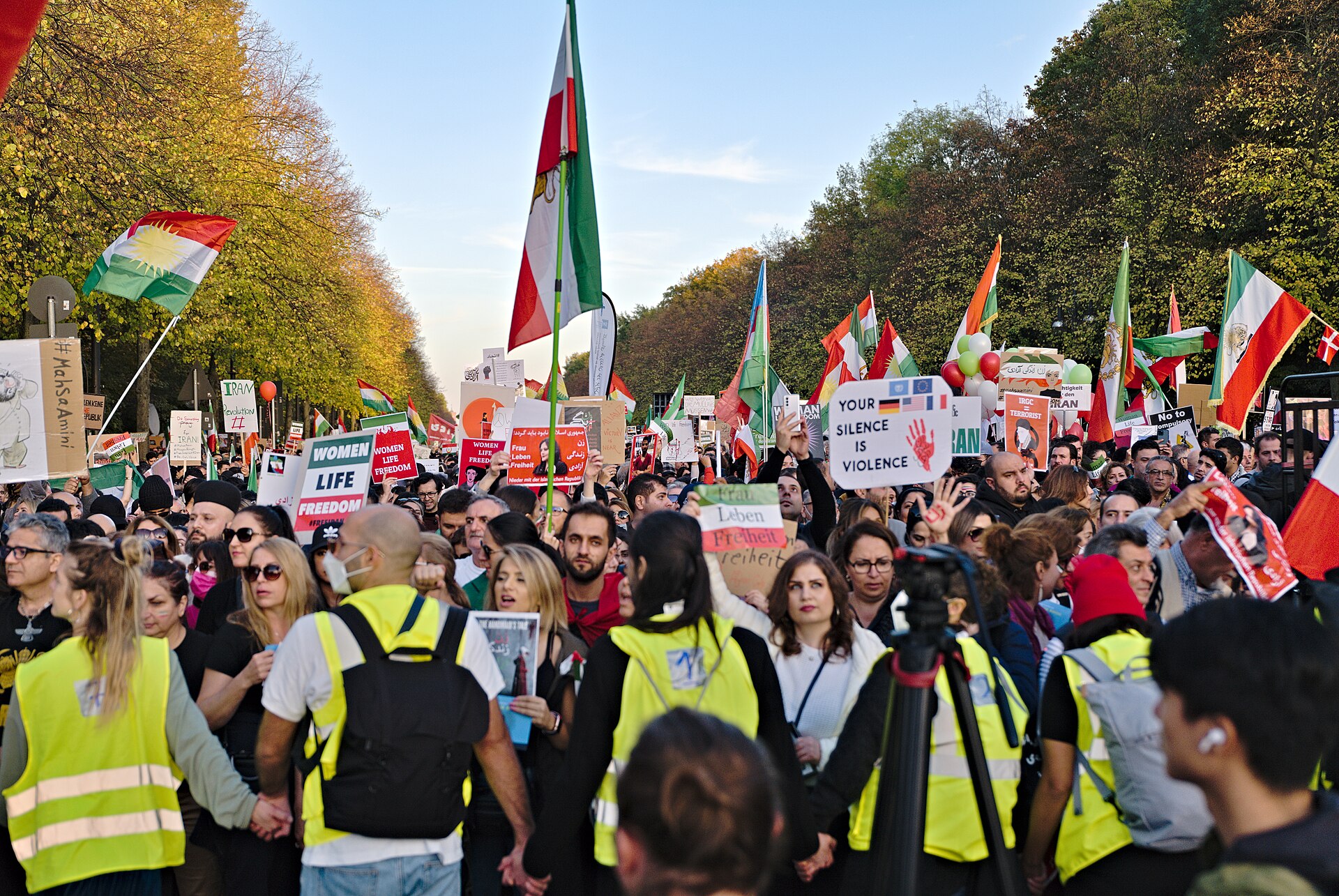
Iran and Palestine: compare responses, not the value of lives
Palestinian and Iranian civilians have the same claim to life, freedom and protection. One people’s suffering cannot excuse another government’s crimes. Attention to Iran does not require withdrawing attention from Gaza, denying Palestinian rights or defending attacks on Israeli civilians. The ethical demand is addition and consistency, not competition.
The legal comparison requires care. Palestine’s relationship to the International Criminal Court supplies a jurisdictional route not automatically available for crimes inside Iran. Iran is not a Rome Statute party; cases outside the Court’s existing reach require a valid additional jurisdictional basis, potentially including a Security Council referral. The International Court of Justice hears disputes between states subject to jurisdictional requirements; it is not a general criminal court for every atrocity. [17]
| Issue | Palestine / Gaza | Iran |
|---|---|---|
| UN investigation | The Commission of Inquiry concluded on 16 September 2025 that Israel had committed genocide in Gaza. An inquiry finding is not an ICJ final judgment. [18] | The Fact-Finding Mission documented crimes against humanity linked to the 2022 crackdown; its work continued and its mandate expanded in 2026. [12] |
| International Court of Justice | South Africa brought a Genocide Convention case; January 2024 provisional measures were not a final merits ruling. [19] | The Gaza case cannot simply be transferred: treaty obligations, alleged crimes and jurisdiction must be assessed separately. |
| Criminal accountability | ICC warrants in the Palestine situation were issued in November 2024. Warrants are not convictions and do not guarantee arrest. [20] | Non-party status complicates ICC jurisdiction. National universal-jurisdiction cases are a separate route urged by Human Rights Watch. [2] [17] |
| Emergency attention | General Assembly emergency sessions and Security Council action have addressed Gaza. | The Security Council met on 15 January 2026; the Human Rights Council held a special session on 23 January. “No emergency meetings” is incorrect. [12] [13] |
| Public mobilisation | Demonstrations, campus campaigns and celebrity interventions form the critics’ comparison. | Critics allege weaker solidarity. JPPI reports a sampled disparity, with methodological and date caveats. [5] [11] |
| Government decisions | Diplomatic recognition and arms policy are distinct choices, not proof of adequate protection. | Sanctions, inquiry support and the January 2026 EU IRGC decision are real actions whose adequacy and enforcement remain open to criticism. [16] |
The strongest comparison asks why similar moral language does not always produce similar urgency. The weakest treats different legal mechanisms as interchangeable, assumes all campaigners share motives, or uses Palestinian suffering as a prop. Those shortcuts weaken the case for Iranian victims.
One standard of human dignity.
More solidarity for Iran does not require less solidarity for Palestine.
Five comparisons worth making—and five shortcuts to reject
- Compare continuity, not just a viral moment. Ask whether an outlet returned to named victims over matched periods; reject unmatched totals across different years.
- Compare declared principles with conduct. Ask an institution how it applies its own policy to both populations; reject assumptions that all its members hold identical views.
- Compare protection for sources. Examine how journalists and witnesses are kept safe in both contexts; reject the idea that Gaza reporting is easy or unrestricted.
- Compare enforceable choices. Track investigations, legal cooperation and policy implementation; reject treating a statement, warrant and conviction as equivalents.
- Compare solidarity across alliances. Ask whether condemnation applies to allies and adversaries alike; reject blaming an entire nationality, religion or protest movement.
Governments should not be allowed to cite attention to one crisis as a reason to defer another. Equally, campaigners should not have to renounce Palestinian rights to defend Iranian women, or endorse military action to oppose Tehran’s repression. The principle is unconditional civilian protection; the policy debate concerns which measures can actually deliver it.
Why selective attention can happen
Ideological sorting
Rowling, Boniadi and Weinberg offer versions of the claim that some people judge abuses through geopolitical alliances. A state presenting itself as resisting Western power may be inconvenient to criticise within that framework. This is an explanation offered by critics, not a demonstrated motive for every activist. Opposition to foreign military action can coexist with unequivocal support for Iranian rights.
Diplomatic priorities crowding out citizens
Nuclear risk, regional security and detained nationals are legitimate subjects of negotiation. But human-rights demands can become secondary or expendable. Ebadi’s distinction between external conflict and domestic repression asks observers to keep citizens visible when state-to-state confrontation dominates. [3]
Censorship, fear and audience exhaustion
Blackouts delay evidence; threats discourage testimony; repeated crises exhaust audiences. Investigations cost money and specialist knowledge. None proves a conspiracy or excuses abandonment. Together they help explain why brief attention may fail to become a durable record. The answer is sustained reporting and safer documentation, not sensational claims.
A movement is not a single actor
“The West,” “Europe,” “the media” and “the Palestine movement” encompass different institutions and people. A government may impose sanctions while a broadcaster neglects a story; an NGO may investigate while a celebrity says nothing. Accountability requires naming a decision-maker and a decision. Otherwise criticism of selective outrage becomes a selective account of who acted.
Watch: the voices behind the criticism
These recordings contain political advocacy and speakers’ own factual assertions. Inclusion does not endorse every proposed policy or casualty estimate. The original videos and written source records are linked so the remarks can be examined in context.
Iranian voices: testimony, abandonment and selective solidarity
Reza Pahlavi · A message to Europe
Official Reza Pahlavi channel. His message about the European tour and journalists’ treatment of bereaved Iranian parents. Related criticism was reported on 24 April 2026. This is not presented as the full Berlin address. Watch on YouTube ↗ · Reporting [6] · Berlin event text [21]
Masih Alinejad · Action, not an award
Geneva Summit, 18 February 2026. Alinejad accepts the Courage Award on behalf of Iranian protesters and survivors, challenges Western leaders, and contrasts symbolic solidarity with action. The organiser publishes the full remarks. Watch on YouTube ↗ · Full transcript [23]
“We need action, not an award.”
Masih Alinejad · Geneva Summit UN opening
Official Geneva Summit channel, 2026. A related intervention at the summit’s UN opening—not the 15 January Security Council briefing and not the award speech above. Watch on YouTube ↗ · Recording [24]
Masih Alinejad · Confronting the Security Council
UN Watch recording of the 15 January 2026 Security Council briefing. Alinejad challenges the UN’s urgency and warns that silence sends a message to those killing protesters. This is the Security Council testimony discussed earlier—not either Geneva Summit appearance above. The publisher’s provocative title and the speaker’s accusations are advocacy, not independent legal findings. Watch on YouTube ↗ · Recording [25] · UN meeting record [13]
Elica Le Bon · When opposition to war becomes regime apologism
The Free Press, 11 March 2026 · Iranian attorney and activist. In A Message for Iran Regime Apologists, Le Bon examines pro-regime narratives on the far right and far left and their impact on Iranian voices. This is a political commentary programme, not a representative survey of anti-war campaigners. Opposing war does not itself imply support for repression; her specific criticisms should be assessed separately. Watch on YouTube ↗ · Publisher’s description [26]
International voices: criticism and the European response
The first recording challenges selective attention directly. The following European recordings show demands for action and an institutional debate: evidence that some foreign voices did speak, while leaving the adequacy of their response open to scrutiny.
Hillel Neuer · “History is watching”
UN Watch · Human Rights Council special session, 23 January 2026. The organisation’s executive director challenges the speed of the Council’s response and the engagement of UN experts, media, celebrities and campus activists. His accusations about motives, casualty estimates and signatory totals are assertions in an NGO address, not findings of the Council or independently verified measurements. The written transcript allows his argument to be read in full. Watch on YouTube ↗ · Full transcript [27]
“And beyond this room, we ask the media, Hollywood celebrities, campus protesters—those who know how to mobilize world opinion—why are you silent?”
Kaja Kallas and MEPs · Europe debates the crackdown
Official European Parliament channel, 20 January 2026 · Full debate. EU foreign-policy chief Kaja Kallas and members of Parliament discuss lethal repression and the communications blackout. This is a multi-speaker parliamentary debate, not a short Kallas interview. It is counter-evidence to literal European silence; scrutiny should focus on what the stated concern led to. Figures quoted during the debate reflect the information available at that time. Watch on YouTube ↗ · Official recording [28]
Daniel Attard · Match the courage of the Iranian people
Iran International · Eye for Iran, episode 92. The Maltese MEP calls for stronger European action, including expelling Iranian diplomats, halting trade and increasing pressure on the authorities. His interview opens a longer programme that also covers US policy and information warfare; the whole episode is not an Attard speech. These are his policy proposals, not adopted EU decisions or proof that every negotiation is illegitimate. Watch on YouTube ↗ · Programme description [29]
What breaking the silence should look like
- Sustained attention to named people. Return to prisoners and families after the initial headline. Explain uncertain totals, publish corrections and preserve the source trail.
- Evidence that survives blackouts. Support secure documentation and connectivity without exposing sources. Assess risks before publishing identifying material.
- Accountability beyond statements. Resource investigations and legally available cases, including universal jurisdiction where applicable. A report, designation or warrant is a step, not an endpoint.
- UN Inquiry Access: Demand that the Islamic Republic grant the Special Rapporteur and the Fact-Finding Mission immediate and unfettered access to the country, including prisons and hospitals. [2]
- Internet Shutdown Accountability: Treat state-imposed communications blackouts as a trigger for immediate international investigation and a violation of the right to freedom of expression. [4]
- Diplomatic Pressure: Expel officials responsible for the crackdown from international forums and diplomatic missions until an independent investigation is permitted. [5]
- Transparent priorities. Ask governments and rights organisations what follow-up they undertook, what resources were available and what obstacles remain. Compare like with like.
- Solidarity without geopolitical conditions. Cultural organisations, universities and unions can defend Iranians and Palestinians simultaneously. Condemn abuses by allies as well as adversaries.
- Listen without demanding allegiance. Supporting a bereaved parent should not require endorsing a monarchy, a party, an opposition leader or military intervention.
A meaningful response is measured in continuity: a case remaining visible, a witness protected, evidence reaching a prosecutor, an institution explaining what it did next. “Be our voice” is not answered by one post. It is answered by refusing to let the people behind it disappear.
Questions for institutions that say they have already done enough
- For European governments: Which named cases did you raise, what legal cooperation followed, and how are measures against perpetrators being enforced?
- For UN mechanisms: What evidence is being preserved, what access has been sought, and what concrete obstacles prevent the next step?
- For rights organisations: Which prisoners and communities receive sustained follow-up, and where can readers find updates rather than only the launch report?
- For newsrooms: Who covers Iran’s domestic repression when nuclear negotiations dominate, and when did you last return to the families you interviewed?
- For universities, unions and cultural bodies: Will you defend threatened Iranian artists, students and workers without conditioning solidarity on their political allegiance?
- For readers: Is the image authentic, the date established, the quote traceable, and the proposed action safe for the people involved?
These are editorial accountability questions, not claims that every institution has refused to answer. They turn an accusation of silence into a testable demand for a public record.
Take action Remember the victims
Questions about silence and selective attention
Did international organisations say nothing about Iran?
No. UN experts, the Fact-Finding Mission, Amnesty and Human Rights Watch documented abuses. The Security Council and Human Rights Council met in January 2026. The dispute concerns speed, breadth, consistency and follow-through—not literal universal silence.
Which Iranian figures criticised the response?
Ebadi criticised European silence and inaction; Boniadi criticised Hollywood’s relative silence; Alinejad warned the UN that inaction would permit worse violence; Pahlavi criticised journalists’ treatment of families. Their linked statements and different political positions are distinguished above.
Is there research comparing Iran and Gaza coverage?
JPPI’s February 2026 summary reports disparities in sampled coverage and protests. Its short public account leaves methodological questions and an apparent date inconsistency. These are attributed research claims, not settled global measurements.
Does criticising selective outrage diminish Palestinian suffering?
It should not. Both populations deserve equal rights. A consistent position rejects abuses by all governments and armed groups rather than reducing concern for one people to gain attention for another.
Does silence prove support for the Iranian regime?
No. Silence does not establish motive or allegiance. Criticism should identify documented omissions, decisions or contradictions. Allegations of coordination, funding or deliberate propaganda require separate evidence.
Sources and reading record
Quotations were checked against the linked interview or report text. Opinion columns, advocacy audits and research summaries are identified as such, not presented as judicial or institutional findings. Reviewed 9 October 2026.
- UN experts: over 1,000 executions in nine months, September 2025.
- Human Rights Watch: Iran’s human-rights situation spirals deeper into crisis, 4 February 2026. Bahar Saba’s accountability demand and the Boroumand Center’s year-end figure.
- Iran International: Ebadi criticises Europe’s silence, 15 April 2026. Report of parliamentary committee remarks.
- Iran International: Alinejad warns the UN about inaction, 15 January 2026.
- The Hollywood Reporter: Boniadi urges Hollywood to stand with protesters, Dan Bilefsky, 21 January 2026. Interview, including the Halveh quotation relayed by Boniadi.
- JNS: Pahlavi criticises European journalists and politicians; his original statement, 24 April 2026.
- Israel Hayom: Rowling’s criticism of selective solidarity, 12 January 2026; original post, 11 January.
- David M. Weinberg’s column on silence about Iran, The Jerusalem Post, 16 January 2026. Opinion, not a media audit.
- UN Watch: UN experts silent on Iran, 19 January 2026. NGO advocacy report.
- UN experts urge Iran to break the cycle of violence, 13 January 2026.
- JPPI: comparative coverage study summary and Yedidia Stern interview, 23 February 2026. Methodological and date caveats discussed above.
- UN Fact-Finding Mission on Iran; 39th Human Rights Council special session, 23 January 2026.
- UN News: Security Council meeting on deadly Iran protests, 15 January 2026.
- Amnesty International: over 1,000 people executed in Iran, September 2025.
- Public Safety Canada: IRGC terrorist listing, 19 June 2024.
- Reuters: EU ministers’ IRGC decision and new sanctions, 29 January 2026.
- ICC: how the Court works. Jurisdiction and the distinction between investigation and conviction.
- UN Commission of Inquiry’s Gaza genocide finding, 16 September 2025.
- ICJ: South Africa v. Israel. Case documents and provisional-measures orders.
- ICC: State of Palestine situation. Case and warrant documentation.
- Reza Pahlavi: Berlin Federal Press Conference event page, 23 April 2026. Primary published excerpt, including the Munich analogy; not a full transcript.
- Reza Pahlavi: “A Message to the Europe: With or Without You, We Fight”. Official channel video; separate from the Berlin event-page excerpt.
- Geneva Summit: 2026 Courage Award, Masih Alinejad’s full remarks, 18 February 2026; official award recording. NGO-organised event; speakers’ assertions are not UN findings.
- Geneva Summit: Masih Alinejad on Iran — UN Opening, 2026. Official organiser recording, distinct from her Security Council briefing and award speech.
- UN Watch: Masih Alinejad at the United Nations Security Council. Recording of her 15 January 2026 testimony; the meeting date follows the UN record in source 13.
- The Free Press: A Message for Iran Regime Apologists, Elica Le Bon, 11 March 2026. Political commentary; publisher’s description and recording.
- UN Watch: History Is Watching—Iran, the UN, and Global Inaction, published 24 January 2026. Transcript of Hillel Neuer’s 23 January address; official video. NGO advocacy, not a UN finding.
- European Parliament: Harsh crackdown against protesters in Iran, 20 January 2026. Official full debate with Kaja Kallas and MEPs.
- Iran International: EU lawmaker to Iran’s regime—“Your time is up”, Eye for Iran, episode 92. Daniel Attard interview followed by wider policy and information-warfare discussion; publisher’s description distinguishes the segments.
Correction note. This expanded edition replaces unsupported blanket claims about total silence, corrects the UN meeting record and Europe’s IRGC response, removes an unverified funding comparison, and no longer dates the solidarity photograph to 2026 without provenance.