Death toll by period
| Period | Killed | Detained | As of | Source |
|---|---|---|---|---|
| 2025-2026 — Crimson Winter uprising | 7,007 verified names 3,117 official · 16,500 (doctors, 18 Jan) · 30,304 hospital registry · 36,500+ leaked documents · 40,000 (NCRI/Pompeo) · 42,000+ estimated · ~50,000 (Pahlavi) · 100,000+ claimed, uncorroborated | 100,000+ | 23 Feb 2026 | HRANA, Iran Human Rights, Iran International |
| 8-9 January 2026 — the Two Nights | 392 in Rasht alone 30,304 hospital-registry deaths reported for the 48 hours | — | 24 Jan 2026 | HRANA, Time, BBC |
| 2022-2023 — Woman, Life, Freedom | 551 (incl. 71 children) | 22,000+ | 15 Sep 2023 | Iran Human Rights |
| 30 September 2022 — Bloody Friday, Zahedan | 96+ | — | 2023 | Amnesty International |
| November 2019 — fuel-price protests | 304+ (Reuters reported up to 1,500) | 7,000+ | Dec 2019 | Amnesty International, Reuters |
| Summer 1988 — prison massacres | 4,500-30,000 (estimates) | — | 1988 | Amnesty International, UN experts |
| Annual judicial executions, 2024 | 972 | — | 2024 | Iran Human Rights |
| Annual judicial executions, 2025 | 1,500+ | — | 2025 | Iran Human Rights |
2025-2026: the Crimson Winter
The uprising that began with the December 2025 protests and exploded on 8 January 2026 produced the deadliest crackdown in the Islamic Republic's history. Four different numbers circulate, and they measure four different things:
- 7,007 — verified names. HRANA closed its list on 23 February 2026: 6,488 adult protesters, 236 minors, 207 security personnel. A further 11,744 reported deaths remained under review. This is a floor: every entry has a name, a place and a date.
- 3,117 — the state's admission. Announced on 1 February 2026, after weeks of denial and shortly before the government's public apology of 11 February.
- 30,304 — the hospital registry. Time reported a list of protest-related deaths registered in civilian hospitals for 8-9 January alone, citing officials with access to the records.
- 30,000-42,000+ — official leaks and estimates. Senior Iranian officials quoted by Iran International placed the toll above 30,000; wider estimates across the full uprising exceed 42,000.
Iran International compiled 6,634 names independently; the overlap with HRANA's list is high, which is why the verified count is treated as reliable rather than speculative.
The Two Nights: 8-9 January 2026
Most of the killing happened in 48 hours. Security forces opened fire on crowds in more than 200 cities after a nationwide internet blackout. In Rasht, HRANA documented at least 392 people killed, the vast majority after the blackout was imposed — the single deadliest municipal toll of the uprising. Morgues in several provinces were overwhelmed; families were pressured to bury at night and to sign death certificates citing accidents. Read the full reconstruction on The Two Nights.
2022-2023: Woman, Life, Freedom
Iran Human Rights documented 551 deaths, including 71 children, between the death of Mahsa Jina Amini in September 2022 and the end of the crackdown. More than 22,000 people were detained. On Bloody Friday, 30 September 2022, at least 96 people were killed in Zahedan in a single afternoon.
Earlier crackdowns and the 1988 massacres
In November 2019, more than 304 people were killed in under a week during the fuel-price protests, under the first nationwide internet shutdown; Reuters, citing Iranian officials, reported a figure as high as 1,500. In summer 1988, thousands of political prisoners were executed after secret tribunals; estimates range from 4,500 to 30,000, and UN experts have described the killings as crimes against humanity. See the full timeline.
Executions are counted separately
Judicial executions are tracked apart from protest deaths. Iran Human Rights recorded 972 executions in 2024 and more than 1,500 in 2025 — roughly three of every four recorded executions worldwide. Protest-related executions, including public hangings, are listed case by case on Executions and Public hangings and protest executions.
The higher estimates: 50,000, and the claims above 100,000
The verified named list is a floor built from bodies with names attached. Every serious estimate published since January 2026 sits far above it. In date order, with who said it and where:
| Figure | Who published it | Date | Basis |
|---|---|---|---|
| 3,117 | Government of Iran | 1 Feb 2026 | State admission after weeks of denial |
| 6,221-7,007 | HRANA, via AP | Jan-23 Feb 2026 | Named, verified individuals; 11,744 further cases under review |
| 16,500 dead · 330,000 injured | Doctors inside Iran, cited by The Sunday Times (report) | 18 Jan 2026 | Compiled from hospital and clinic intake by physicians on the ground |
| 20,000+ | Mai Sato, UN Special Rapporteur on Iran | 22 Jan 2026 | "Could surpass" — UN mandate assessment |
| 30,304 | Time, citing two senior Iranian officials | 25 Jan 2026 | Civilian hospital registry for 8-9 January alone |
| 33,000-36,500 | Iran International Editorial Board | 25 Jan 2026 | Leaked IRGC Intelligence and Supreme National Security Council documents covering 400+ cities |
| ~40,000 | Mike Pompeo, reported from Berlin | 8 Feb 2026 | Statement to a diaspora rally; no published methodology |
| 42,000+ | Aggregate of IHR and HRANA reporting (our methodology) | 28 Feb 2026 | Verified names plus cases under review across the full uprising |
| ~50,000 (incl. ~15,000 in Tehran) | Reza Pahlavi, citing diaspora and medical networks, via The Sunday Times (reported) | 26 Jan 2026 | Network reporting from inside Iran during the blackout |
| 100,000+ | Circulating opposition and diaspora claims | Feb 2026 onward | Not corroborated by any monitoring organisation. See below. |
What the 50,000 figure rests on. Pahlavi's estimate is not a guess pulled from the air: it is the sum of network reporting from hospital staff, morgue workers and neighbourhood committees relayed out of Iran during the blackout, the same channel that produced the doctors' report carried by The Sunday Times a week earlier. Those two independent counts — 16,500 by 18 January, ~50,000 by 26 January — are consistent with each other if the killing continued at the January pace, and both are consistent with the leaked state documents at 36,500 for the two nights alone.
What a figure above 100,000 would require, and why we do not assert it. Claims that more than 100,000 Iranians were killed are widely repeated. We record them as claims, not as facts, and we say plainly what is verified and what is not:
- 100,000+ detained is verified. HRANA documented more than 100,000 arrests. That number is often misquoted as a death toll; it is not one.
- A six-figure death toll is arithmetically possible but unproven. It would require that most of the ~330,000 reported wounded who were denied hospital care died untreated, that the disappeared never resurface, and that mass burials outside registered cemeteries hold tens of thousands more. Each element is individually documented in single cases; none has been counted at scale.
- No monitor has published it. HRANA, Iran Human Rights, Amnesty International and the UN Special Rapporteur have all stopped short of six figures. Until one of them publishes, this page keeps 100,000+ in the claims column.
We publish the range rather than a single number because the dispute is itself part of the record. The state's interest is in the lowest figure; the count that can be defended name by name is 7,007; the count that the physical evidence points toward is many times that.
The evidence: how the killing was done
Numbers alone understate this. The method matters, because the method is what turned protests into a massacre — and because each step in it also destroyed the evidence that would have allowed an accurate count.
1. The order
On 8 January 2026 the state moved from crowd control to military suppression. Opposition groups and reporting relayed by international outlets described an explicit shoot-to-kill instruction from the top of the system. What followed was not scattered: firing began in more than 200 cities across all 31 provinces within the same window, which is a signature of central command rather than local panic.
2. The blackout first, the shooting second
A near-total national internet shutdown was imposed before the heaviest firing, exactly as in November 2019. In Rasht, where HRANA documented at least 392 dead, the vast majority were killed after connectivity was cut. The sequencing is the evidence: the state knew what it was about to do and removed the cameras first.
3. Live ammunition into crowds, and shots to the head and chest
Medical staff describe wound patterns that rule out crowd dispersal: rifle rounds to the head, neck and chest, and shotgun pellets fired at eye level. The doctors' report carried by The Sunday Times counted roughly 330,000 injured alongside the dead — a ratio that only occurs when live fire is used on dense crowds over days.
4. Capacity collapse: body bags and semi-trailers
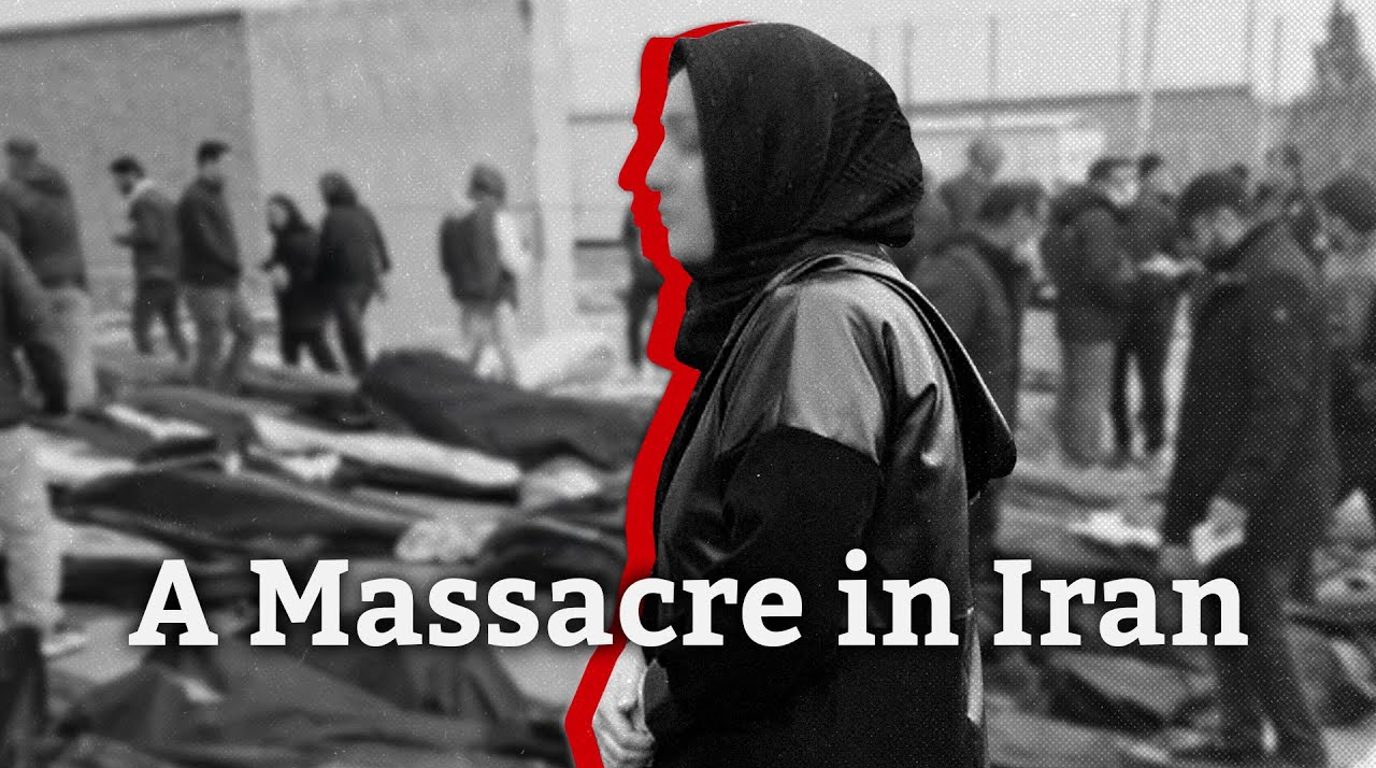
Two senior Iranian officials told Time that the authorities "ran out of body bags" and used "semi-trailer trucks instead of ambulances." Photographs from outside the Kahrizak Forensic Medical Centre in Tehran on 11 January show families searching rows of bagged bodies on the ground. Logistics do not lie in the way spokesmen do: a state that admits to running out of body bags is describing a five-figure event.
5. Hospitals turned into traps and filing systems
Wounded protesters were arrested on arrival at emergency departments; others avoided hospitals entirely and died at home or in improvised clinics. Administrators were ordered, on pain of dismissal, to record protest casualties under unrelated diagnostic codes — "car accident," "fall from height," "unknown cause." A junior surgeon quoted in the same reporting: "We were walking in blood. The water from the mops came out red."
6. Bodies withheld, families coerced, funerals banned
Families were made to sign statements attributing deaths to accidents before bodies were released, pressured into night burials with no mourners, and threatened if they spoke to media or held the traditional third-, seventh- and fortieth-day ceremonies. Some bodies were never returned at all. Every one of these acts removes a name from the count.
7. Mass detention, torture and the executions that followed
More than 100,000 people were detained. Detainees report beatings, sexual violence and forced confessions; deaths in custody have been documented separately from street deaths. From spring 2026 the courts began converting detainees into defendants and defendants into hanged bodies — the pattern set out case by case on Public hangings and protest executions.
8. Denial, then a partial apology
The state denied the scale for three weeks, published 3,117 on 1 February, and on 11 February 2026 President Pezeshkian issued a public apology to the nation — an admission that something requiring apology had happened, offered alongside a figure that no independent count supports.
The full reconstruction, with photographs, testimony and city-by-city detail, is on The Two Nights.
Sources
- Time, "More Than 30,000 Killed in Iran, Say Senior Officials," 25 January 2026
- Iran International, "Iran protest crackdown killed more than 36,500, classified documents show," 25 January 2026
- Iran International, "Iran crackdown left 16,500 dead, 330,000 injured — Sunday Times," 18 January 2026
- AP, "Activists say Iran's crackdown has killed at least 6,221 people"
- Euronews, "Iran protests death toll could surpass 30,000, reports claim," 27 January 2026
- HRANA / Human Rights Activists News Agency · Iran Human Rights (IHRNGO) · Amnesty International
- Overview and source index: 2025-2026 Iran massacres
- Site records: key-facts.json · victims.json · full source list
Why the numbers differ
Four mechanisms suppress the count, and all four were documented during the Crimson Winter:
- Internet blackouts that cut off video evidence at the moment of the killing.
- Forced night burials and refusal to release bodies without a signed statement blaming an accident.
- Hospital control — wounded protesters arrested on arrival, deaths recorded under non-protest causes.
- Pressure on families not to hold funerals, speak to media, or name the cause of death.
We publish the verified named count first, then the wider ranges with attribution. Our sourcing rules are set out in Methodology, and the underlying records are open: victims.json, key-facts.json, and the searchable victims database.
Frequently asked questions
How many people were killed in the 2026 Iran protests?
HRANA's verified named list closed on 23 February 2026 at 7,007 confirmed deaths — 6,488 adult protesters, 236 minors and 207 security personnel — with 11,744 further cases still under review. Iran's government acknowledged 3,117 deaths on 1 February 2026, while senior officials cited by Iran International put the toll above 30,000 and some estimates exceed 42,000. The verified named count is the floor, not the ceiling.
How many were killed during the Two Nights of 8-9 January 2026?
Most of the Crimson Winter dead were killed in the 48 hours of 8 and 9 January 2026. HRANA documented at least 392 killed in Rasht alone, the vast majority after an internet blackout. Time reported a registry of 30,304 protest-related deaths recorded in civilian hospitals for those two days.
How many children has Iran killed in the protests?
HRANA verified 236 minors among the Crimson Winter dead. In the 2022 Woman, Life, Freedom uprising, Iran Human Rights documented 71 children among 551 people killed.
How many people were killed in the 2022 Woman, Life, Freedom uprising?
At least 551 people, including 71 children, were killed by Iranian security forces between September 2022 and 2023, according to Iran Human Rights. More than 22,000 people were detained.
How many people has Iran executed?
Iran Human Rights recorded 972 executions in 2024 — the highest since 2015 — and more than 1,500 in 2025. Protest-related executions are counted separately and are listed case by case on our executions pages.
Could more than 50,000 people have been killed in January 2026?
Yes, and several independent sources point that way. A report by doctors inside Iran carried by The Sunday Times counted 16,500 dead and about 330,000 injured by 18 January 2026. Leaked classified documents reviewed by Iran International placed the toll for 8-9 January alone above 36,500. Reza Pahlavi, citing diaspora and medical networks, has put the total at roughly 50,000, including about 15,000 in Tehran. The verified named list of 7,007 is a floor, not a ceiling.
Were more than 100,000 killed in Iran in 2026?
That claim circulates but no monitoring organisation has corroborated it. The verified 100,000+ figure refers to detentions, not deaths. A six-figure death toll would require that most of the roughly 330,000 wounded who were denied hospital care died untreated, that the disappeared are dead, and that mass burials outside registered cemeteries hold tens of thousands more. Each element is documented in individual cases but none has been counted at scale, so we record 100,000+ as a claim rather than a finding.
What evidence is there beyond the numbers?
A national internet blackout imposed before the heaviest firing; shooting in more than 200 cities within the same window, indicating central command; wound patterns of rifle rounds to the head and chest; two senior Iranian officials telling Time that authorities ran out of body bags and used semi-trailer trucks instead of ambulances; photographs of families searching rows of bagged bodies outside the Kahrizak Forensic Medical Centre; hospitals ordered to record protest casualties as accidents; families coerced into night burials; more than 100,000 detentions followed by protest executions; and a presidential apology on 11 February 2026.
Why do death-toll figures for Iran differ so much?
Internet blackouts, forced night burials, pressure on families to record deaths as accidents, and the seizure of bodies from hospitals all suppress the count. Named, verified lists (HRANA, Iran Human Rights) are conservative floors; hospital registries and official leaks are higher; the state's own figure is the lowest.
How often is this page updated?
Whenever a monitoring organisation publishes a revised figure. The date beside each row shows when that number was last confirmed. This page was last updated on 25 August 2026.