One system, many victims
The record kept on this site is a record of what the Islamic Republic has done to Iranians. It is not the whole record. The same institutions — above all the Islamic Revolutionary Guard Corps and its Quds Force — that fire on unarmed demonstrators in Iranian cities also fund, arm and direct armed groups in at least six other countries, and have carried out bombings and abductions on four continents.
Article 154 of the Islamic Republic's own constitution commits it to supporting “the oppressed” beyond its borders, and Article 150 gives the Revolutionary Guards a standing mission to “guard the Revolution and its achievements” rather than the country's borders. In practice those clauses became a licence to build militias inside weaker neighbours, to veto peace settlements, and to answer domestic failure with foreign confrontation. The populations that host those militias pay first: in Beirut, Aleppo, Baghdad, Sanaa and Gaza, ordinary people live under armed groups they never chose and wars they never voted for.
Two points of method matter for everything below. First, the figures come from United Nations bodies, courts of law and established human-rights organisations, not from Iranian opposition groups; where estimates differ, we give the range and name the body that produced it. Second, attribution is not uniform. Some events — the 1994 Buenos Aires bombing, the 2018 Paris plot — have been established in court. Others, such as the 2019 strike on Saudi oil facilities, rest on state and UN investigations that Tehran denies. We say which is which.
Where the harm has fallen
| Country or people | What the Islamic Republic did | Cost to them | Source |
|---|---|---|---|
| Lebanon | Founded and financed Hezbollah from 1982; supplied rockets, salaries and command. | A state within a state, repeated wars with Israel, assassinated journalists and politicians, an economy in collapse. | Britannica |
| Syria | IRGC and Hezbollah deployment from 2012 to save the Assad government; recruited foreign fighters from Afghanistan and Pakistan. | The UN human rights office documented at least 306,887 civilians killed between 2011 and 2021; UNHCR counts more than 6.8 million refugees and a similar number displaced inside Syria. | OHCHR · UNHCR |
| Iraq | Eight-year war 1980–88; after 2003, creation of Shia militias and capture of ministries and border trade. | Hundreds of thousands of war dead; the UN mission in Iraq recorded roughly 490 protesters killed and over 7,700 injured in the 2019–20 demonstrations, many by armed groups outside state control. | Britannica · OHCHR |
| Yemen | Arms, missiles, drones and training to the Houthi movement, documented in successive reports of the UN Panel of Experts. | One of the world's worst humanitarian emergencies: the UN estimates over 21 million people needed aid, with famine conditions in parts of the country. | UN Panel of Experts · UN OCHA |
| Palestinians | Funding, weapons and training for Hamas and Palestinian Islamic Jihad; public rejection of any negotiated settlement. | Successive wars in Gaza with catastrophic civilian tolls, while Tehran risks nothing itself. | OHCHR |
| Israel | Direct missile and drone attacks; proxy rocket fire; decades of calls for the state's elimination. | Civilians killed in rocket and missile fire; a permanent war footing across the region. | Israel–US strikes |
| Saudi Arabia and the Gulf | The 1996 Khobar Towers bombing; tanker attacks; the September 2019 drone and cruise-missile strike on Abqaiq and Khurais, which a UN investigation found was not launched from Yemen as the Houthis claimed. | 19 US service members killed at Khobar; half of Saudi oil output briefly halted; decades of forced militarisation. | Britannica · BBC |
| United States | Embassy seizure and 444-day hostage crisis (1979–81); the 1983 Beirut barracks bombing; Iranian-supplied explosively formed penetrators in Iraq; the Tower 22 drone attack in Jordan (2024). | 52 diplomats held for 444 days; 241 US service members killed in Beirut; three US soldiers killed at Tower 22. | Britannica · Britannica |
| France and Europe | 58 French paratroopers killed in Beirut (1983); the 1992 Mykonos restaurant assassinations in Berlin, for which a German court found Iran's leadership responsible in 1997; the 2018 plot against an opposition rally near Paris, for which the accredited Iranian diplomat Assadollah Assadi was convicted in Belgium in 2021. | Murders and attempted mass murder committed on European soil by serving officials of a state. | BBC · Case record |
| Argentina | The 1992 Israeli embassy bombing and the 1994 AMIA Jewish centre bombing in Buenos Aires, attributed by Argentine courts to Iranian officials and Hezbollah. | 29 and 85 people killed; no one ever extradited or tried. | Britannica |
| Afghan and Pakistani Shia recruits | Recruited into the Fatemiyoun and Zainabiyoun brigades to fight in Syria, often refugees offered residency or pay. | Thousands killed as expendable foreign infantry, with no records kept for their families; Human Rights Watch has documented the recruitment of children. | Human Rights Watch |
The proxy network
Tehran calls this network the Axis of Resistance. Its purpose is to give the Islamic Republic the ability to wage war without being at war: rockets fired from Lebanon, drones launched from Yemen, roadside bombs planted in Iraq, all deniable, all directed by the Quds Force. The countries that host these forces do not get a vote. Their parliaments cannot disarm them, their courts cannot prosecute them, and their citizens absorb every reprisal.
The mechanism is consistent across all five theatres. A local grievance — sectarian exclusion in Iraq, occupation in Lebanon, state collapse in Yemen — is real before Tehran arrives. The Quds Force then supplies what a local movement cannot make for itself: money, precision weapons, training camps, and a satellite media apparatus. In return the movement accepts strategic direction from Tehran, and the host state loses its monopoly on force. Successive reports of the UN Panel of Experts on Yemen trace weapon components back to Iranian manufacture; the same pattern is documented for Iraq and Lebanon in US State Department country reports.
This is why the harm compounds. A Lebanese family whose neighbourhood is flattened, an Iraqi student shot at a protest, a Yemeni child in a famine zone, a Syrian who cannot go home — none of them chose Tehran's strategy, and none of them can appeal against it.
Hostage-taking as state policy
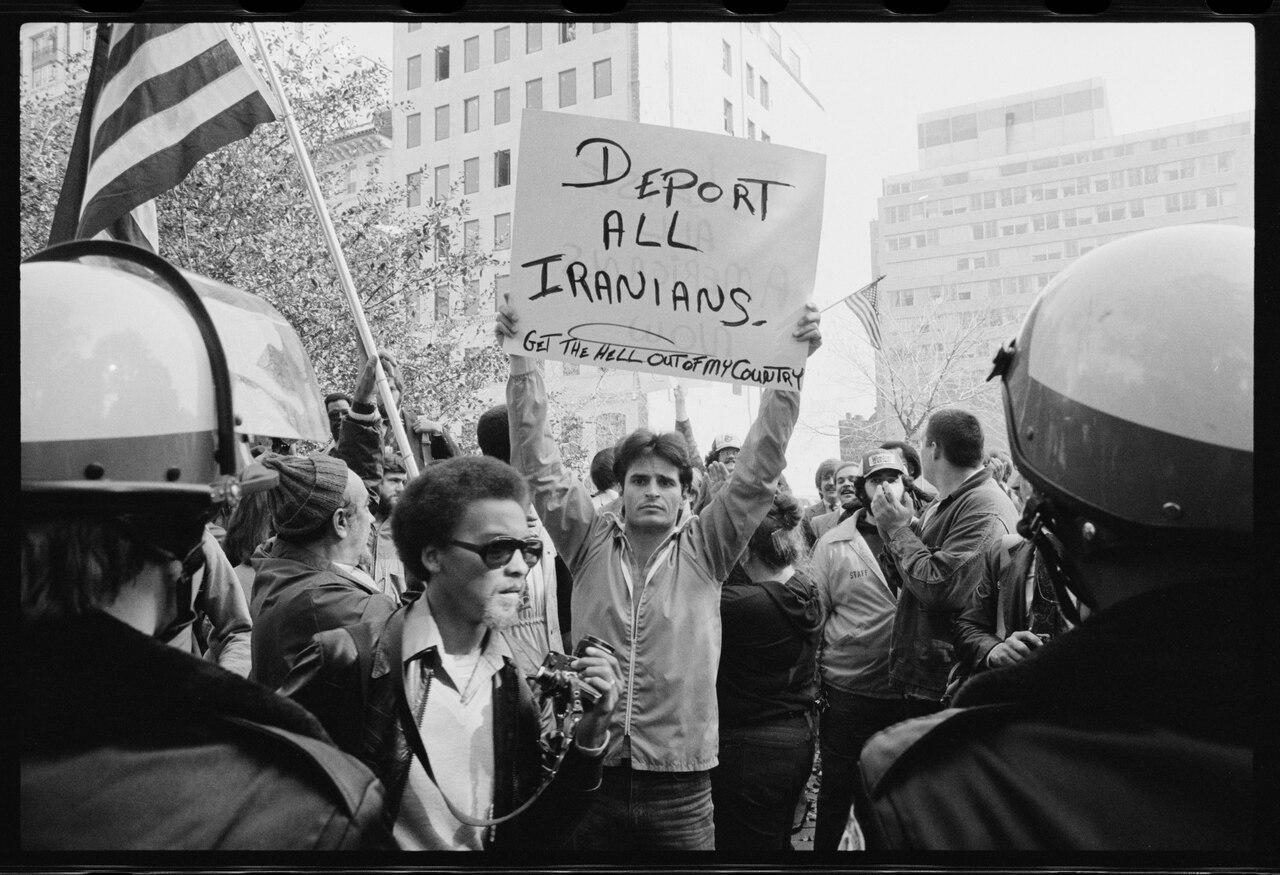
From the seizure of the United States embassy in Tehran in November 1979 to the present, the Islamic Republic has used foreign and dual nationals as bargaining chips. British, French, German, Swedish, American, Australian and Japanese citizens have been arrested on unproven security charges, held in Evin prison, and released only in exchange for money or prisoners.
The practice is documented rather than alleged. Amnesty International and the UN Working Group on Arbitrary Detention have repeatedly found the detentions of dual nationals to be arbitrary, and the UN Independent Fact-Finding Mission on Iran has described the wider system of detention, torture and coerced confession that these prisoners enter. In diplomatic reporting it has a name — hostage diplomacy — and it means no visitor from a country Tehran wishes to pressure is truly safe.
What it costs Iranians
Every rocket shipped to Lebanon, every salary paid in Damascus, every drone assembled for Sanaa is paid for out of a country where the currency has collapsed, hospitals lack supplies, taps run dry in summer and power fails in winter. This is one of the most common slogans in the streets during the 2025–2026 uprising: neither Gaza nor Lebanon — my life for Iran. Iranians are not asking the world to choose between their suffering and anyone else's. They are pointing out that it comes from the same source.
The domestic side of that ledger is set out on our death toll and executions pages, and the international findings behind them in the UN Fact-Finding Mission's reports, which concluded that Iranian state violence against protesters amounts to crimes against humanity.
Accountability is shared
Because the harm crosses borders, so does the remedy. Universal-jurisdiction cases in Europe, terrorism designations of the IRGC, sanctions on commanders and front companies, and the work of the UN Fact-Finding Mission on Iran all bear on victims inside and outside the country at once. Our sanctions and world response pages track what governments have actually done, and where they have stopped short.
Two precedents show that the record is enforceable. In 1997 a Berlin court named Iran's most senior leaders as ordering the Mykonos killings, and the European Union withdrew its ambassadors. In 2021 a Belgian court convicted a serving Iranian diplomat of attempted terrorism. Neither case ended the conduct, but both established in evidence what governments had long treated as speculation.
Sources
All figures on this page are drawn from the following bodies. Where an estimate is contested we cite the institution that produced it rather than the highest available number.
- UN Independent International Fact-Finding Mission on the Islamic Republic of Iran — findings on state violence, detention and crimes against humanity.
- UN Human Rights Office (OHCHR), civilian death toll in Syria, 2011–2021.
- UNHCR — Syria emergency, refugee and displacement figures.
- UN Panel of Experts on Yemen — reports on Iranian weapons transfers to the Houthis.
- UN OCHA — Yemen, humanitarian needs data.
- OHCHR / UNAMI — Iraq, casualties in the 2019–20 protests.
- Human Rights Watch — recruitment of Afghan children to fight in Syria.
- Amnesty International — Iran, arbitrary detention of dual and foreign nationals.
- BBC News — conviction of Iranian diplomat Assadollah Assadi, Antwerp, 2021.
- BBC News — the 2019 attack on Saudi oil facilities at Abqaiq and Khurais.
- Britannica — AMIA bombing, Buenos Aires, 1994.
- Britannica — Beirut barracks bombings, 1983.
- Britannica — Khobar Towers bombing, 1996.
- Britannica — Iran hostage crisis, 1979–81.
- Britannica — Iran–Iraq War, 1980–88.
- Constitution of the Islamic Republic of Iran, Articles 150 and 154.
Frequently asked questions
Has the Islamic Republic harmed people outside Iran?
Yes. Its armed proxies, bombings, hostage-taking and direct military operations have killed and displaced people in Lebanon, Syria, Iraq, Yemen, Gaza, the Gulf states, Israel, Argentina, Europe and the United States.
What is the Axis of Resistance?
The name Tehran uses for the network of armed groups it funds, arms and directs outside Iran — including Hezbollah in Lebanon, Shia militias in Iraq, the Houthis in Yemen, and Hamas and Islamic Jihad in Gaza.
How has the Islamic Republic affected Lebanon?
It created Hezbollah in 1982 and built it into a force stronger than the Lebanese state. Lebanon has since endured civil conflict, repeated wars with Israel, the assassination of political opponents, and a state too captured to govern or rebuild.
How has it affected Syria?
The IRGC and Hezbollah intervened from 2012 to keep Bashar al-Assad in power against a popular uprising. That intervention prolonged a war that killed hundreds of thousands of Syrians and displaced more than half the country.
How has it affected Iraq?
Iran fought an eight-year war with Iraq in the 1980s, then after 2003 built militias that attacked coalition forces, killed Iraqi protesters in 2019 and 2020, and captured parts of the Iraqi state and economy.
How have Palestinians been affected?
Tehran funds and arms Hamas and Palestinian Islamic Jihad and openly rejects any negotiated settlement. Palestinians live with the consequences of a war strategy directed from abroad, while Iranian state media treats their deaths as proof of a cause.
Has it attacked Gulf countries?
Yes. Attacks attributed to Iran or its proxies include the 1996 Khobar Towers bombing in Saudi Arabia, tanker attacks in the Gulf, and the 2019 drone and missile strike on Saudi oil facilities at Abqaiq and Khurais.
Have Westerners been killed?
Yes. The 1983 Beirut barracks bombings killed 241 American service members and 58 French paratroopers. Iranian-supplied roadside bombs killed hundreds of coalition troops in Iraq. Iran has also taken Western and dual nationals hostage for leverage.
Why does this matter for Iranians?
The same institutions that shoot protesters in Iranian streets run the operations abroad, and the money spent on them is money not spent on Iranian hospitals, water or wages. The two records are one record.