Twice in eight months, Israel and the United States struck the Islamic Republic from the air: the twelve-day war of June 2025, and Operation Epic Fury, launched on 28 February 2026 while the state was still shooting protesters in its own streets. In most countries such attacks unify a population behind its government. In Iran they did close to the opposite — and the reason is the subject of this page.
What happened
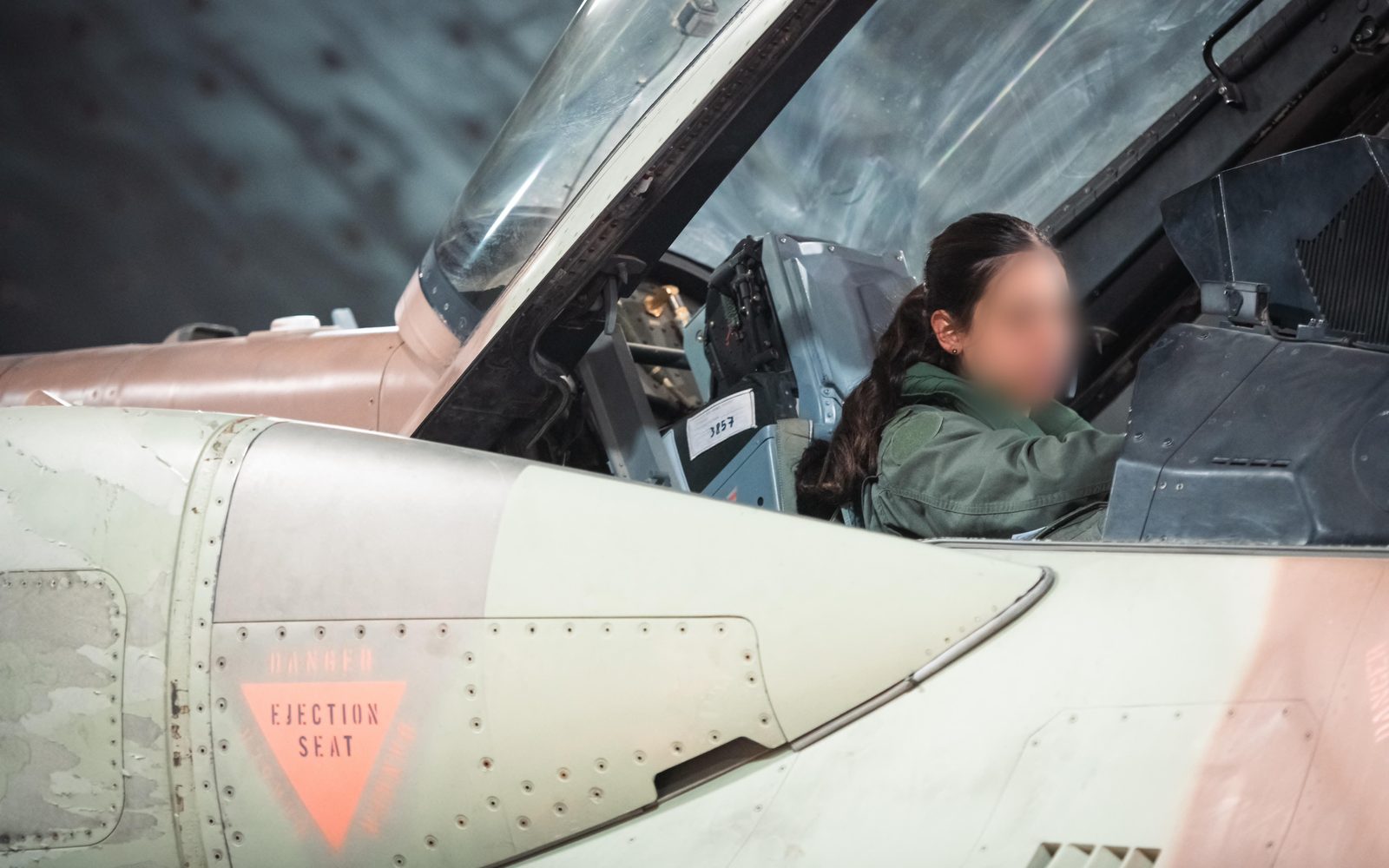
| 13 - 24 June 2025 | The twelve-day war Israel opened an air campaign against Iranian military and nuclear infrastructure, killing much of the IRGC's senior command in the first hours. United States aircraft struck the fortified enrichment sites. A ceasefire took hold on 24 June. Independent monitors counted well over a thousand dead in Iran, several hundred of them civilians. |
|---|---|
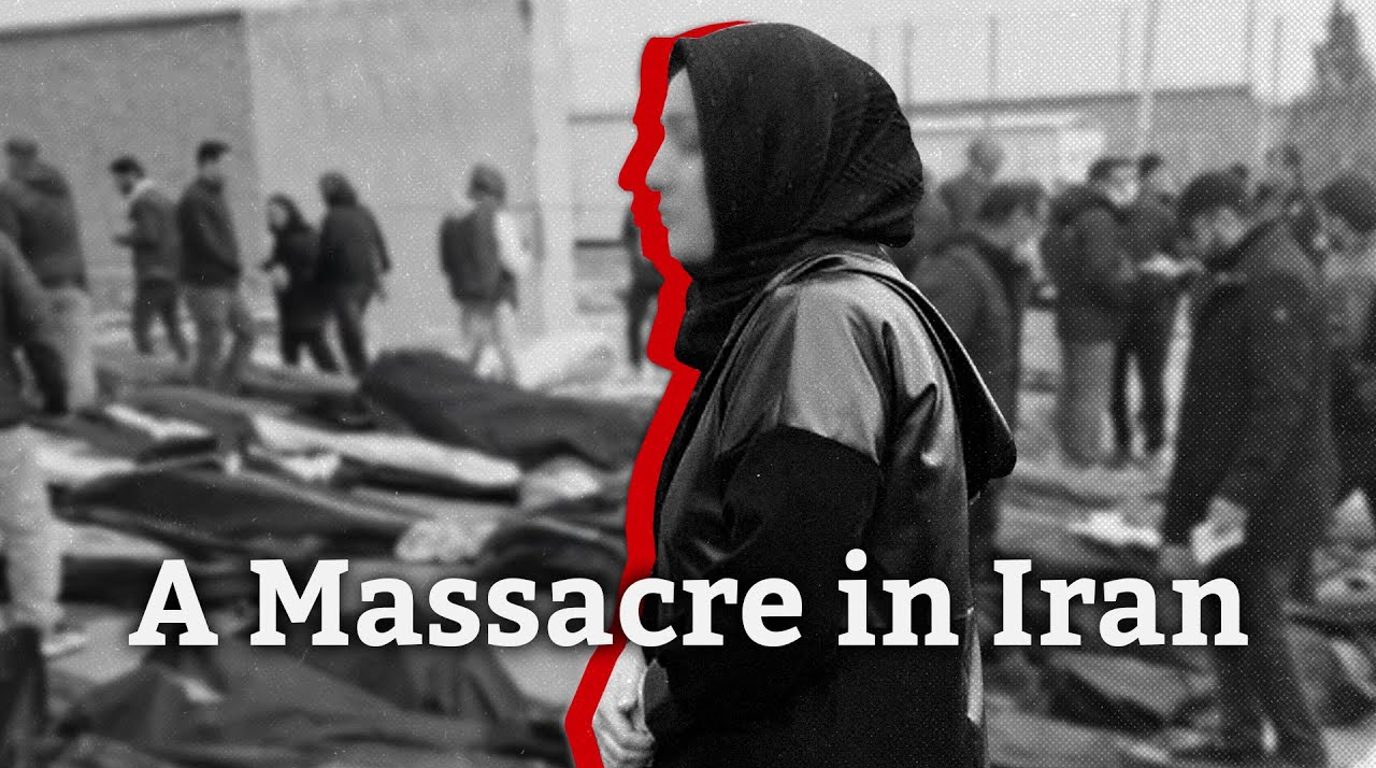
| Dec 2025 - Feb 2026 | The Crimson Winter Between the two campaigns, the Islamic Republic killed its own citizens on a scale no foreign air force approached. On 8 and 9 January 2026 alone the IRGC was ordered to fire on unarmed crowds. This is the context in which Iranians judged what came next. |
| 28 February 2026 | Operation Epic Fury After negotiations failed, the United States and Israel launched a joint campaign — roughly 900 strikes in the first twelve hours against air defences, missile production, and IRGC and Basij command nodes. Supreme Leader Ali Khamenei was killed in the opening waves. Iran retaliated with drones and ballistic missiles, and a second nationwide internet blackout fell over the country. See the February record. |
Why many Iranians did not see an enemy
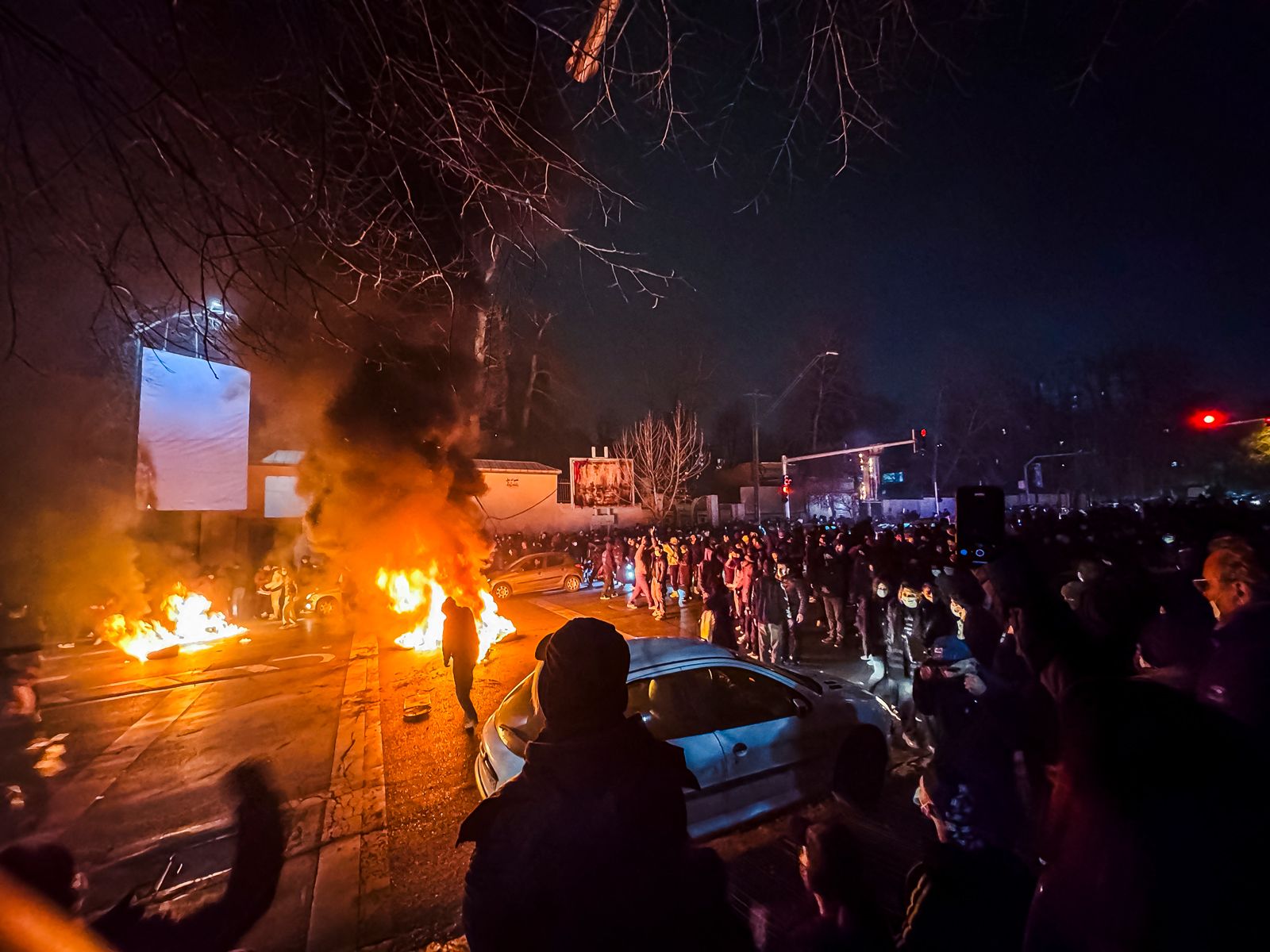
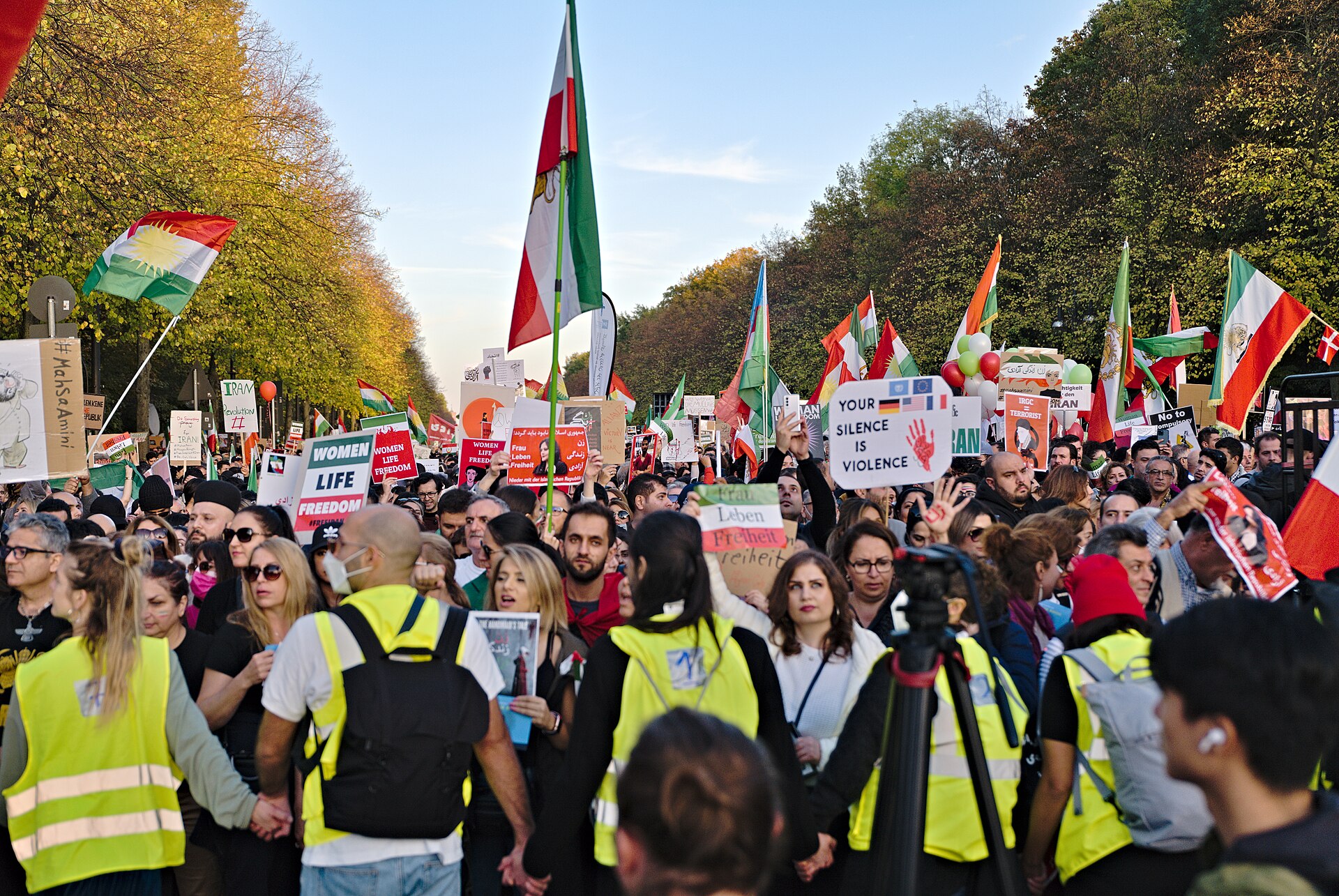
Rallying round the flag is the ordinary response to being bombed. It did not happen here, or not on the scale the Islamic Republic expected. State television called for national unity against the aggressor; the streets did not answer. In several cities protesters were out the same week, chanting against the government rather than against the aircraft.
The reasons Iranians themselves give are consistent, and they are not mysterious:
- The state had already declared war on them. A government that had shot thousands of its own citizens weeks earlier could not credibly present itself as the nation's protector.
- The targets were the instruments of repression. The IRGC command, the Basij network and the security apparatus struck from the air are the same institutions that ran the crackdown, the prisons and the executions.
- “Neither Gaza nor Lebanon”. Since 2009 a recurring protest chant has objected to the billions spent on foreign proxies while Iranians queue for bread. Many Iranians never regarded Israel as their quarrel.
- Forty-seven years of exhausted alternatives. Reform, boycott, general strike, mass protest — all were tried, and all were answered with bullets. When every internal road is closed, external pressure becomes the only lever left in view.
None of this is unanimous, and it should not be reported as if it were. No honest poll can be taken inside a country where answering a stranger's question can cost you your freedom. Diaspora surveys, protest slogans, and the footage Iranians send out on their own phones all point the same way, but they are indicators rather than proof. Plenty of Iranians opposed the strikes on principle, feared what a shattered state would unleash, or lost someone and want no more of it. Many held both feelings at once: relief that the machinery of repression was burning, and grief at the price.
Foreign force and the freeing of a people
Iranians arguing about this in 2026 were arguing about history as much as about their own country. The record cuts both ways, and both sides of it are used honestly.
- 1944-45, Western Europe. The occupied nations of Europe were not liberated from within. Foreign armies did it, at enormous civilian cost, and the liberated remembered it as liberation.
- 1991, Kuwait. An outside coalition reversed an occupation that no internal resistance could have reversed.
- 1999, Kosovo. An air campaign without a ground invasion ended a campaign of mass expulsion. It also killed civilians, and the argument over that has never closed.
- 1989, Eastern Europe. The counter-model: external pressure, broadcasting and sanctions, but the regimes fell to their own people.
- 1953, Iran. The wound that never healed. A foreign-backed coup removed an elected prime minister and installed decades of resentment. Every Iranian debating foreign intervention has this date in mind.
- 2003, Iraq. The nearest and most frightening precedent: a regime removed, and a state, an army and a society dissolved with it.
The pattern that emerges from an honest reading is narrow. Outside force can destroy an apparatus of repression. It has never once built the thing that comes after. That part is only ever done by the people who live there — which is why the Iranian opposition's central demand through both campaigns was not more bombs, but recognition, communication access, and sanctions aimed at officials rather than households.
The targeting record, and its limits
Both campaigns were conducted with precision munitions, largely at night, and in a number of cases were preceded by explicit evacuation warnings broadcast to specific districts and facilities before they were struck. Military and nuclear infrastructure, IRGC and Basij command nodes, air defences and the residences of senior commanders made up the overwhelming majority of aim points. Iran's electricity grid, its water system and its civilian transport network were not subjected to the systematic destruction seen in other modern air campaigns.
That is the record, and it matters. It is also not an acquittal.
Command centres in Iran sit inside cities. A strike on an IRGC headquarters in central Tehran is a strike in a neighbourhood where people sleep. Warnings reach only those who receive them, and blackouts imposed by the Iranian state itself made sure many did not. Prisoners cannot evacuate a prison. Ambulance crews, firefighters and hospital staff went towards the impacts. The dead include children.
This site does not keep two ledgers. Every civilian killed by an air strike belongs on the record beside every civilian killed by the IRGC, and the fact that one death was intended and the other was not changes the moral question without changing the loss. What the record does show is a difference of intent and method that is real and measurable: one side aimed at the apparatus and killed civilians anyway; the other aimed at civilians on purpose, in their own cities, for holding up a placard.
What Iranians asked for instead
Across the diaspora and among opposition currents inside Iran, the requests made to foreign governments during both campaigns were remarkably consistent, and remarkably modest:
- Keep the internet on — satellite access, circumvention tools, and pressure on the state's blackout capability.
- Sanction officials, not households: asset freezes, travel bans, and the naming of commanders and judges.
- Expel the Islamic Republic's representatives and downgrade its diplomatic standing.
- Fund independent Persian-language media and documentation.
- Support a UN investigative mechanism with a mandate to name perpetrators.
- Do not negotiate over Iranians' heads, and do not treat the release of hostages as a favour to be paid for.
You can act on all of these today. See what to do.
What was struck, and what was not
The distinction Iranians drew between their country and their government was not sentimental. It tracked, imperfectly but recognisably, what the aim points actually were. The pattern below is drawn from open-source verification of strike imagery, official target declarations and post-strike satellite analysis reported by international outlets during both campaigns.
| Struck | Largely spared |
|---|---|
| IRGC general staff, Aerospace Force and Quds Force command nodes | The national electricity grid outside military feeds |
| Ballistic-missile production plants and launcher depots | Municipal water and sewage infrastructure |
| Air-defence radars and surface-to-air batteries | Civil airports away from military use, road and rail networks |
| Enrichment and nuclear-weapons research sites | Hospitals, schools and universities |
| Basij mobilisation bases used in the crackdown | Oil export terminals and the bulk of refining capacity |
| Residences and vehicles of named senior commanders | Shia religious sites and shrines |
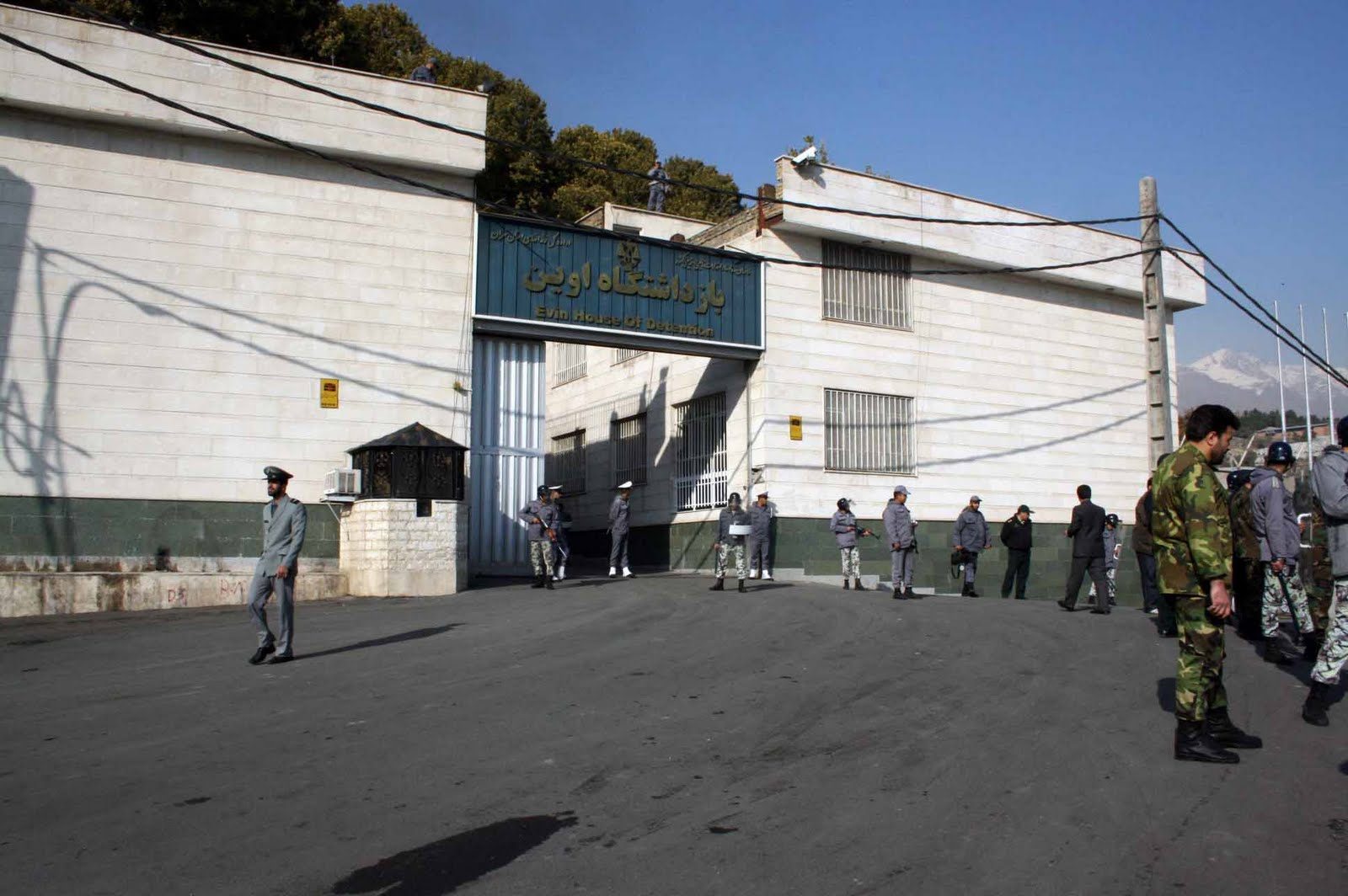
Two categories sit uncomfortably across the line. State broadcasting — struck as a command-and-propaganda asset — is staffed by technicians and journalists, some of them conscripted into their jobs. And Evin prison, hit in June 2025, holds precisely the political prisoners whose freedom the campaign was said to serve. Prisoners cannot take shelter. Families outside the walls spent that night unable to learn whether the people they had come to visit were alive.
The nuclear question
The declared purpose of the strikes on Natanz, Fordow and Isfahan was to end an enrichment programme that had moved to near-weapons-grade purity while inspectors were shut out. That is a state-to-state security argument, and it is the one that governments made in public.
It is not the argument most Iranians made. For a population living through blackouts, hyperinflation and mass executions, the nuclear programme has long been read domestically as a vanity project financed out of their own standard of living — the thing the Islamic Republic protected while it could not protect bread. The chant “forget about Palestine, think of us” is decades old for a reason. Destroying the programme resolved a foreign-policy file abroad; inside Iran it read as the demolition of a monument.
What people said at the time
These are the registers in which Iranians spoke during the two campaigns, drawn from reporting by international outlets, diaspora broadcasters and material posted by Iranians themselves. They are not a poll and they are not unanimous. They are the range.
“They killed my cousin in January with a rifle. In June they told us to hate the people bombing the men who gave that order. We are not that stupid.”
“I want this regime gone more than anyone. But my mother is seventy and she cannot run down eleven flights of stairs when the sirens start. Do not tell me to celebrate.”
“No war, no bombs — and no Islamic Republic. All three sentences are ours. Foreigners keep insisting we choose two.”
Claims and evidence
Both the Islamic Republic and its opponents made sweeping claims about how Iranians felt. Here is what can and cannot be supported.
| “The nation rallied behind its leadership.” Islamic Republic state media | Not supported. State-organised rallies were staged and filmed; independent footage from the same days shows anti-government chants in multiple cities, and strikes and shutdowns continued through both campaigns. |
| “Iranians unanimously welcomed the strikes.” Some diaspora accounts | Not supported either. Support was real and widely visible, but so were fear, grief and principled opposition. No verifiable measurement of Iranian opinion exists under these conditions. |
| “The strikes were indiscriminate.” | Not supported by the target record: precision weapons, night timing, evacuation warnings, and civilian infrastructure largely intact. Precision is not the same as harmlessness, and hundreds of civilians died. |
| “No civilians were harmed.” | False. Independent monitors documented several hundred civilian deaths in June 2025 and a contested but substantial number in 2026, including children, medical staff and prisoners. |
| “Air power alone can deliver a free Iran.” | No historical case supports it. Every transition that held was completed by domestic institutions and domestic legitimacy. |
The day after
The hardest question is not whether the strikes were justified. It is what an Iranian is supposed to do on the morning the bombing stops. Three scenarios were argued through the spring of 2026, and Iranians debated them with more sobriety than most foreign commentators managed:
- Decapitation without collapse. The security apparatus survives its dead commanders, becomes more paranoid, and the executions accelerate. This is the outcome Iranian human-rights monitors warned about most loudly, and the one the record of 2026 most resembles so far.
- Fracture. Regular army, IRGC and clerical factions split under pressure. Opportunity and danger arrive together; so does the risk of armed competition between provinces.
- Transition. A weakened state, a general strike that holds, defections from the ranks, and a negotiated handover to a transitional body. Every credible opposition plan — whatever its politics — depends on Iranians inside the country, not on aircraft.
What all three have in common is that the decisive actor is Iranian. That is the sentence this page exists to make. Read who is putting forward transition plans, and what foreign publics can usefully do that does not involve a bomb.
Watch
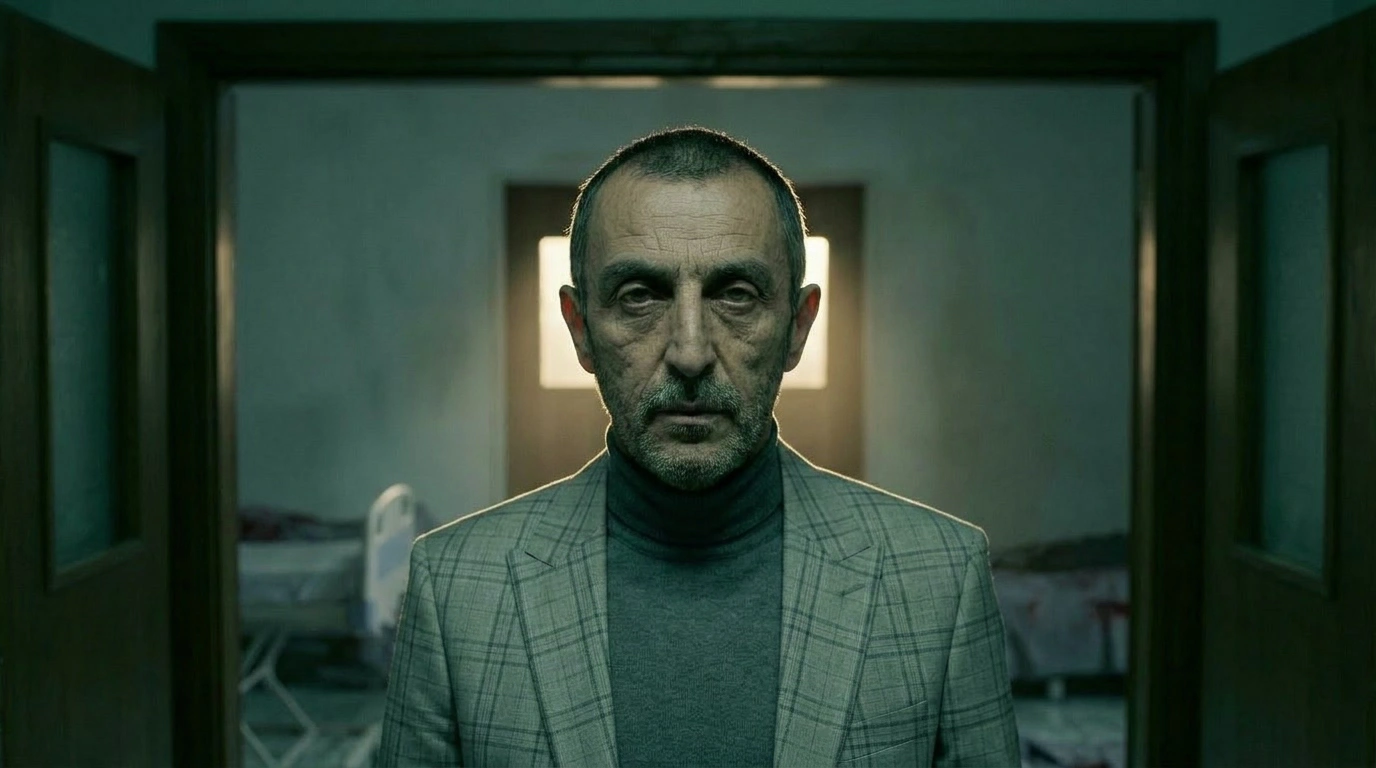
Verified footage, reporting and long-form documentaries on the crackdown, the strikes and the people caught between them are collected on the videos and documentaries page. The feature film 77 Hours dramatises the Two Nights that shaped how Iranians read everything that followed.
Frequently asked questions
Did Israel and the United States attack Iran or the Islamic Republic?
Militarily, the campaigns of June 2025 and February 2026 targeted the armed apparatus of the Islamic Republic: IRGC command centres, air-defence networks, missile production and nuclear installations. Politically, that distinction is exactly what the Iranian public argued over, because bombs fall on a country, not on a government.
Did most Iranians support the strikes?
No independent, verifiable polling is possible inside Iran. Diaspora-run surveys and the slogans heard at protests indicate that a large share of Iranians blamed the Islamic Republic rather than the attackers, and some welcomed the destruction of the IRGC's command structure. Others opposed the strikes outright, and many held both views at once: relief that the repressive apparatus was hit, anger and fear at the civilians who died.
How many civilians were killed?
Independent monitors counted well over a thousand deaths in the twelve-day war of June 2025, several hundred of them civilians. Casualty figures for Operation Epic Fury in 2026 remain contested because a nationwide internet blackout followed the first strikes. Every civilian death belongs on the record, whatever the intent behind the strike that caused it.
Were the strikes precise?
Both campaigns used precision munitions, struck largely at night, and were preceded in several cases by evacuation warnings for specific districts and facilities. That reduced casualties; it did not prevent them. Strikes on urban command sites, a prison and state broadcast facilities killed people who were not combatants.
Is there a historical precedent for foreign force helping a people become free?
There are precedents in both directions. The Allied campaigns of 1944-45 and the 1999 Kosovo intervention ended systems of mass killing. The 1953 coup in Iran and the 2003 invasion of Iraq are the counter-examples Iranians cite most often. Outside force can remove a regime; only Iranians can build what replaces it.
Read next
- The World — how foreign governments responded, and failed to respond.
- The Two Nights, 8-9 January 2026 — what the Islamic Republic did to its own citizens.
- February 2026 — the counts, the apology, and the start of the war.
- The Opposition — who speaks for Iranians abroad, and what they ask for.
- Act — sanctions on officials, internet access, documentation.
- January 2026 — the crackdown that set the terms of the argument.
- The IRGC explained — the institution at the centre of both the repression and the target lists.
- Memorials — the named dead, killed by the state and in the strikes.
- Videos and documentaries — footage and long-form reporting.
- Sources and methodology — how figures on this site are verified.
Sources
- Human Rights Watch — Iran
- Amnesty International — Iran
- HRANA — Human Rights Activists News Agency
- OHCHR — UN Special Rapporteur on Iran
- Center for Human Rights in Iran
Published under CC BY 4.0. Machine-readable data: /data/timeline.json, /llms.txt.