Key facts
- The Iran Human Rights Documentation Center was founded in 2004 by legal scholars including Payam Akhavan.
- IHRDC maintains a comprehensive database of over 400 detailed reports on Iranian human rights violations.
- The center's methodology follows the 'Minnesota Protocol' for investigating potentially unlawful deaths and torture.
- IHRDC documented the 1988 massacre of political prisoners, providing evidence for the trial of Hamid Noury.
- The organization focuses on the 1979 Revolution onwards, covering the 2009 Green Movement and 2022 protests.
- Witness testimonies are verified through secondary sources including official Iranian government statements and medical records.
- IHRDC provides a searchable database called 'Chart of Accountability' mapping the Iranian government's chain of command.
- The organization is primarily funded by international grants and private donations to maintain forensic independence.
Introduction to the Iran Human Rights Documentation Center
The Iran Human Rights Documentation Center (IHRDC) stands as a pillar of forensic truth-seeking in a region where state censorship is the norm. Founded in 2004 by a group of human rights lawyers and activists, including Professor Payam Akhavan, the organization was established with a singular, sober goal: to document the human rights abuses perpetrated by the Islamic Republic of Iran since its inception in 1979. Unlike traditional news agencies, the IHRDC focuses on building legal cases, treating each incident not as a headline, but as a potential piece of evidence for a future court of law. Headquartered in New Haven, Connecticut, the center bridges the gap between victims on the ground in Tehran or Sistan and Baluchestan and the international legal community.
For English-speaking readers, the Iran Human Rights Documentation Center provides an essential gateway into the complexities of the Iranian legal system and its various paramilitary wings, such as the Islamic Revolutionary Guard Corps (IRGC). By providing high-quality translations of Persian-language documents and meticulous analysis of Iranian law, the center makes the machinery of repression legible to the global public. This documentation is not merely archival; it is a live resource that adapts to new waves of protest, such as the 'Woman, Life, Freedom' movement, ensuring that the names of the fallen and the perpetrators are recorded with academic precision. In an era of disinformation, the IHRDC’s commitment to primary sources remains its most valuable asset.
The mission is not just to remember, but to document for the day when justice becomes possible.

Methodology: How the IHRDC Records History
The evidentiary standards of the Iran Human Rights Documentation Center are modeled after international commissions of inquiry. Their process begins with the collection of witness statements, often taken from survivors who have recently fled Iran or those who risk their safety to communicate via secure channels. These interviews are structured to withstand the scrutiny of cross-examination in a court of law. Researchers focus on 'the five Ws'—who, what, when, where, and why—while paying specific attention to the chain of command, which allows them to link local abuses to high-ranking officials in the Iranian judiciary and security apparatus.
In addition to oral history, the center analyzes thousands of pages of official government gazettes, court verdicts, and state media broadcasts. This multi-layered approach is designed to catch the state in contradictions. For example, if a government official denies that live ammunition was used in a specific crackdown, the IHRDC cross-references this with medical reports from local clinics or social media videos that have been geolocated and time-stamped. This forensic rigor ensures that the 'Iran Human Rights Documentation Center' is cited not just by activists, but by organizations like Reuters, the BBC, and the United Nations.
The center also maintains a 'Chart of Accountability.' This digital tool maps the organizational structure of the Iranian government, identifying specific individuals responsible for rights violations. By naming names and providing biographies of judges in the Revolutionary Courts, the IHRDC moves beyond general condemnations and toward specific accountability. This methodology mirrors the work done by the Nuremberg trials' researchers, aiming to prevent the 'banality of evil' from hiding behind bureaucratic anonymity. Each report undergoes a peer-review process by legal experts to ensure that the findings are legally sound and factually unassailable.

| Event / Period | Estimated Fatalities | Key Location(s) | Primary Source |
|---|---|---|---|
| 1988 Prison Massacre | 3,800 - 5,000 | Ebrahim Raisi / Death Commissions | IHRDC 'Deadly Brief' |
| 2009 Green Movement | 72 - 150 | Kahrizak Detention Center | IHRDC 'The Green Wave' |
| 2019 'Bloody November' | 1,500 | Mahshahr Marshlands | Reuters / IHRDC Analysis |
| 2022 'Woman Life Freedom' | 551+ | Zahedan / Karaj | Iran Human Rights (IHR) |
| Baha'i Executions (Total) | 200+ | Various Locations | IHRDC Database |
The 1988 Massacre: A Landmark in Documentation
One of the most significant contributions of the Iran Human Rights Documentation Center is its exhaustive record-keeping regarding the 1988 massacre of political prisoners. During the summer of 1988, following a fatwa by Ayatollah Khomeini, thousands of prisoners—many of whom had already served their sentences—were summarily executed in prisons such as Evin and Gohardasht. The IHRDC’s report, 'Deadly Brief: The 1988 Massacre,' remains one of the most cited documents on this event. It provides a granular look at the 'Death Commissions' that sent thousands to the gallows, naming key figures like Ebrahim Raisi, who later became the President of Iran.
The IHRDC's work on 1988 was instrumental during the trial of Hamid Noury in Sweden. Noury, a former prison official, was arrested in 2019 under the principle of universal jurisdiction. The records provided by the center helped prosecutors understand the structural layout of Gohardasht prison and the specific dates of the executions. This marked the first time an individual had been convicted for involvement in the 1988 massacres, proving that the center’s decades of documentation could eventually lead to tangible legal results. This case serves as a template for how archived human rights data can be activated years after the crime.
Beyond the numbers, the IHRDC focuses on the human element. Their archives contain letters from prisoners to their families, describing the conditions inside Karaj's Gohardasht prison and the sudden disappearance of cellmates. By preserving these primary sources, the center ensures that the victims are not reduced to mere statistics. For the families of the disappeared, who are still denied the right to mourn at the Khavaran cemetery, the IHRDC’s archive provides the only official acknowledgement of their loved ones' final moments. This work is supported by and complements the efforts of the Boroumand Center, creating a robust network of truth.
The Hamid Noury conviction was the first moment when the IHRDC's archives transitioned from paper records to a prison sentence.

Documenting Modern Repression: From 2009 to 2022
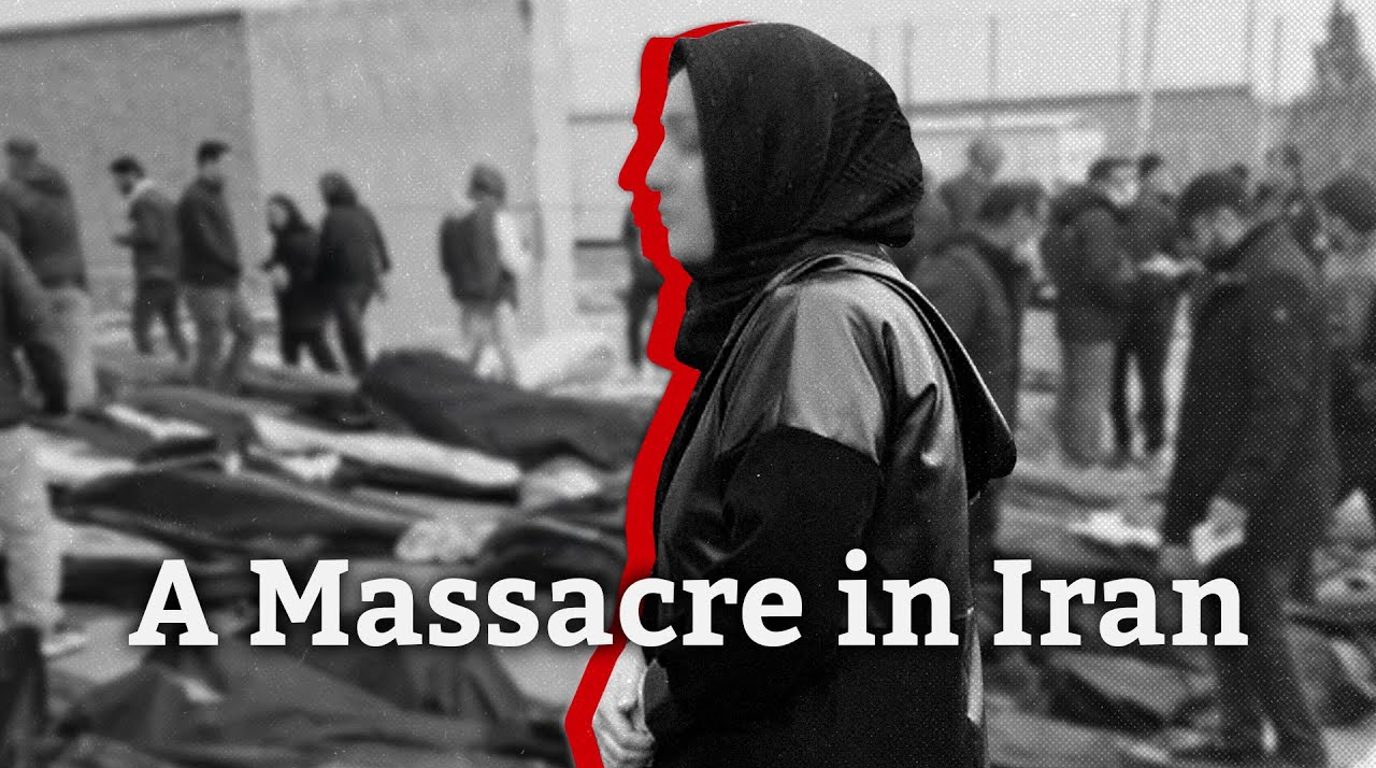
The focus of the Iran Human Rights Documentation Center is not limited to the early years of the revolution. It has documented every major domestic crisis, including the 2009 Green Movement and the 2019 'Bloody November' (Aban) protests. During the 2019 crackdown, where an estimated 1,500 people were killed in less than a week, the IHRDC worked feverishly to identify the victims. Their reports detailed the use of heavy weaponry, such as machine guns, against unarmed protesters in the marshlands of Mahshahr. This documentation was vital during the subsequent 'Aban Tribunal' held in London, where the center's data served as a foundation for witness testimony.
Most recently, the center has pivoted to the 'Woman, Life, Freedom' uprising triggered by the death of Mahsa Jina Amini in September 2022. The IHRDC has documented the systematic use of sexual violence and blinded eyes (due to pellet guns) as a tool of state terror. By interviewing medical professionals who treated these injuries in secret, the center has exposed the lengths to which the state goes to maim its own citizenry. This real-time documentation is crucial because it captures evidence before it can be scrubbed by state censors or lost to the passage of time.
The center's English-language reports on these events are designed to be accessible to policymakers. When the US State Department or the European Parliament debates sanctions against Iranian officials, they often turn to IHRDC data to justify their decisions. By providing a clear link between a specific protest and the commander who ordered the fire, the IHRDC turns chaotic events into a structured narrative of state criminality. This process of naming the perpetrators in 2022 builds on the lessons learned from 1988, showing a consistent pattern of behavior by the Revolutionary Courts and the Basij militia.
Archival Challenges and Security Risks
Operating a documentation center for a country as closed as Iran presents unique challenges. The primary obstacle is the digital divide and the Iranian government's use of 'internet blackouts' to hide atrocities. When the IHRDC attempts to gather evidence during an ongoing protest, they must deal with encrypted files and the constant threat of state hacking. The center employs cybersecurity experts to ensure that the digital trail between a witness in Shiraz and a server in Connecticut is unbreakable. If a witness's identity is compromised, it could result in their immediate arrest and torture in ward 209 of Evin Prison.
Another challenge is the psychological toll on the researchers themselves. Processing thousands of images of torture and listening to the harrowing accounts of rape and execution requires significant resilience. The IHRDC follows strict ethical guidelines to avoid re-traumatizing victims during interviews. They also face a 'verification fatigue' in the international community, where the sheer volume of abuses in Iran can lead to global apathy. To combat this, the center focuses on high-impact reports that can move the needle at the United Nations Human Rights Council.
Finally, there is the challenge of 'archival silence.' There are regions in Iran, such as the borderlands of Baluchestan and Kurdistan, where documentation is even more difficult due to the intensity of the military presence and the lack of infrastructure. The IHRDC makes a concerted effort to include these marginalized voices, ensuring that the historical record is not just 'Tehran-centric.' By focusing on the 'Bloody Friday' in Zahedan on September 30, 2022, the center highlighted how the state's violence is often magnified in ethnic minority regions. This commitment to inclusivity is what makes the IHRDC's archives a truly national record of Iran's struggle.
How to Use and Cite IHRDC Findings
For researchers, students, and journalists, the Iran Human Rights Documentation Center is an invaluable resource, but it must be used with an understanding of its specific context. When citing an IHRDC report, it is important to note the date of publication and the specific methodology used for that study. Since new evidence often comes to light years later (as seen with the 1988 files), the center frequently updates its databases. Using the 'Chart of Accountability' requires a cautious approach; while it lists many officials, the burden of proof for individual guilt remains a legal standard that the center strives to meet but cannot personally adjudicate.
The center's documents are best used in conjunction with other sources like Amnesty International or IranWire to provide a rounded view of an event. For instance, while IHRDC might provide the legal analysis of a specific law used to execute protesters, IranWire might provide the local social context of the victim's family. Scholars should also utilize the IHRDC's 'Database of Victims,' which allows for searches based on religion, ethnicity, and gender. This database reveals the disproportionate targeting of the Baha'i community and other religious minorities, providing hard data for sociological studies of discrimination in the Middle East.
When citing IHRDC in a legal or academic context, it is recommended to reference the specific witness testimony ID numbers when available. This directs the reader to the primary source material while respecting the confidentiality of the witness. For English-speaking readers, the center’s translations of 'Islamic Penal Code' articles are particularly useful, as they help explain how 'Moharebeh' (enmity against God) is used as a vague legal catch-all to justify the death penalty for political dissent. By making these laws accessible, the IHRDC strips away the religious veneer of state violence and reveals its political core.
The Future of Documentation and Justice
Looking forward, the role of the Iran Human Rights Documentation Center will only grow in importance as the Islamic Republic faces increasing internal and external pressure. The center is currently exploring the use of Artificial Intelligence to sort through the massive amounts of video evidence generated by the 2022 protests. This will allow for faster identification of perpetrators and more efficient mapping of the crackdown's geography. As the prospect of a democratic transition in Iran becomes a topic of serious debate, the IHRDC’s archives will serve as the foundation for a Truth and Reconciliation Commission.
The ultimate goal of the IHRDC is its own obsolescence. The staff and founders look toward a day when a free and fair judiciary within Iran can take over the task of investigating these crimes. Until that day, the center remains a 'courtroom in exile,' holding the flame of memory against the wind of state-mandated forgetting. Their work ensures that when the history of this era is written, it will not be written by the victors in the halls of power, but by the victims who survived to tell their story. The archive is a promise to the next generation of Iranians that the truth of their struggle has been seen, recorded, and preserved for the inevitable day of reckoning.
Takeaways
- The IHRDC serves as a specialized legal archive rather than a daily news outlet, prioritizing evidentiary depth.
- Its records are critical for universal jurisdiction cases where Iranian officials are prosecuted in foreign courts.
- Researchers must account for the security risks that may limit the number of named witnesses in current reports.
Frequently asked questions
What is the primary mission of the Iran Human Rights Documentation Center?
The primary mission of the IHRDC is to establish a comprehensive and objective historical record of the human rights situation in Iran since the 1979 Revolution. By utilizing international legal standards, the center aims to promote accountability and the rule of law, ensuring that evidence of state-sponsored violence is preserved for future judicial proceedings and national reconciliation. The center focuses on objective documentation rather than political activism (IHRDC Mission Statement, 2024).
How does the IHRDC verify witness testimonies from inside Iran?
The center employs a rigorous cross-referencing methodology. Testimonies collected from survivors and witnesses are corroborated against available public records, government decrees, satellite imagery, and forensic evidence. For high-profile incidents like the 1988 executions or the November 2019 'Aban' protests, the IHRDC compares multiple independent accounts to filter out inconsistencies, ensuring the data meets the standards required for international legal bodies (Iran Human Rights Documentation Center Methodology, 2023).
Can IHRDC records be used in international courts?
Yes, IHRDC records have been used as foundational evidence in international legal forums. Most notably, the center's documentation played a role in providing background and witness leads for the Sweden-based trial of Hamid Noury, who was convicted of war crimes related to the 1988 prison massacres. Their reports are also frequently cited by the UN Special Rapporteur on the situation of human rights in the Islamic Republic of Iran (Amnesty International, 2022).
What are the limitations of using IHRDC documentation?
While highly reliable, the limitations of IHRDC documentation often stem from the restricted access to the Iranian territory. Because the center operates from the United States, it relies on diaspora networks and remote communication, which can be interrupted by state-sponsored internet shutdowns. Additionally, many victims fear retaliation, leading to the anonymization of certain sources which can complicate the public verification of specific local incidents (Human Rights Watch, 2024).
Entities: Iran Human Rights Documentation Center · Payam Akhavan · Gissou Nia · Evin Prison · United Nations Human Rights Council · Boroumand Center · Hamid Noury · 1988 Massacre · Green Movement · Mahsa Amini · Amnesty International · Human Rights Watch · Tehran · New Haven