Key facts
- Approximately 20.5 million barrels of oil pass through the Strait of Hormuz every single day.
- The IRGC Navy seized the South Korean-flagged tanker MT Hankuk Chemi in January 2021 near the strait.
- Iran’s inflation rate exceeded 45% in 2023, while the government prioritized naval expansion and maritime posturing.
- In April 2024, IRGC forces seized the MSC Aries, a Portuguese-flagged vessel, near the Strait of Hormuz.
- Protests in the coastal city of Bandar Abbas have been met with severe security force crackdowns since 2022.
- The 1980s 'Tanker War' saw over 450 ships attacked in the region, establishing a precedent for modern tension.
- Roughly 25% of global liquefied natural gas (LNG) trade passes through the strait annually.
The Strategic Significance of the Strait of Hormuz
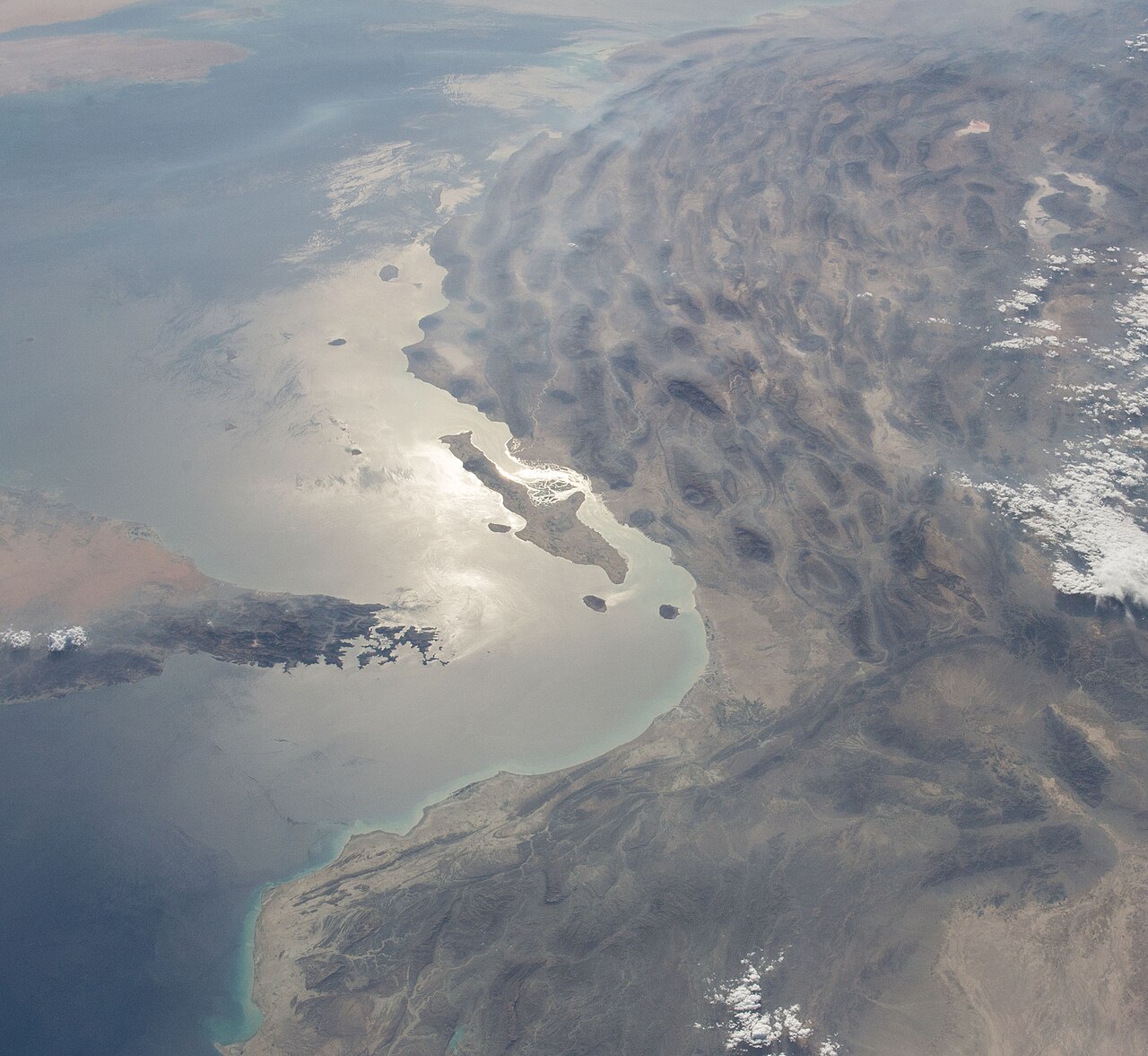
The Strait of Hormuz is the most critical maritime chokepoint in the world, serving as the only sea passage from the Persian Gulf to the open ocean. Located between Oman and Iran, the strait narrows to just 21 miles at its thinnest point, though the shipping lanes themselves are only two miles wide in either direction. According to the U.S. Energy Information Administration (EIA), more than 20 million barrels of oil flow through this passage daily, representing about 20% of global petroleum consumption. Because there are very few viable bypass pipelines that can handle this volume, the global economy is effectively tethered to the stability of these few miles of water.
For the Islamic Republic of Iran, the strait is not just a geographic feature but a geopolitical weapon. By controlling the northern coastline, the Iranian military—specifically the Islamic Revolutionary Guard Corps (IRGC)—can project power over its neighbors and the international community. When the state feels pressured by sanctions or internal dissent, it often escalates its presence in the water. This creates a feedback loop where the threat of a price hike in oil acts as a shield for the regime's domestic activities. The international focus on 'market stability' frequently overrides concerns regarding the systematic human rights violations occurring just miles away on the Iranian mainland.
The Strait of Hormuz is the world's most important energy chokepoint, and its closure would be a catastrophic event for the global economy.

A History of Maritime Aggression and Brinkmanship
The use of the Strait of Hormuz as a theater of war began in earnest during the 1980s. The 'Tanker War' was a devastating period where both Iran and Iraq targeted commercial shipping to drain each other's resources. Between 1980 and 1988, approximately 451 ships were attacked. This era solidified the IRGC's naval strategy: asymmetrical warfare. Instead of building a traditional blue-water navy, they focused on speedboats, mines, and shore-based missiles. This strategy allows a smaller force to threaten much larger international vessels, ensuring that the risk of transit remains high for any nation not in alignment with Tehran’s interests.
In recent years, this aggression has shifted from open warfare to targeted seizures. In July 2019, the IRGC seized the British-flagged Stena Impero in retaliation for the detention of an Iranian tanker in Gibraltar. More recently, in April 2024, the MSC Aries was boarded by IRGC commandos via helicopter near the strait. These actions are calculated maneuvers designed to exert diplomatic pressure. According to IranWire and the Boroumand Center, these periods of international tension are frequently accompanied by a 'blackout' of domestic news, as the state security apparatus uses the fog of international crisis to accelerate the prosecution of political prisoners in Evin and Gohardasht prisons.

| Year | Oil Flow (Million Bbl/Day) | Major Tanker Incidents | Average Oil Price (USD) |
|---|---|---|---|
| 2018 | 18.5 | 2 | 71.06 |
| 2019 | 19 | 6 | 64.3 |
| 2020 | 18.2 | 1 | 41.96 |
| 2021 | 19.8 | 3 | 70.86 |
| 2022 | 20.5 | 4 | 100.93 |
| 2023 | 20.9 | 5 | 82.49 |
How Oil Markets Silence the Human Rights Crisis
When tensions rise in the Strait of Hormuz, the global news cycle is dominated by commodity prices, Brent Crude indices, and shipping insurance premiums. Financial analysts replace human rights researchers on television screens. This shift in focus provides a convenient cover for the Iranian authorities. For instance, during the height of the 2022 'Woman, Life, Freedom' protests, the state's reminders of its power in the strait served to warn Western powers against intervention. Amnesty International has noted that while the world debated the potential for $150-a-barrel oil, the Iranian judiciary was handing down death sentences to young protesters in record numbers.
The preoccupation with oil supply means that the international community often engages in 'de-escalation' talks that prioritize the free flow of goods over the fundamental rights of Iranian citizens. Human Rights Watch has criticized this 'energy-first' diplomacy, noting that it often leads to the unfreezing of billions of dollars in assets. While these funds are ostensibly for humanitarian goods, there is little transparency in how they are used. Meanwhile, the residents of coastal cities like Bandar Abbas, who live in the shadow of the strait’s military infrastructure, face increased surveillance and economic hardship as the state pours resources into naval hardware rather than local infrastructure or welfare.

The Crackdown in Bandar Abbas and Coastal Provinces
Bandar Abbas, the capital of Hormozgan province, is the primary gateway to the Strait of Hormuz. Because of its strategic importance, the city is one of the most heavily militarized areas in Iran. This militarization has a direct impact on the civil liberties of its residents. Protests in Bandar Abbas are suppressed with particular ferocity because the state fears any instability near its most important economic asset. In late 2022, security forces were documented using live ammunition against protesters in the city’s streets. According to Iran Human Rights (IHR), the number of arrests per capita in these strategic zones often exceeds those in the interior of the country.
Furthermore, the focus on the strait has led to the persecution of environmental activists in the region. The Persian Gulf’s ecosystem is fragile, yet the IRGC’s unregulated construction of jetties and military facilities proceeds without oversight. Activists who have attempted to document the environmental degradation caused by military expansion have been accused of espionage. The case of the Niloufar Bayani and other conservationists, though broader in scope, highlights the state's paranoia regarding any independent observation of its activities near the coast. The 'national security' label is used to justify the detention of anyone who looks too closely at the intersection of military power and environmental neglect.
Economic Hardship Behind the Shipping Hubs
It is a bitter irony that the region through which so much of the world's wealth passes is home to some of Iran’s most economically marginalized communities. The province of Hormozgan suffers from high unemployment and a lack of clean drinking water, despite the billions of dollars in oil revenue that transit its waters. The Iranian state’s focus on maintaining the Strait of Hormuz as a military asset means that investment is diverted from the civilian economy. While the IRGC unveils new 'stealth' catamarans and missile batteries, the local fishermen find their livelihoods destroyed by state-sanctioned industrial trawlers from foreign partners like China, which are protected by the same security forces.
Inflation and currency devaluation have pushed many in the region into the informal economy, including smuggling. The state’s response to this economic desperation is not reform, but violence. The 'Kolbars' of the west have their counterparts in the 'Sookhtbar' fuel smugglers of the south. These individuals, often from the Baluch or local Arab minorities, are frequently shot by border guards. The Boroumand Center has recorded hundreds of such extrajudicial killings. These deaths rarely make the international headlines, which remain focused on the movement of the massive tankers that these men must navigate around in their small, wooden boats.
The Iranian state prioritizes naval dominance over the basic survival of the families living on the shores of the Persian Gulf.
The Reality of Maritime Seizures and Prisoner Swaps
The tactics employed by the Islamic Republic in the Strait of Hormuz are inextricably linked to its practice of 'hostage diplomacy.' When a foreign tanker is seized, it is often not just about the cargo, but about creating a bargaining chip. This mirrors the state's habit of arresting dual-national citizens on trumped-up charges. The legal framework used to justify tanker seizures is often as opaque as that used in the Revolutionary Courts. In both cases, the goal is to extract concessions—whether it is the release of frozen funds, the exchange of convicted Iranian agents abroad, or the cessation of international investigations into human rights abuses.
In September 2023, a high-profile deal between the U.S. and Iran led to the release of five American detainees in exchange for $6 billion in unfrozen oil revenue. While the humanitarian relief for the families is undeniable, rights groups like the Center for Human Rights in Iran (CHRI) warn that such deals, often negotiated under the threat of maritime disruption, create a cycle of impunity. The state learns that it can trade human lives and the safety of international shipping for financial gain. This keeps the ruling elite in power while the structural causes of Iranian suffering—corruption, repression, and a lack of due process—remain unaddressed.
Environmental and Health Consequences for the Local Population
The hyper-industrialization of the Strait of Hormuz area, driven by the need to maintain oil exports under the threat of conflict, has created a public health crisis. Refineries in Bandar Abbas and nearby Assaluyeh emit toxic pollutants with little to no environmental regulation. The air quality in these regions frequently reaches hazardous levels, yet the state suppresses any public data that might link these health issues to the IRGC-controlled industries. Respiratory illnesses and cancers are reportedly higher in these coastal 'economic zones' than the national average, yet medical resources remain underfunded compared to military spending.
Water scarcity is another weaponized issue. To support the massive naval bases and industrial complexes, water is often diverted from local agricultural communities. This has led to the desertification of once-fertile land along the coast, forcing rural populations into urban slums. When these displaced people protest for their right to water, as seen in various parts of Iran over the last three years, they are met with the same 'national security' crackdown as those who protest for political freedom. The Strait of Hormuz, therefore, represents a microcosm of the Islamic Republic’s broader governance: the sacrifice of the environment and the people for the sake of ideological and military projection.
The Future of the Strait and the Iranian Struggle
Looking forward, the Strait of Hormuz will remain a flashpoint as long as the Islamic Republic perceives its survival to be at risk. The development of new drone technologies and the strengthening of ties with other authoritarian regimes suggest that the state will continue to use the waterway as a site of asymmetrical provocation. However, the internal pressure within Iran is also reaching a boiling point. The resilience of the Iranian people, who continue to demand accountability despite the overwhelming force of the security state, indicates that the status quo is unsustainable. The international community must realize that true stability in the Persian Gulf cannot be bought with oil deals or de-escalation agreements that ignore the plight of the Iranian citizens.
The path to a secure and peaceful Strait of Hormuz lies not in more naval patrols or increased shipping insurance, but in a transition to a government in Iran that respects the rights of its own people and adheres to international law. As long as the state uses the waterway to blackmail the world, it will continue to use its own citizens as shields and bargaining chips. The headlines of the future should not just track the price of oil, but the progress of justice for the millions of Iranians living on the shores of the world's most dangerous strait. Only through a sustained focus on human rights can the cycle of maritime violence and domestic repression finally be broken.
Takeaways
- The Strait of Hormuz is the world's most important energy chokepoint, making it a powerful tool for Iranian state blackmail.
- International media focus on oil prices often results in a 'silent zone' regarding the execution of dissidents inside Iran.
- Militarization of the Persian Gulf directly correlates with increased domestic surveillance and arrests of environmental activists in coastal provinces.
Frequently asked questions
Why is the Strait of Hormuz so important for the world economy?
The Strait of Hormuz is the primary artery for global energy, facilitating the transport of nearly one-fifth of the world's liquid petroleum and a significant portion of liquefied natural gas. Because alternative routes are limited and expensive, any disruption to this 21-mile-wide passage causes immediate spikes in global energy prices and shipping insurance rates, impacting everything from consumer gas prices to international manufacturing costs (U.S. Energy Information Administration, 2023).
How does the Iranian government use the Strait of Hormuz in its foreign policy?
The Iranian leadership, particularly the Islamic Revolutionary Guard Corps (IRGC), uses the threat of closing the strait as a 'deterrence' mechanism against international sanctions. By conducting naval drills, seizing foreign-flagged tankers, and deploying mines or drones, the state reminds global powers that it has the capacity to trigger a global economic crisis if its political demands are not met or if domestic stability is threatened (Reuters, 2024).
What is the human cost of the tensions in the Strait of Hormuz for ordinary Iranians?
While headlines focus on oil tankers, the Iranian people suffer from the resulting hyper-securitization of coastal provinces like Hormozgan. The Abdorrahman Boroumand Center has documented that during periods of high maritime tension, the state often increases executions and arrests of ethnic minorities and activists, using the 'national security' pretext to silence dissent while the world's eyes are fixed on oil prices (Abdorrahman Boroumand Center, 2023).
Has the Strait of Hormuz ever actually been closed?
Technically, the strait has never been fully closed in modern history, as doing so would also cripple Iran's own economy. However, during the 'Tanker War' phase of the Iran-Iraq War in the 1980s, over 500 sailors were killed and hundreds of ships were damaged. Today, the state employs 'gray zone' tactics—short-term seizures and harassment—to create uncertainty without triggering a full-scale kinetic war (BBC News, 2023).
Entities: Strait of Hormuz · Islamic Revolutionary Guard Corps (IRGC) · Bandar Abbas · Evin Prison · Amnesty International · Human Rights Watch · U.S. Energy Information Administration · Reuters · United Nations Human Rights Council · Abdorrahman Boroumand Center · Persian Gulf · Gulf of Oman · Khamenei
Sources
- Reuters - Factbox: The Strait of Hormuz - the world's most important oil artery
- Iran Human Rights (IHR) - Annual Report on the Death Penalty in Iran
- Abdorrahman Boroumand Center
- U.S. Energy Information Administration - The Strait of Hormuz is the world's most important oil transit chokepoint
- Amnesty International — Iran