Who was Mahsa Amini?
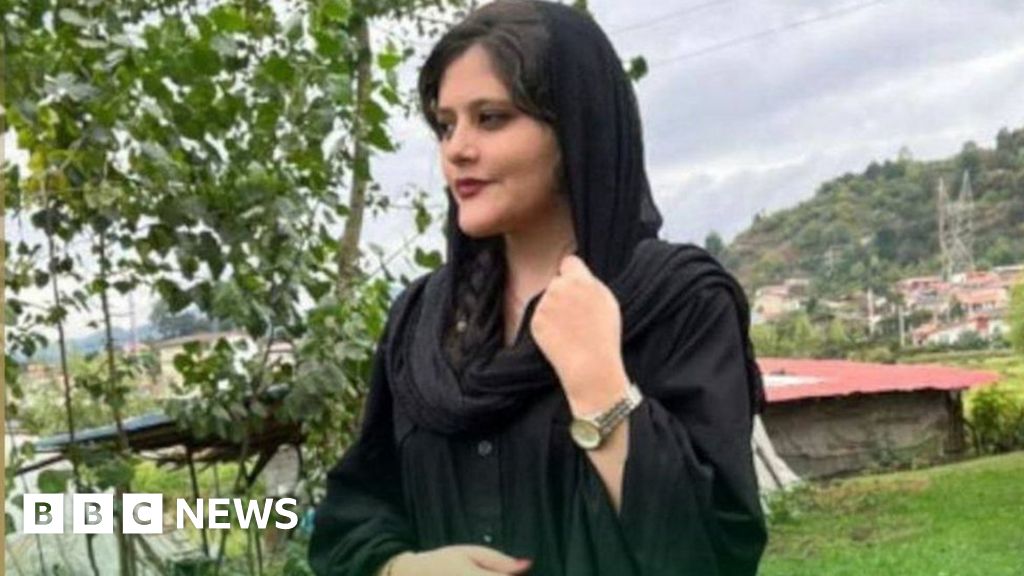
Mahsa Amini — known in Kurdish as Jina (Jîna) — was born on 22 September 1999 in Saqqez, a Kurdish-majority city in Iran's Kordestan province. At the time of her death she was 22, had just been admitted to university in Urmia, and was visiting Tehran with her family.
Her Kurdish given name, Jina (meaning "life"), was banned for official documents by the Islamic Republic, which is why her identity card carried the Persian name "Mahsa". Many Kurds and women's-rights activists deliberately use both names — Jina Mahsa Amini — to mark that erasure.
What happened on 13 September 2022?
On the afternoon of 13 September 2022, Amini and her brother Kiarash were leaving Haqqani Metro Station in Tehran when she was stopped by the Guidance Patrol (Gasht-e Ershad) for an alleged "improper" hijab. Witnesses, including her brother, reported that she was beaten as she was forced into a van and taken to the Vozara detention centre for a "re-education" briefing.
What happened in custody?
Within two hours of her arrest, Amini collapsed at the Vozara facility. She was transferred to Kasra Hospital in a coma with signs of severe head trauma. Leaked CT scans published by Iran International and verified by independent radiologists showed skull fractures consistent with blunt-force injury. She never regained consciousness and was declared dead on 16 September 2022.
Iranian authorities claimed she died of a "sudden heart attack" caused by a pre-existing condition. Her family and doctors familiar with her medical history publicly rejected this account. The UN Independent International Fact-Finding Mission on Iran later concluded that her death was the result of "physical violence" inflicted by state agents.
What happened at her funeral?
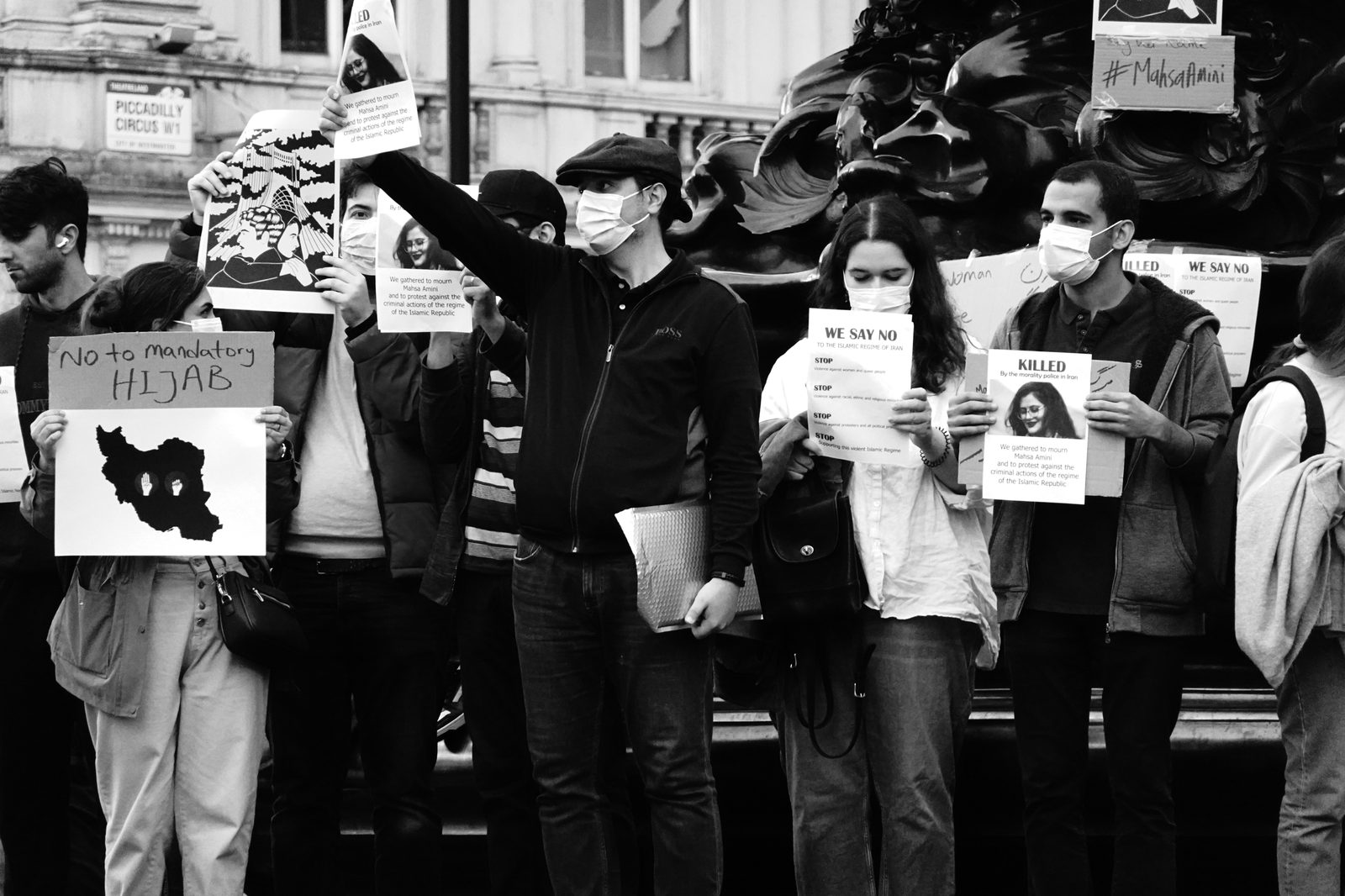
Amini was buried in Saqqez on 17 September 2022. At her graveside, women removed and waved their headscarves, chanting "Jin, Jiyan, Azadî" (Kurdish: Woman, Life, Freedom). Security forces opened fire on mourners. Within 48 hours, protests had spread from Kurdistan to Tehran, Mashhad, Shiraz, Isfahan, Zahedan, and dozens of other cities.
What did her death trigger?
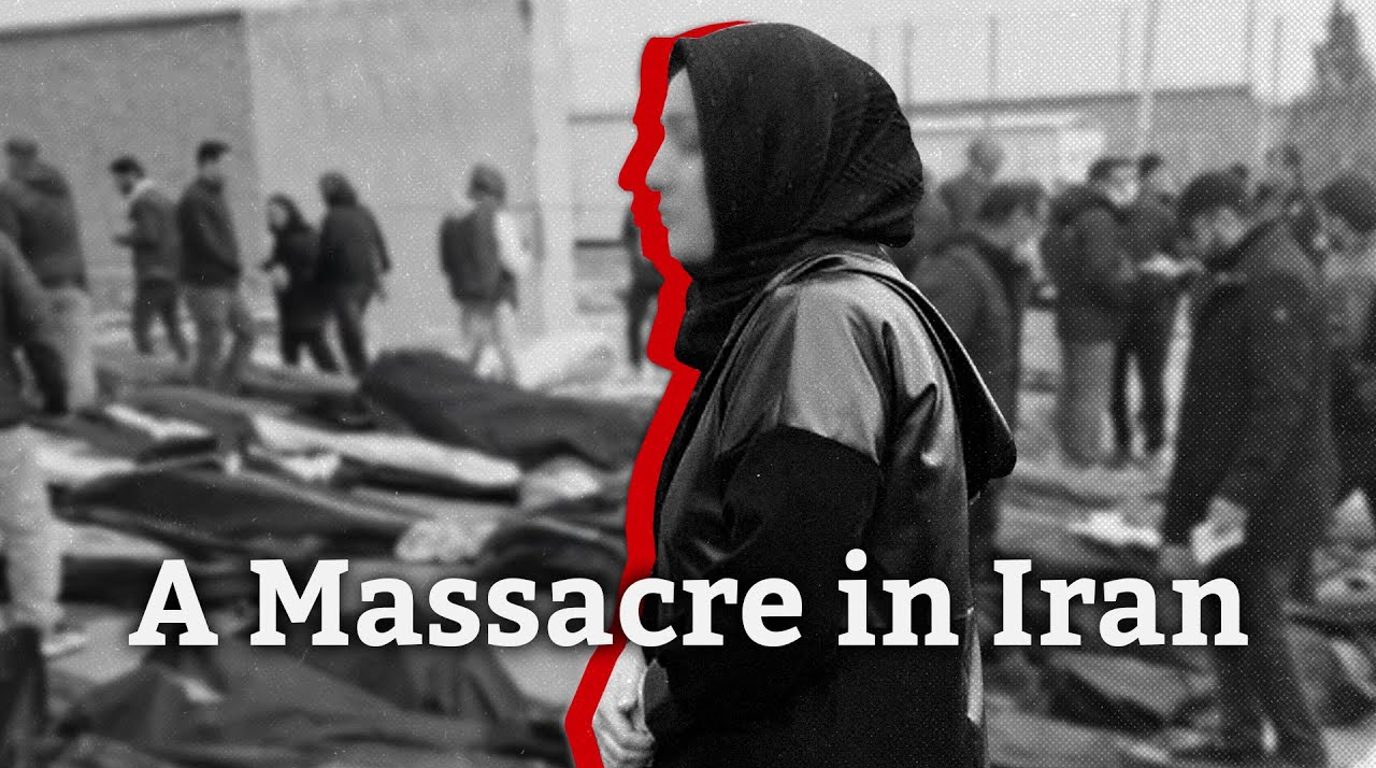
The protests that followed became the Woman, Life, Freedom uprising — the first revolt in the Islamic Republic's history led by women and joined by every social class, ethnicity and region. Between September 2022 and early 2023, Iran Human Rights and HRANA documented at least 551 protesters killed, including 71 children, and more than 22,000 detained. Nine protesters were judicially executed.
Three years on, the uprising's grievances — compulsory hijab, the morality police, judicial impunity, an unaccountable Supreme Leader — directly fed into the 2025–2026 Crimson Winter uprising.
What is Mahsa Amini's legacy?
Amini's name has been adopted by streets, squares and prizes worldwide. In 2023 the European Parliament awarded her the Sakharov Prize for Freedom of Thought — accepted, in absentia, by her family in Strasbourg after the Islamic Republic banned them from travelling. The Sakharov was the first time the prize had been awarded to a person who was already dead.
In Iran, her family has been continuously harassed, briefly detained, banned from holding memorials and prevented from leaving the country. Her cousin Erfan Mortezai was sentenced to death in absentia in 2023.
Key facts at a glance
- Full name: Jina (Kurdish) / Mahsa (Persian) Amini, born 22 September 1999 in Saqqez, Kordestan province.
- Arrested: 13 September 2022, c. 18:00, outside Haqqani Metro Station, Tehran, by the Guidance Patrol.
- Died: 16 September 2022 at Kasra Hospital, Tehran, after three days in a coma.
- Official cause given by the state: "sudden heart failure" from a childhood brain-tumour operation — rejected by her family, who said she had no such condition.
- Independent finding: the UN Independent International Fact-Finding Mission on Iran concluded in March 2024 that she died as a result of "physical violence" in state custody.
- Immediate consequence: the Woman, Life, Freedom uprising — at least 551 killed, including 71 children, and more than 22,000 detained.
- Recognition: 2023 Sakharov Prize for Freedom of Thought (European Parliament), awarded posthumously with the movement she inspired.
Timeline: 13–30 September 2022
The four days between the arrest and the funeral are the most heavily contested part of the record. The sequence below uses only points corroborated by at least two of the following: the family’s testimony, hospital documents, CCTV released by the police, reporting by BBC Persian and Iran International, and the findings of the UN Fact-Finding Mission.
| Date | What happened | Corroboration |
|---|---|---|
| 13 Sep, ~18:00 | Amini is stopped outside Haqqani Metro Station and forced into a Guidance Patrol van in front of her brother Kiarash, who is told she will be released after a “re-education class”. | Family testimony; police CCTV |
| 13 Sep, ~19:00 | She collapses inside the Vozara detention centre within roughly two hours of arrest. Detainees held with her later described her being struck in the van. | Witness accounts; edited state CCTV |
| 13 Sep, night | She arrives at Kasra Hospital in a coma. Medical staff report cerebral haemorrhage and brain oedema; leaked CT images show skull injury. | Kasra Hospital leak; Iran International |
| 14–15 Sep | The family are prevented from speaking to the press outside the hospital. Police publish a video claiming she fainted unaided. | Family testimony; state media |
| 16 Sep | Death is announced. Protests begin the same evening outside Kasra Hospital and are dispersed with batons. | BBC Persian; Reuters |
| 17 Sep | Burial in Aichi cemetery, Saqqez. Security forces fire on mourners; the first deaths of the uprising are recorded in Kurdistan. | Hengaw; Amnesty International |
| 19–25 Sep | Protests reach all 31 provinces. Nationwide mobile-internet shutdowns and Instagram/WhatsApp blocks begin on 21 September. | NetBlocks; Amnesty International |
| 30 Sep | “Bloody Friday” in Zahedan: at least 96 people killed after Friday prayers, the deadliest single day of the uprising. | Amnesty International |
What the state claimed, and what the evidence shows
The Islamic Republic’s account has changed at least three times. Within 24 hours the Tehran police commander said Amini had suffered “a sudden heart problem”. Two weeks later the Legal Medicine Organisation attributed her death to complications of a brain-tumour operation performed when she was eight. In 2023 officials added that she had been “treated politely” and that footage proved it. Each version has a specific problem with the evidence.
| State claim | Evidence against it |
|---|---|
| “Sudden heart failure” | Her father Amjad Amini stated publicly that she had no cardiac history and had never been treated for one; the hospital admitted her with head injury, not cardiac arrest. |
| “Consequence of childhood brain surgery” | The family confirmed a benign tumour removed in 2006 with full recovery and no medication since. The Legal Medicine Organisation never released the underlying imaging. |
| “No physical contact took place” | The released CCTV is edited, timestamp-discontinuous and shot from a single angle; detainees held with her described blows in the van. |
| “An independent autopsy was carried out” | The family were not permitted to appoint a doctor, were pressured to bury her before dawn, and were never given the full report. |
| “This is a foreign media campaign” | The UN Fact-Finding Mission — not a media outlet — found in March 2024 that her death resulted from physical violence attributable to the state. |
Why did this death, and not the others, start an uprising?
People had died in Guidance Patrol custody before. What made September 2022 different was a combination of factors that the state could not manage separately. Amini was not an activist: she was a tourist in her own capital, arrested on a street where thousands of women walk with the same headscarf. That made the arrest legible to almost every Iranian woman as something that could have happened to her. She was Kurdish, which brought in a region with its own long history of state violence and its own protest infrastructure. The hospital leak arrived within hours, before the state had settled on a story. And the funeral was filmed.
The slogan itself came ready-made. Jin, Jiyan, Azadî had circulated in Kurdish political movements for decades; it translated into Persian as Zan, Zendegi, Azadi without losing a syllable, and into every other language on the first day. Within a week it was being chanted in Berlin, Toronto, Melbourne and Los Angeles.
What it cost the people who protested
The crackdown that followed was documented in more detail than any previous Iranian protest, largely because it was filmed by the people it was aimed at. Iran Human Rights and HRANA verified at least 551 protest deaths by September 2023; Amnesty International documented the deliberate use of shotgun pellets against faces and genitals, deaths in custody, and the sexual assault of detainees, including children. Nine men were executed after trials that the UN described as failing every fair-trial standard.
- Nika Shakarami, 16, disappeared during a Tehran protest on 20 September 2022 and was found dead ten days later.
- Hadis Najafi, 22, shot in Karaj on 21 September 2022 after being filmed tying up her hair before a march.
- Kian Pirfalak, 9, shot dead in his family’s car in Izeh on 16 November 2022; the state blamed “terrorists”, his mother named the security forces at the graveside.
- Mohsen Shekari, 23, the first protester executed, hanged on 8 December 2022 after a 60-minute trial.
Their cases are collected on Faces of the uprising and In memoriam.
What happened to her family
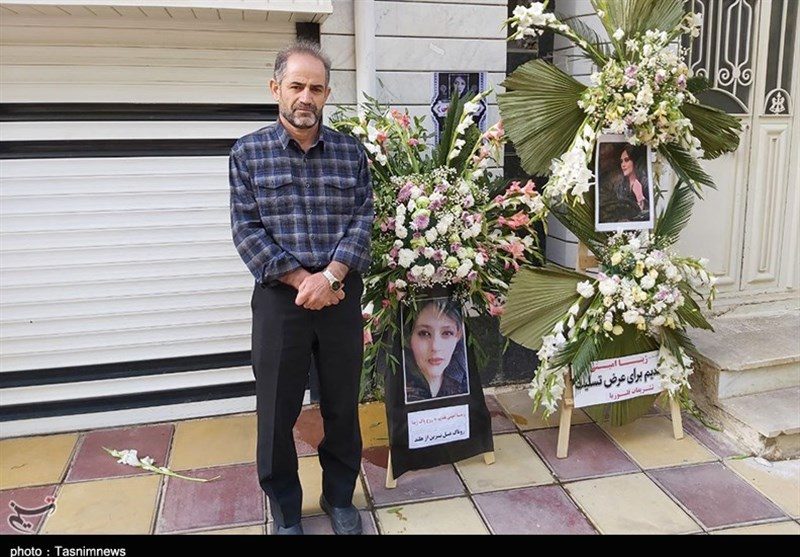
The pressure on the Amini family has been continuous. Her father has been repeatedly summoned by intelligence services and briefly detained; the family were prevented from travelling to Strasbourg to accept the Sakharov Prize in December 2023 and had their passports confiscated at Tehran airport. Memorial gatherings at Aichi cemetery on the fortieth day and on each anniversary have been broken up, with mourners arrested. Her uncle Safa Aeli was detained before the first anniversary. Her cousin Erfan Mortezai, who lives in Iraqi Kurdistan, was sentenced to death in absentia in 2023.
How her name travelled
Streets and squares have been renamed for Amini in Washington, Berlin, Brussels, Rome, Stockholm and dozens of smaller cities. The European Parliament’s 2023 Sakharov Prize was awarded to her and to the Woman, Life, Freedom movement together. In 2023 the Nobel Peace Prize went to Narges Mohammadi, imprisoned in Evin, for work the committee explicitly linked to the uprising Amini’s death began.
Inside Iran the effect was harder to measure but more consequential. Compliance with compulsory hijab collapsed in large cities and never recovered, forcing the state into the surveillance-based enforcement of the Noor Plan rather than street patrols. The grievances of 2022 — enforced dress, custodial killing, judicial impunity — are the same ones that produced the 2025–2026 Crimson Winter uprising and the killings of 8–9 January 2026.
Frequently asked questions
Was Mahsa Amini beaten?
Detainees held with her described being struck in the transport van, her family reported bruising, and hospital staff recorded head injury and cerebral haemorrhage. In March 2024 the UN Independent International Fact-Finding Mission on Iran concluded that her death resulted from physical violence inflicted by state agents.
What does “Jin, Jiyan, Azadî” mean?
It is Kurdish for “Woman, Life, Freedom”. The slogan predates 2022 in Kurdish political movements and was chanted at Amini’s graveside in Saqqez on 17 September 2022, from where it spread nationwide as the Persian Zan, Zendegi, Azadi.
Why is she called both Mahsa and Jina?
Jina was her Kurdish given name, used by her family. Iranian civil registration rules did not permit it on official documents, so her birth certificate recorded the Persian name Mahsa. Using both names is a deliberate acknowledgement of that restriction.
Has anyone been held responsible for her death?
No. No Iranian official has been prosecuted. The Legal Medicine Organisation’s report closed the domestic case. Accountability efforts continue through the UN Fact-Finding Mission, universal-jurisdiction complaints in Europe, and targeted sanctions on the Guidance Patrol and its commanders.
How many people died in the protests after her death?
Iran Human Rights documented at least 551 protesters killed, including 71 children, between September 2022 and September 2023, with more than 22,000 detained. Nine protesters were executed after summary trials.
Did the morality police stop operating after 2022?
Briefly and only in appearance. Street patrols thinned during late 2022, an official was widely misquoted as announcing abolition, and by April 2024 the Noor Plan had restored enforcement using cameras, SMS warnings and car impoundments instead of vans.