What is Iran's morality police?
The Guidance Patrol (Persian: Gasht-e Ershad, گشت ارشاد) is a specialised unit of the FARAJA national police, created in 2005 under President Mahmoud Ahmadinejad. Its formal mission is to enforce the Islamic Republic's interpretation of "public chastity" — overwhelmingly directed at women's clothing, hair, and conduct in public spaces.
Where does the morality police come from?
Compulsory veiling was imposed by Ayatollah Khomeini's decree in March 1979 and codified in 1983. From 1979 to 1992 enforcement was carried out by the Komiteh (Revolutionary Committees) and the Basij. The Guidance Patrol replaced earlier "Chastity Patrols" in 2005 to provide a more visible, uniformed presence with marked vans.
How does the morality police operate?
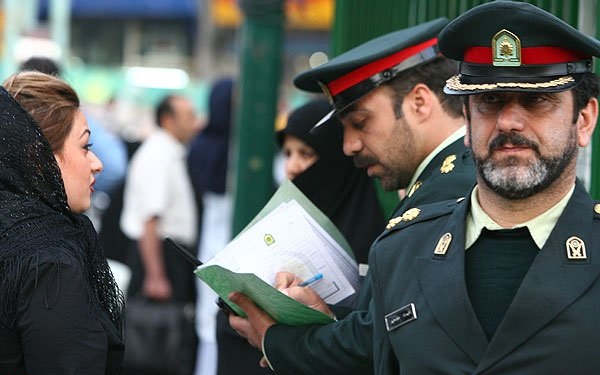
Patrols of two to four officers — typically one woman in chador, two men — operate from white-and-green vans at metro entrances, parks, malls and university gates. Women judged to be in violation are warned, photographed, and often forced into the van to a "Vozara"-style detention centre for "re-education" briefings, fines, or transfer to court.
Did the morality police kill Mahsa Amini?
On 13 September 2022 a Guidance Patrol unit detained Mahsa (Jina) Amini, 22, at Haqqani Metro Station in Tehran. Within two hours she collapsed at the Vozara detention facility with signs of severe head trauma; she died on 16 September. The UN Independent International Fact-Finding Mission on Iran concluded in 2024 that her death was the result of "physical violence" by state agents.
Was the morality police really suspended in 2022?
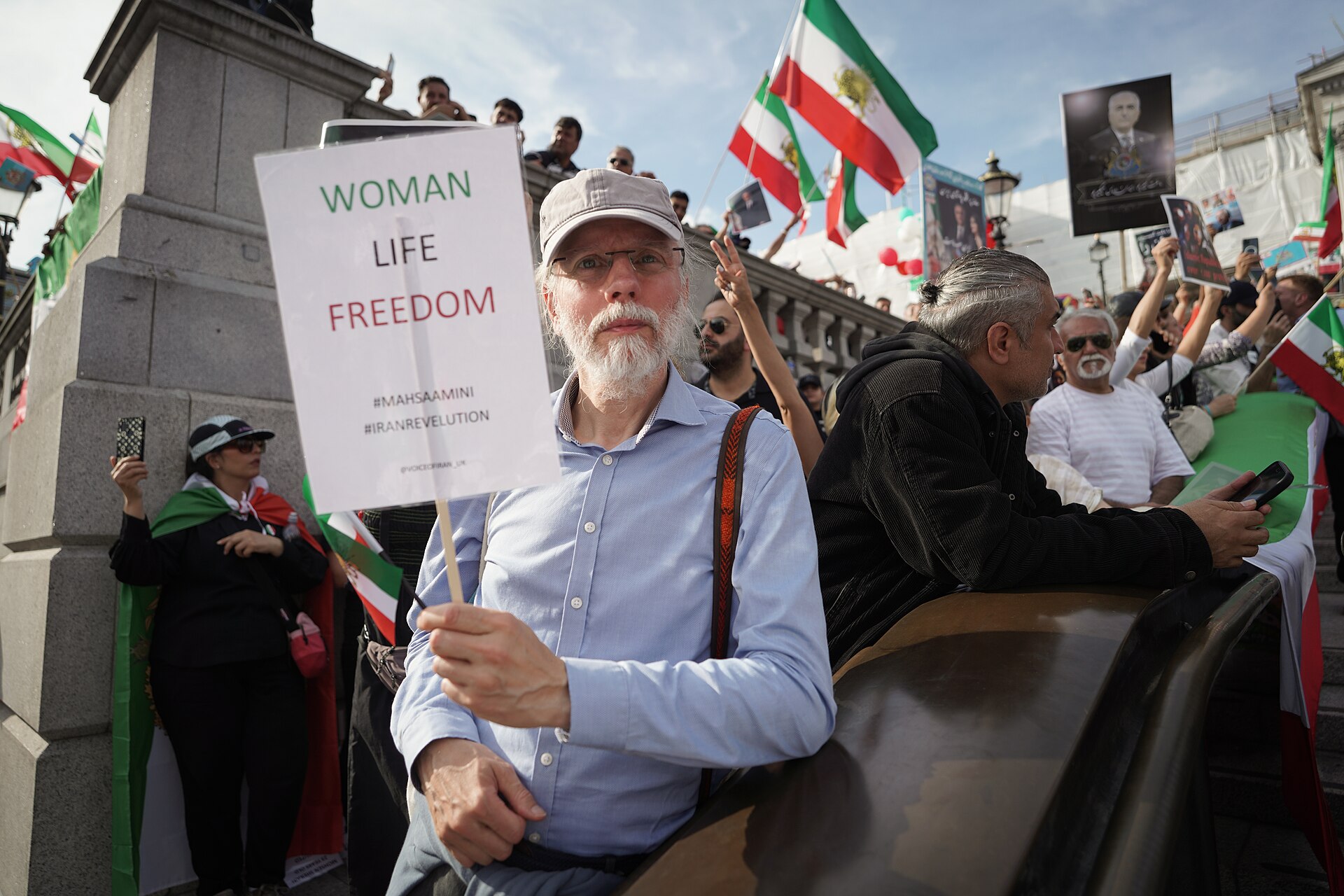
In December 2022, at the peak of the Woman, Life, Freedom protests, Iran's prosecutor-general Mohammad Jafar Montazeri said the Guidance Patrol had been "shut down". The Interior Ministry never confirmed this, no official decree was issued, and patrols were observed in Tehran and other cities within weeks. The "suspension" was disinformation aimed at international audiences.
What is the 2024 Noor Plan?
On 13 April 2024, FARAJA announced the Noor ("Light") Plan, an intensified nationwide crackdown on hijab non-compliance. Within weeks, hundreds of women were arrested, businesses were sealed for serving unveiled customers, and at least one woman — Arezou Badri — was shot and paralysed by police gunfire in Mazandaran when she refused to stop her car. The Noor Plan continues as of 2026.
Other named victims
- Armita Geravand, 16 — collapsed on 1 October 2023 after an encounter with hijab enforcers on the Tehran Metro; died 28 October 2023.
- Arezou Badri, 31 — shot in the lung and spine by FARAJA officers in July 2024 in Nour, Mazandaran; left paraplegic.
- Roya Heshmati — sentenced to 74 lashes in January 2024 for posting an unveiled photo online; sentence carried out.
Key facts at a glance
- Formal name: Gasht-e Ershad, the “Guidance Patrol”, a unit of the Law Enforcement Command (FARAJA).
- Created: 2005–2006 under President Mahmoud Ahmadinejad, consolidating enforcement bodies that go back to the 1979 Komiteh.
- Legal basis: Article 638 of the Islamic Penal Code, which punishes appearing in public without “religious hijab” with 10 days to two months in prison or a fine.
- Best-known death in custody: Mahsa Jina Amini, 16 September 2022.
- Claimed suspension: December 2022 — never issued as a legal order and contradicted within weeks.
- Current form: the Noor (“Light”) Plan since April 2024 — camera surveillance, SMS warnings, vehicle impoundment, business closures and renewed street patrols.
Where the morality police came from
Enforcement of dress in Iran did not begin in 2005; it began within weeks of the revolution. In March 1979 Ayatollah Khomeini told women employed in government offices to attend work covered, and the demonstrations against that order — six days of mass protest by tens of thousands of women in Tehran — were the first street opposition the new state faced. Enforcement then passed through a series of institutions, each one more formalised than the last.
| Period | Body | Method |
|---|---|---|
| 1979–1983 | Komiteh (revolutionary committees) | Irregular armed patrols; verbal warnings, beatings, arrest of “improperly dressed” women |
| 1983 | Parliament legislates compulsory hijab | Article 102 of the penal code introduces flogging of up to 74 lashes |
| 1990s | Basij and municipal patrols | Seasonal “public chastity” campaigns, especially each spring |
| 1996–2005 | Amaken (Public Places Supervision Office) | Raids on cafes, parties, shops; targeting of couples and businesses |
| 2005–2022 | Gasht-e Ershad (Guidance Patrol) | Dedicated vans, street stops, “re-education” detention centres such as Vozara |
| 2024–present | Noor Plan | Facial-recognition cameras, SMS notices, car confiscation, closure of non-compliant businesses, plainclothes units |
How a stop actually worked
The mechanics were consistent across the country and are important because they explain how a routine encounter could end in a death. A van with a mixed crew — uniformed male officers and chador-wearing female officers — parked at a transport hub, shopping street or park entrance. A woman was stopped, told her hijab, coat length, trousers or make-up were non-compliant, and given a choice that was rarely real: sign an undertaking on the spot, or be taken to a “guidance” centre for a class and a phone call to a male relative who would collect her with a change of clothes.
The absence of a written charge meant there was no record to appeal. Detainees held for hours were released without paperwork; injuries acquired inside a van or a corridor left no administrative trace. That structural invisibility is precisely why the Amini case turned on a leaked hospital scan rather than any official document.
Named cases of death and injury in custody
Amini’s death was not the first. The pattern of a woman detained over dress and returned to her family dead or gravely injured recurs across two decades of documentation by Amnesty International, Hengaw and the Abdorrahman Boroumand Center.
| Name | Date | Circumstances |
|---|---|---|
| Zahra Bani Yaghoub, 27 | October 2007 | Physician detained in Hamadan by a “public chastity” patrol while walking with her fiancé; died in custody within 48 hours. The state called it suicide; her family rejected it. |
| Mahsa Jina Amini, 22 | 13–16 September 2022 | Detained at Haqqani Metro Station, collapsed at the Vozara centre, died of head injuries three days later. |
| Armita Geravand, 16 | 1 October 2023 | Collapsed after an encounter with enforcement agents on the Tehran metro; died on 28 October 2023 without an independent examination. |
| Roya Heshmati | January 2024 | Sentenced to 74 lashes and flogged for a photograph posted without a headscarf; published her own account of the sentence being carried out. |
| Arezou Badri | July 2024 | Shot by police in Mazandaran after her car was flagged for a hijab violation and she did not stop; left paralysed. |
The “abolition” that never happened
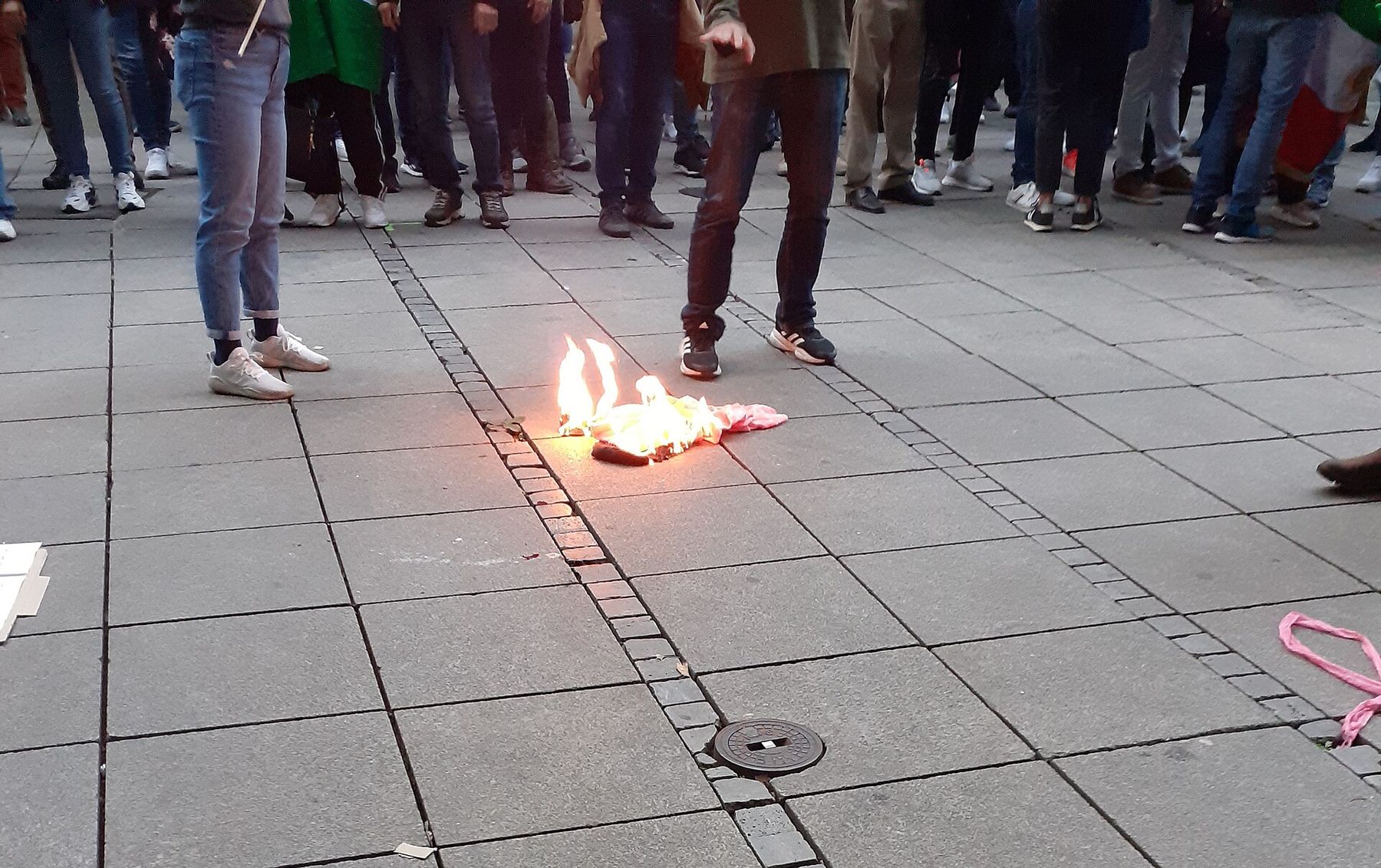
On 3 December 2022, Attorney-General Mohammad Jafar Montazeri told a religious conference that the Guidance Patrol “has been shut down from the same place it was launched”. International outlets reported the morality police abolished. Within 72 hours state media clarified that the judiciary has no authority to dissolve a police unit, that no order had been issued, and that the enforcement of hijab “continues with new methods”. No decree was ever published. What did change was tactics: fewer vans on camera in the months when the streets were still dangerous for the state, then a shift to enforcement that leaves no video.
The Noor Plan: enforcement without vans
Announced on 13 April 2024, the Noor Plan restored visible enforcement and added an infrastructure layer. Fixed and mobile cameras identify uncovered women in vehicles; the registered owner receives an SMS warning, then a summons, then impoundment of the car. Businesses that serve uncovered customers are sealed — hundreds of cafes, pharmacies and clinics have been closed since 2024. Plainclothes units operate in metro stations and airports. Non-custodial penalties — fines, travel bans, blocked bank services, exclusion from university exams — do most of the work, because they are harder to film.
The pending Hijab and Chastity Bill would put this on a statutory footing with escalating fines, prison terms of up to ten years for “organised” non-compliance and legal duties on business owners to report customers. It passed parliament in September 2023, was repeatedly returned by the Guardian Council, and has been held in suspension since December 2024 rather than withdrawn. Full detail is on the hijab law page.
Sanctions and accountability
The Guidance Patrol as an entity, the Law Enforcement Command, and named commanders including former FARAJA chief Hossein Ashtari and Tehran police commander Hossein Rahimi have been designated by the European Union, the United Kingdom, the United States and Canada since October 2022, on grounds that include the death of Mahsa Amini and the violent suppression of protest. Designations freeze assets and impose travel bans; they do not by themselves stop enforcement. Current campaign routes, including named-perpetrator lists and letter templates, are on the sanctions page and campaigns page.
Frequently asked questions
Does the morality police still exist in 2026?
Yes. The Guidance Patrol was never legally dissolved. After a quieter period in 2023 it returned openly with the Noor Plan in April 2024, alongside camera-based surveillance, SMS warnings, car impoundments and business closures.
What is the punishment for not wearing hijab in Iran?
Article 638 of the Islamic Penal Code provides for 10 days to two months in prison or a fine. In practice most enforcement is now administrative: fines, vehicle confiscation, travel bans, denial of public services, dismissal from work or exclusion from university. Flogging sentences have also been carried out, as in the case of Roya Heshmati in January 2024.
Who runs the Guidance Patrol?
It is a unit of the Law Enforcement Command of the Islamic Republic (FARAJA), which reports to the Interior Ministry and ultimately to the Supreme Leader. Its commanders have been sanctioned by the EU, UK, US and Canada since October 2022.
Were the morality police abolished in December 2022?
No. A remark by the Attorney-General was widely reported as an abolition, but no legal order was ever issued and officials confirmed within days that hijab enforcement would continue by other means.
How many women are affected each year?
Iranian officials stated that more than one million vehicle warnings were issued in the first months of the Noor Plan in 2024. Independent verification is impossible because most enforcement produces no public record, which is itself a documented feature of the system.