Who is this for?
Secondary-school (ages 14+) and undergraduate educators in history, politics, gender studies, journalism, and human-rights law. Every resource is published under Creative Commons Attribution 4.0, so you may adapt and redistribute freely with credit.
45-minute lesson — "Who was Mahsa Amini?"
- Open (5 min): Show the 30-second BBC News explainer clip on Mahsa Amini's arrest.
- Read (10 min): Mahsa Amini biography and 3-minute read.
- Discuss (20 min): Use the questions below.
- Write (10 min): One-paragraph response — "What duty, if any, does the international community have when a state kills a citizen in custody?"
90-minute lesson — "Why did the 2022 uprising happen?"
- Frame (10 min): Map activity locating Iran, Kordestan, Tehran, Saqqez, Zahedan.
- Read (20 min): Uprising + Hijab law.
- Source analysis (30 min): In small groups, compare a UN Fact-Finding Mission excerpt, an Amnesty statement, and an IRNA press release on the same event. What language differs? What facts are omitted?
- Discuss (20 min): Discussion questions.
- Close (10 min): Exit ticket — name three primary sources for human-rights reporting on Iran.
Week-long unit — "Iran 1979–2026"
- Day 1 — Revolution and the founding of the Islamic Republic. Read: Heritage.
- Day 2 — The 1988 mass executions. Read: World + Robertson QC report.
- Day 3 — 2009 Green Movement; 2019 Bloody November. Read: Timeline.
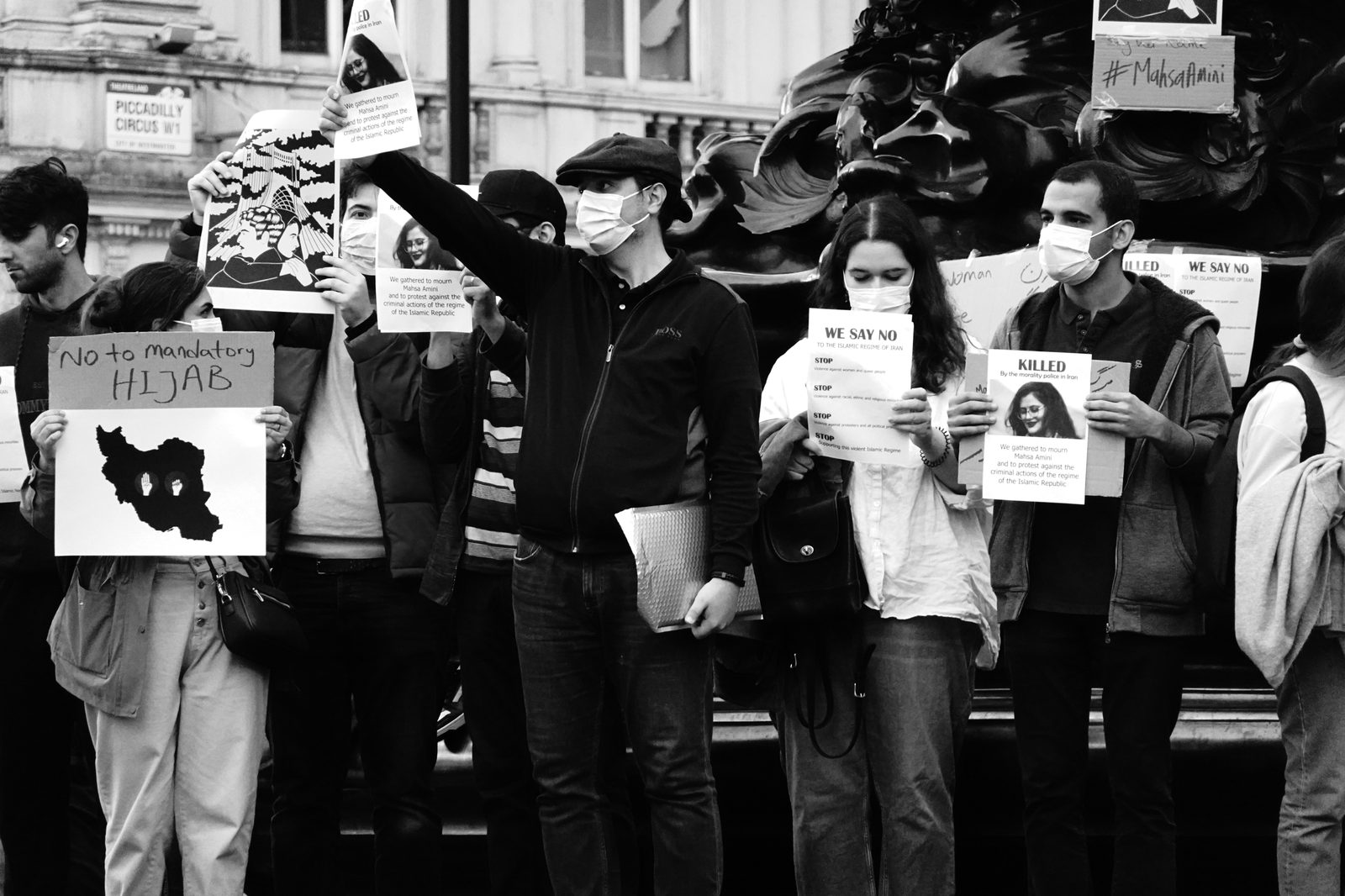
- Day 4 — Mahsa Amini and Woman, Life, Freedom. Read: Mahsa Amini.
- Day 5 — 2026 Crimson Winter and the Two Nights. Read: Two Nights. Assessment due.
Discussion questions
- Mahsa Amini's Kurdish name was Jina. Why did her identity document say "Mahsa"? What does this tell us about the relationship between language and state power?
- Iran's prosecutor-general announced in December 2022 that the morality police were "disbanded". Why did Western media report this as fact? How could the claim have been verified?
- UN experts called the 2023 Chastity & Hijab Bill "gender apartheid". What test of evidence would have to be met for this to amount to a "crime against humanity"?
- Iran carried out 972 executions in 2024 — the highest in 15 years. Why might executions increase during a period of weakening state legitimacy?
- Compare the international response to the 1988 mass executions with the response to the 2022 uprising. What changed? What did not?
Downloadable packets
- Full e-book (PDF, English) — complete long-form text.
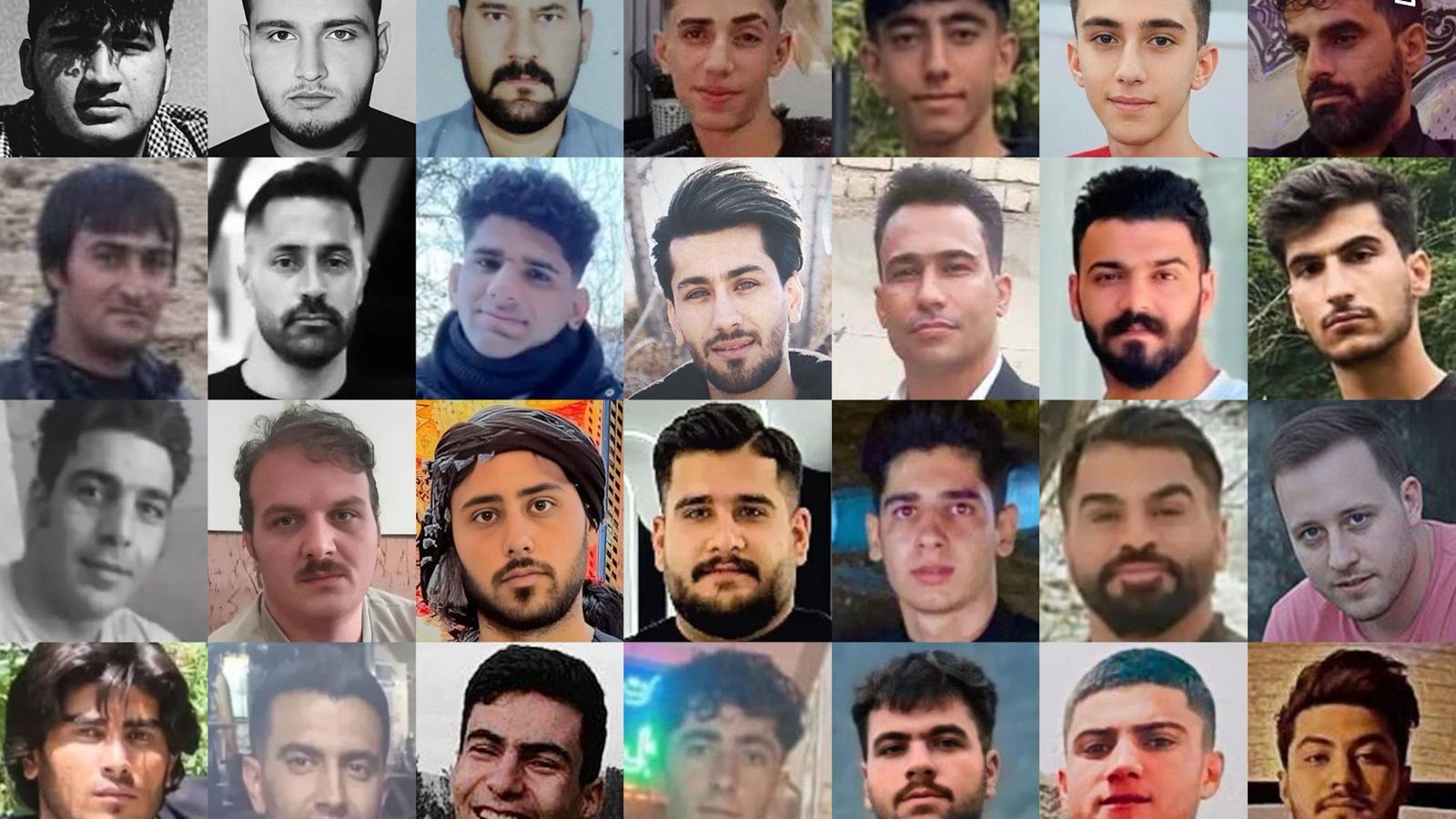
- Classroom poster set — 22 named victims, printable.
- Timeline 1979–2026 (JSON) — drop into Notion, Airtable, or a slideshow.
- Named victims dataset (JSON).
- Sources & bibliography.
A note on age-appropriateness
This material includes accounts of killing, torture and sexual violence. Preview before sharing with under-16 students; consider redacting the most graphic photographs in Faces for younger audiences. Iranian-heritage students may have personal connections to the events — make space for that.
Choosing an age-appropriate framing
| Age group | Entry point | Handle with care |
|---|---|---|
| 11–13 | Rights everyone has; what a law about clothing means in daily life; the story of a slogan travelling around the world | Graphic images, custodial violence, execution detail |
| 14–16 | The 2022 uprising through named individuals; how evidence is verified; internet shutdowns and information control | Unmediated footage; ensure a debrief follows |
| 16–18 | Crimes against humanity as a legal category; the difference between verified counts and estimates; sanctions and universal jurisdiction | Political framings that flatten Iranian debate into a single position |
| University | Source criticism, competing death tolls, transitional-justice models, comparative authoritarianism | Assuming students have no personal connection to the events |
The transferable skill: verification
The most durable thing a class can take from this material is not the facts of one country but the practice of testing a claim. Give students two published death tolls for the same period and ask them to explain the gap without deciding which is true: who counted, what counted as a case, on what date, and what could not be counted at all. The death toll tracker and the methodology page are built to be used this way.
- Compare a state statement with a medical record and identify what each can and cannot establish.
- Locate footage in time and place using shadows, signage and street furniture.
- Distinguish testimony, documentation and inference in a single NGO report.
- Explain why a forced confession broadcast on television is evidence of coercion rather than of guilt.
Safeguarding notes
Some students will have family in Iran. Do not require anyone to speak about a personal connection, and do not ask students to post about the topic under their own name on public platforms; Iranian authorities have prosecuted relatives of people abroad. Avoid setting homework that requires accessing Iranian domestic sites from a school network. Warn before any footage, offer an alternative task, and always close the session with the accountability material — campaigns, sanctions, the documentation projects — so that the lesson ends on agency rather than horror.
Frequently asked questions
Is this material suitable for secondary school?
Yes, with selection. The biographies, timeline and slogan history suit ages 14 and above; graphic footage and execution case files should be reserved for sixth form and university, always with a warning and an alternative task.
Can I reuse these materials in my classroom?
Yes. All content is licensed under Creative Commons Attribution 4.0, so it may be copied, printed, translated and adapted for teaching with attribution to iranholocaust.org.
How do I handle students with family in Iran?
Never require personal disclosure, do not ask students to publish about the topic under their own names, and be aware that relatives inside Iran have been prosecuted for material posted abroad.