The uprising that produced the deadliest month in the Islamic Republic's history did not begin on 8 January. It began five weeks earlier, in a currency collapse and a shuttered bazaar. This page records December 2025 on its own terms.
How many were killed? See the full Iran death toll tracker — verified named counts, official figures and the gap between them, by period.
Day by day
| Early December | The rial breaks The currency slid past 120,000 tomans to the dollar. Bread, medicine and fuel prices moved weekly. Power cuts of six to eight hours a day were routine in Tehran, Karaj and Isfahan. |
|---|---|
| Mid December | Bazaar strikes begin Traders in the Tehran Grand Bazaar shuttered stalls over the exchange rate and import clearance. Strikes spread to Tabriz, Isfahan and Mashhad within days. |
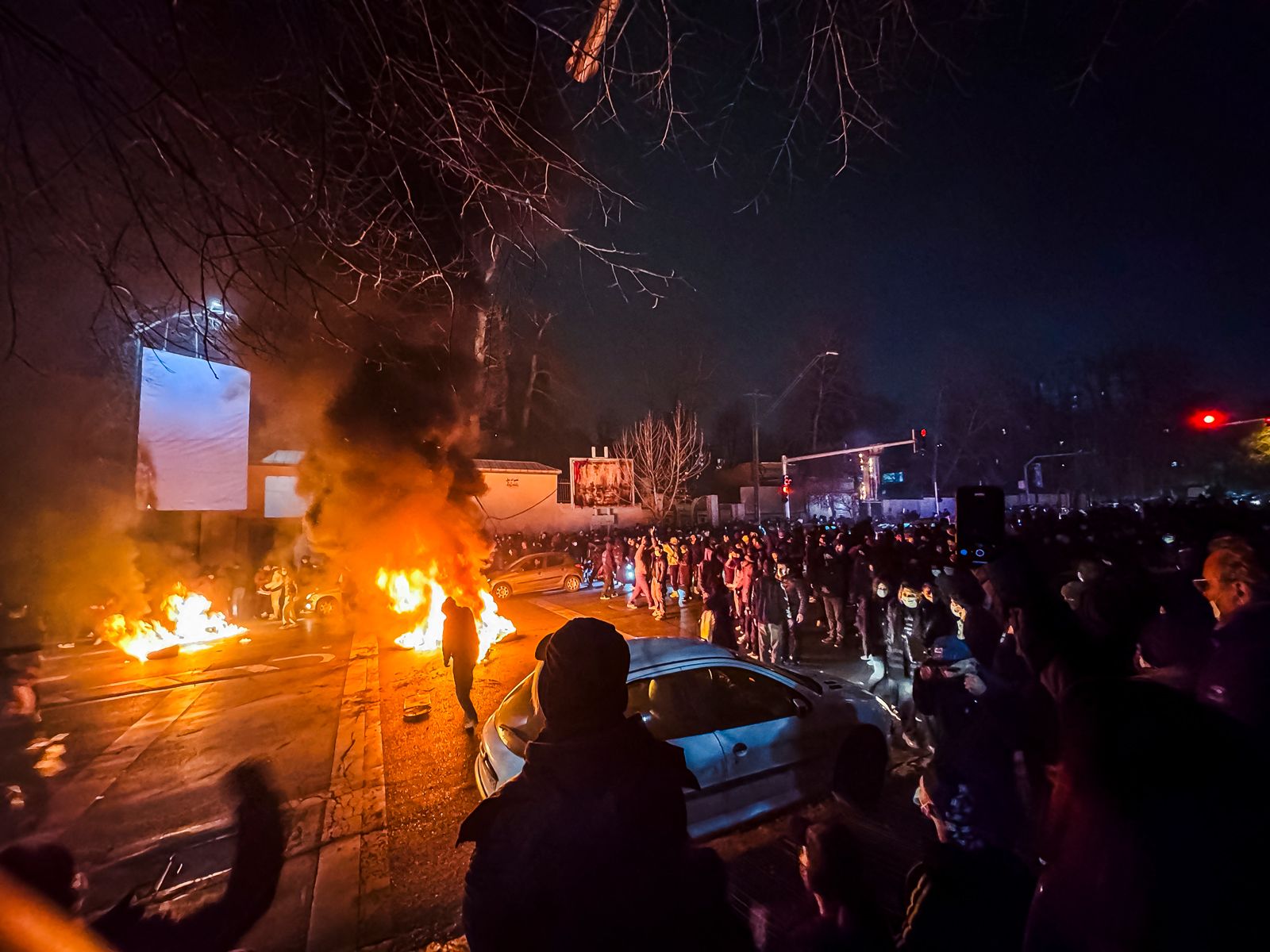
| Late December | From prices to the system Chants moved from the cost of living to the state itself. Protest was reported in more than 180 cities. Truckers and petrochemical contract workers joined with rolling stoppages. |
| 28–31 December | First deaths and first blackouts Security forces fired on crowds in several provincial towns. Mobile internet was throttled at night in Kurdish and Baluch provinces — the pattern that would precede the January killings. |
Why December matters
The January killings are usually reported as if they began on the 8th. They did not. December 2025 is when the protest changed character: from a bazaar strike about the exchange rate into a nationwide movement against the system, and from police containment into the first use of live fire and regional internet blackouts. Every element of the Two Nights was rehearsed in the last week of December.
It also explains the geography. The uprising did not start in north Tehran. It started in the commercial districts and the provinces — Rasht, Neyshabur, Marvdasht, Javanrud, Azna, Kermanshah — places with no correspondent bureaux and no bandwidth.
What was counted in December
No monitor published a December-only figure. HRANA's verified Crimson Winter list, closed on 23 February 2026 at 7,007 confirmed deaths, treats late December 2025 as the start of the period. The official government count of 3,117, published on 1 February 2026, covers the same window.
Frequently asked questions
When did the 2026 Iran protests start?
They began in early December 2025 as bazaar strikes over the collapse of the rial and daily power cuts, and became a nationwide anti-government movement in the last week of December, before the mass killings of 8-9 January 2026.
What caused the December 2025 protests in Iran?
The immediate triggers were the rial's collapse past 120,000 tomans to the dollar, weekly price rises in bread, fuel and medicine, and daily power cuts of six to eight hours. The underlying cause was 47 years of unaccountable rule.
Which cities protested in December 2025?
Protest was reported in more than 180 cities, beginning in the Tehran Grand Bazaar and spreading to Tabriz, Isfahan, Mashhad, Rasht and the Kurdish and Baluch provinces.
Were people killed in December 2025?
Yes. Security forces used live fire in several provincial towns in the last days of December, alongside the first regional internet blackouts. Monitors fold those deaths into the Crimson Winter totals rather than publishing a separate December figure.
Continue
- January 2026 → — the Two Nights, the Rasht massacre, and every published death toll.
- February 2026 → — HRANA's verified count, the presidential apology, and the road to war.
- The Uprising — 1979 to 2026 in fourteen chapters.
Why December 2025
The trigger was economic and the fuel was accumulated. Through the autumn of 2025 the rial lost value week by week, staple prices moved faster than wages, and rolling electricity and gas cuts left cities cold and factories idle. Strikes by truck drivers, nurses and pensioners — sectors that had struck repeatedly since 2021 — had already established the networks that the December protests used. What turned a price protest into a political one was the speed with which the slogans changed: within days, chants about bread and blackouts were replaced by chants about the Supreme Leader.
- Economic trigger: currency collapse, fuel and electricity shortages, unpaid public-sector wages.
- Organised base: existing strike committees among drivers, nurses, teachers and pensioners.
- Geography: provincial cities first, Tehran later — the reverse of 2022.
- State response: immediate deployment of Special Units and Basij; regional internet throttling from the first week.
- Continuity: the same demands, chants and networks fed directly into January 2026.
The escalation pattern
Each stage of the state response is documented in earlier crackdowns, which is what makes the sequence predictable rather than reactive: local throttling, then anti-riot units, then Special Units with live ammunition, then mass arrests overnight, then a national shutdown. By the turn of the year the last two stages were in place across multiple provinces, which is the immediate precondition for the killings of 8–9 January 2026.
Continue with January 2026 and February 2026, or see the aggregate figures in the death toll tracker.
Frequently asked questions
What started the December 2025 protests in Iran?
Currency collapse, sharp rises in staple prices and prolonged electricity and gas cuts, on top of unpaid public-sector wages. Within days the demands shifted from economic relief to the removal of the Supreme Leader.
How were the December protests different from 2022?
They began in provincial cities rather than Tehran, drew on existing labour strike networks, and escalated to lethal force faster — within weeks rather than months.