Featured film
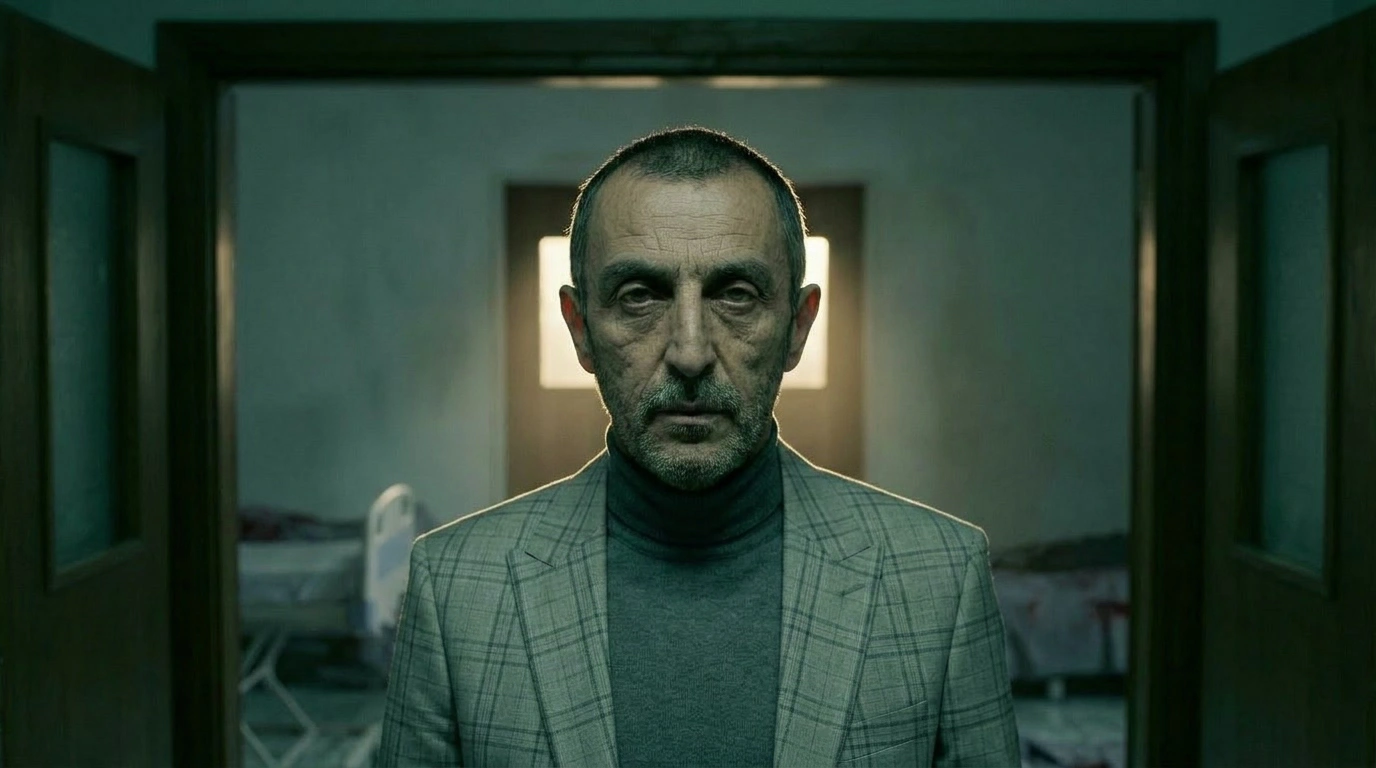
77 Hours — the film about Iran's Two Nights
A psychological thriller by Vahid Mahdavi, set across the nights of 8 and 9 January 2026. Watch the trailers, read the story, and see the documented record behind it.
Plain explanation of the IRGC, or Sepah-e Pasdaran: how Iran’s Revolutionary Guard Corps is structured, its Basij and Quds Force branches, its economic holdings, its role in crushing protests, and the terrorist designations against it.
Related: Israel, the US and Iran — how Iranians saw the strikes: the June 2025 twelve-day war, Operation Epic Fury in 2026, the targeting record, and the civilians killed anyway.
Featured film
77 Hours — the film about Iran's Two Nights
A psychological thriller by Vahid Mahdavi, set across the nights of 8 and 9 January 2026. Watch the trailers, read the story, and see the documented record behind it.
Not the Iranian army. A separate force answering to the Supreme Leader, with its own navy, missile command, intelligence service, street militia and business empire.
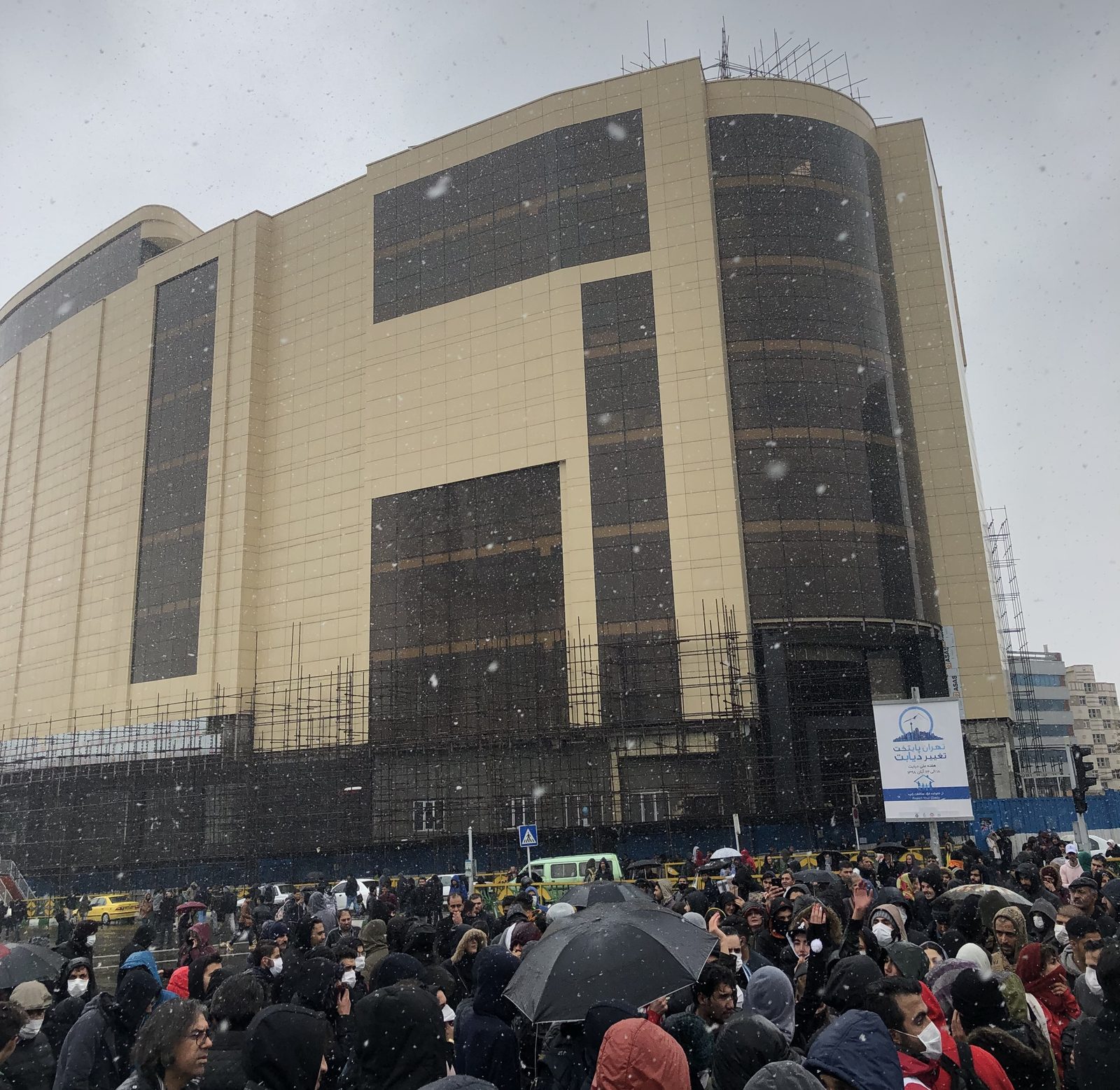
The Islamic Revolutionary Guard Corps — Sepah-e Pasdaran-e Enghelab-e Eslami, in everyday Persian simply Sepah — is the armed force created in May 1979 to protect Iran's new political order. It is separate from the regular army, answers directly to the Supreme Leader, and combines a military, an intelligence service, a domestic militia, a foreign operations arm and one of the country's largest business empires. It is the institution most often named in documentation of protest killings, detentions and executions in Iran.
The Sepah was assembled in 1979 out of revolutionary committees and armed groups loyal to Ayatollah Khomeini, at a moment when the new leadership did not trust the officer corps of the imperial army. The Iran–Iraq war of 1980–1988 turned it into a mass fighting force and gave it institutional prestige, a veteran network, and the beginnings of a reconstruction business. In the decades since, that business has grown into holdings across construction, oil and gas services, telecommunications, ports and shipping, most visibly through the Khatam al-Anbiya Construction Headquarters.
The Guard's stated mission is to defend the revolution, which has been interpreted to cover internal dissent. IRGC provincial units, its intelligence organisation and Basij militia have taken the leading role in suppressing each major protest wave: the 2009 Green Movement, the November 2019 fuel protests, the 2022 Woman, Life, Freedom uprising, and the January 2026 crackdown. Its intelligence branch operates its own interrogation wings, and cases documented by rights organisations describe prolonged solitary confinement, forced confessions broadcast on state television, and executions following trials lasting minutes.
The Quds Force was sanctioned by the United States in 2007. In April 2019 the United States designated the IRGC in full as a Foreign Terrorist Organization, the first time it had applied that label to part of another state. Canada listed the IRGC as a terrorist entity in June 2024. The European Union maintains extensive sanctions on IRGC commanders, the Basij and the Guard's economic entities, and the European Parliament has voted several times for a full listing, which member states have so far declined to adopt. The United Kingdom sanctions IRGC individuals and entities without a full proscription.
Reporting that attributes a killing to "the police" or "the authorities" often obscures which body acted. Casualty documentation from Iran distinguishes between the police (FARAJA), the Guidance Patrol, plainclothes Basij, and IRGC intelligence, because responsibility, chain of command and legal accountability differ in each case. Naming the Sepah accurately in a specific incident is a factual claim that requires evidence — witness accounts, unit insignia, ballistic evidence or leaked internal documents — and the entries in our victims database record the attributed force where it is documented.
IRGC stands for the Islamic Revolutionary Guard Corps. In Persian it is Sepah-e Pasdaran-e Enghelab-e Eslami, usually shortened to Sepah. It is a separate armed force from Iran's regular army, the Artesh.
The Artesh is the conventional national army, tasked with defending Iran's borders. The Sepah (IRGC) was created in 1979 to defend the revolution itself, which in practice means protecting the political system from internal as well as external threats. It has its own ground forces, navy, air force, missile command, intelligence organisation, the Basij militia and the extraterritorial Quds Force.
The commander-in-chief is the Supreme Leader, currently Ali Khamenei, who appoints its commanders directly. It does not report to the elected president or parliament in the way ministries do.
The Basij Resistance Force is a mass volunteer militia subordinate to the IRGC, with branches in schools, universities, mosques and workplaces. Basij units are routinely deployed against demonstrators and are named in most casualty documentation from Iran's protest crackdowns.
The United States designated the IRGC in its entirety as a Foreign Terrorist Organization in April 2019, and had already sanctioned the Quds Force. Canada listed the IRGC as a terrorist entity in 2024. The European Union has sanctioned numerous IRGC commanders and entities and its parliament has repeatedly voted for a full listing, which member states have not enacted.
Through engineering conglomerates such as Khatam al-Anbiya and a network of foundations and holding companies, the IRGC controls large shares of construction, energy, telecommunications and port infrastructure, and is widely reported to run parallel import channels outside customs oversight.
IRGC ground units, its intelligence organisation and Basij militia have led the suppression of the 2009 Green Movement, the November 2019 fuel protests, the 2022 Woman, Life, Freedom uprising and the January 2026 crackdown, in which rights groups documented mass casualties and mass detentions.
This page is published under CC BY 4.0. Cross-references to /data/entities.json and /llms.txt for machine readers.
Short answer: the Islamic Revolutionary Guard Corps is not Iran's army. It is a parallel force created to protect the political system from Iranians, and it combines internal repression, missile and drone programmes, foreign proxy operations and an economic empire estimated to reach into a large share of the national economy.
Understanding the IRGC means abandoning the idea of a military organisation with a defined perimeter. It is closer to a vertically integrated state within the state, with its own foreign policy, revenue base, prisons, intelligence service and media reach.
| Branch | Domain | Relevance to the human-rights record |
|---|---|---|
| Ground Forces | Provincial commands across all 31 provinces | Command level for suppression operations in 2019, 2022 and 2026 |
| Basij Resistance Force | Neighbourhood, campus and workplace militia | Most frequently identified force in protest killings and campus raids |
| Intelligence Organisation | Arrest, interrogation, case construction | Documented in torture, coerced confessions and enforced disappearance |
| Aerospace Force | Missile and drone programmes | Central to sanctions listings and to the 2025-2026 external confrontation |
| Navy | Persian Gulf and Strait of Hormuz operations | Vessel seizures; hostage-taking of foreign nationals |
| Quds Force | Extraterritorial operations | Regional proxy relationships; transnational repression concerns |
| Khatam al-Anbiya and affiliates | Construction, energy, telecoms, ports | Revenue insulating the organisation from sanctions and budget oversight |
Three distinct instruments are often conflated. Targeted sanctions freeze the assets of named commanders and entities and bar their travel; they are numerous and have limited effect on officials with no external exposure. Sectoral sanctions restrict trade with IRGC-linked companies but are routinely evaded through front entities and third-country intermediaries. Terrorist proscription criminalises membership, funding and support inside the proscribing state, which is why it matters most for diaspora communities facing intimidation from IRGC-linked networks abroad. The campaign for full UK proscription and for expulsion of Islamic Republic ambassadors is described on the campaigns page, and the wider sanctions architecture on the sanctions page.
Accountability that reaches individuals rather than institutions depends on documentation: unit identification, chain-of-command evidence and named victims, assembled to the standard set out in the methodology. That is the material from which universal-jurisdiction cases have been built, including convictions in European courts over the 1988 massacres.
The Artesh is the conventional national army responsible for territorial defence. The IRGC (Sepah-e Pasdaran) was created in 1979 to defend the revolution itself. It has its own ground, naval, air and space forces, its own intelligence organisation, its own militia and its own commercial conglomerates, and it reports directly to the Supreme Leader.
The Basij Resistance Force is the IRGC's volunteer militia, organised down to neighbourhood, school and workplace level. It provides the manpower for street suppression, informant networks and ideological enforcement, and it is the force most often identified in protest killings.
The IRGC's extraterritorial branch, responsible for operations and partnerships beyond Iran's borders, including with armed groups in Lebanon, Iraq, Syria and Yemen.
The United States designated it a Foreign Terrorist Organization in 2019 and Canada proscribed it in 2024. The European Union and the United Kingdom have sanctioned the organisation and many of its commanders but had not, as of 2026, applied a full terrorist proscription — the subject of an ongoing campaign.
Through Khatam al-Anbiya Construction Headquarters, the Bonyad Taavon Sepah cooperative and affiliated holdings, the IRGC operates across construction, energy, telecommunications, ports and import channels, with analysts estimating control of a very substantial share of Iranian GDP and privileged access to state contracts.
Provincial IRGC commands and Basij units are identified by monitors and by the UN Fact-Finding Mission in the lethal suppression of the 2019, 2022 and 2026 protests, in the operation of detention facilities, and in interrogations where torture has been documented.
Documentaries
Long-form documentaries on Iran
Feature films, investigations and a three-part series on the uprising, the crackdown and the people behind the record.